Your cart is empty.


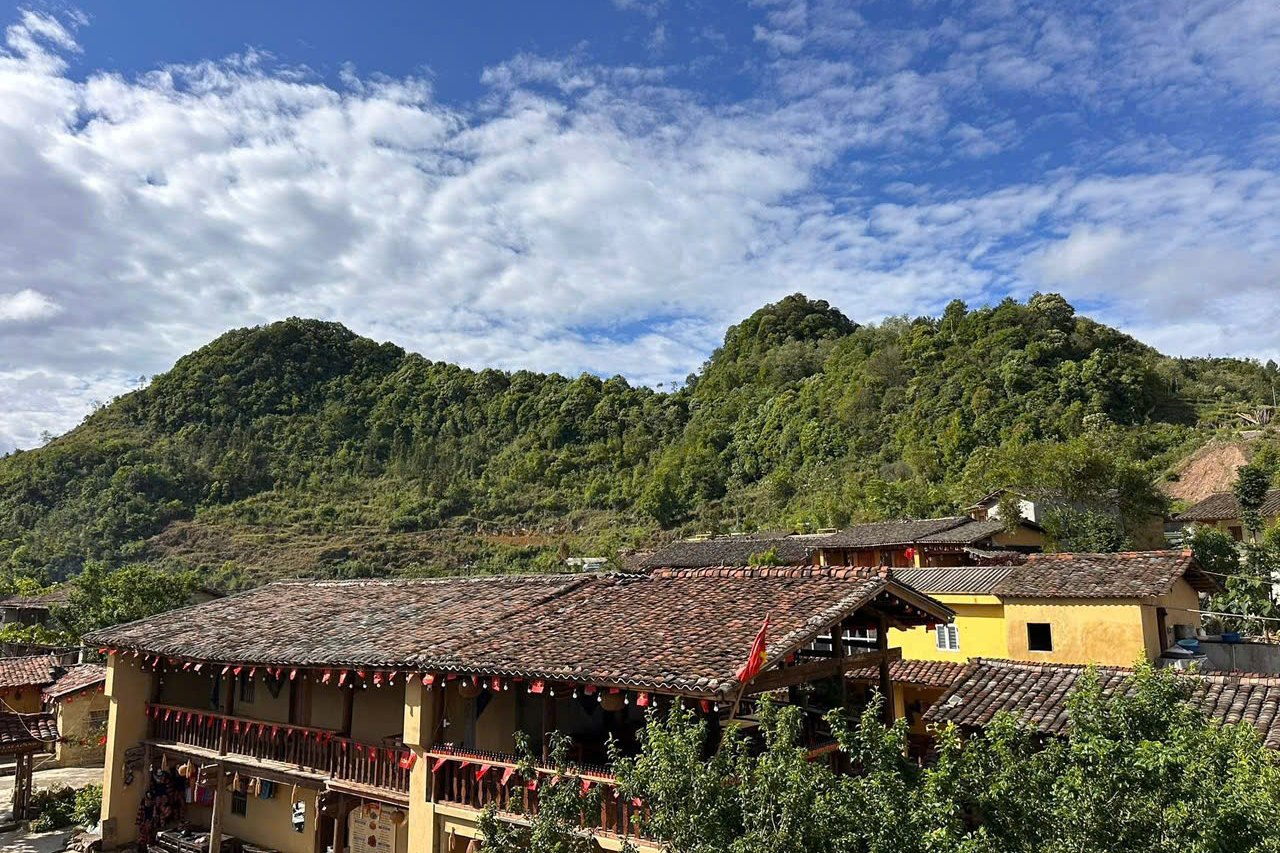
Tucked into a green hollow at the very top of Vietnam, Lo Lo Chai Village is one of those rare places that still feels untouched by time. Sitting just below the Lung Cu Flag Tower — the symbolic northernmost point of the country — this tiny hamlet of earthen houses, flowering fences and richly embroidered costumes offers a window into the life of the Black Lo Lo people. For travellers on the Ha Giang Loop, Lo Lo Chai is the perfect place to slow down, sleep in a homestay and experience a culture that has quietly endured on the border for centuries.
In this guide we cover everything you need to know before you visit Lo Lo Chai Village: who lives there, what makes it special, the best things to do, when to go, how to get there, and a few tips to make the most of your stay.
Lo Lo Chai lies in Lung Cu Commune, Dong Van District, in the far north of Ha Giang (now part of Tuyen Quang Province). The village sits at the foot of the hill crowned by the Lung Cu Flag Tower, only about a kilometre from the true northern tip of Vietnam. From Ha Giang City it is roughly 150–160 km along the classic loop route, usually reached on the second or third day of a Ha Giang trip.
Because of its position on the frontier, the setting is dramatic: limestone hills, terraced fields, and — in the right season — a patchwork of flowers surrounding a cluster of traditional homes. It is close enough to Dong Van Ancient Street and the wider Dong Van Karst Plateau to combine easily into a single itinerary.

Lo Lo Chai is home mainly to the Black Lo Lo (Lô Lô đen), one of Vietnam’s smallest ethnic groups, alongside a number of H’mong families. Despite their modest numbers, the Lo Lo have preserved a remarkably distinct identity — in dress, language, music and belief — making Lo Lo Chai Village one of the most culturally rich stops on the whole loop.
The most striking expression of that identity is the traditional costume. Lo Lo women wear elaborately decorated outfits pieced together from hundreds of small, brightly coloured fabric patches and geometric embroidery, often finished with silver ornaments and headdresses. Each piece is hand-made and can take months to complete. If you are lucky enough to visit during a festival, you may also see traditional bronze-drum dances — a cultural symbol the Lo Lo hold especially dear.
For a wider look at the many peoples who share this region, see our guide to Ha Giang’s indigenous cultural diversity.
Part of what makes Lo Lo Chai so photogenic is its architecture. Many homes are built in the traditional highland style, with thick rammed-earth walls that stay cool in summer and warm in winter, topped by weathered yin-yang tiled roofs. Wooden fences, stone paths and small flower gardens tie the village together into a scene that feels almost frozen in another era.
In recent years, several of these houses have been carefully restored and opened as homestays, allowing the community to earn a living from tourism while keeping their heritage intact. The result is a village that is living and lived-in — not a museum — where you are welcomed as a guest rather than a spectator.

The single best thing you can do in Lo Lo Chai is spend the night. A homestay in Lo Lo Chai means sharing a home-cooked highland dinner, sitting by the fire with your hosts, and waking to a quiet, mist-wrapped village. It is a world away from the busier backpacker hubs and one of the most authentic experiences in the north.
Lo Lo Chai is well known for a cosy little café — often called the “northernmost café in Vietnam” — set inside a restored earthen house. It is the perfect spot to warm up with a Vietnamese coffee, admire the traditional interior and simply watch village life go by.

You cannot visit Lo Lo Chai without walking up to the Lung Cu Flag Tower right above the village. From the base of the tower, a staircase leads to a viewing platform where the enormous national flag snaps in the wind and the panorama stretches across the border hills — a genuinely moving “top of Vietnam” moment.
Embroidery and brocade are at the heart of Lo Lo life. Many families sell small hand-stitched items and you may be invited to watch the intricate needlework in progress. Buying directly from the makers is a meaningful way to support the community and take home a genuine piece of the village.
With its earthen walls, tiled roofs and flower-lined lanes, Lo Lo Chai is a dream for photographers. The scene changes beautifully through the year — nowhere more so than during the pink-white bloom of the buckwheat flower season.
Lo Lo Chai Village is worth visiting year-round, but a few windows stand out:
Whenever you come, mornings and late afternoons in Lo Lo Chai Village offer the softest light and the best chance to catch the village wrapped in mist. For a month-by-month overview of conditions across the region, plan with our Ha Giang Loop guide.
Lo Lo Chai is reached from Ha Giang City via the main loop road (QL4C) through Quan Ba, Yen Minh and Dong Van, then north to Lung Cu — roughly 150–160 km one way. Most travellers arrive as part of a multi-day loop rather than a day trip. You have three main options:
Because Lo Lo Chai sits in a border area, remember that a border-zone permit is required for the Lung Cu region. This is a small government fee (around US$10 per person, paid locally) and is easy to arrange — your guide or homestay can help.
Absolutely. Lo Lo Chai Village is one of the most authentic and best-preserved ethnic villages in Ha Giang, combining living Black Lo Lo culture, beautiful traditional architecture and a location right at Vietnam’s northern tip.
Yes. Lo Lo Chai Village has several welcoming homestays inside restored earthen houses, and an overnight stay is the best way to experience local life.
Lo Lo Chai Village is roughly 150–160 km via the main loop road, usually visited on day two or three of a Ha Giang Loop itinerary rather than as a day trip.
Lo Lo Chai Village is home mainly to the Black Lo Lo (Lô Lô đen), one of Vietnam’s smallest ethnic groups, together with some H’mong families.
A visit to Lo Lo Chai Village is easy to weave into any northern loop itinerary, and staying overnight turns a quick photo stop into an unforgettable cultural experience. Let Ha Giang Ali Travel handle the route, the permit and a hand-picked homestay so you can simply enjoy the top of Vietnam. Contact us for a tailored trip:
📱 WhatsApp / Zalo: (+84) 787 652 333 | 📧 info@hagiangalitravel.com | 🌐 hagiangalitravel.com
See more:
Lung Cu is on the day-two route of our longer tours, with time to climb the 286 steps and take it in.
Dong Van & Ma Pi Leng3 days 2 nightsSee dates & prices →White Cliff & Sky Path3 days 2 nights · private roomSee dates & prices →
Free cancellation up to 24 hours before departure — 100% refund, deposit included.