Is the Ha Giang Loop in July worth it? Yes, if you ride in the mornings and keep one spare day. July is the wettest month of the year at the Ha Giang city weather station, with about 545 mm of rain spread over 24 rainy days, but it is also the greenest month, the waterfalls are at their fullest, and the road is quieter than it is in spring. The trade-offs are real: afternoon storms, rivers that run brown for a day after a downpour, humid 32°C afternoons in the valleys and a small but genuine risk of losing a day to a closed pass during typhoon season.
We are Ha Giang Ali Travel, a licensed tour operator and hostel in Ha Giang city, and we run the Loop every week of the year. This guide to the Ha Giang Loop in July is built from our own wet-season rides, our current prices and the questions guests ask us before they book a summer trip. Before anything else, read our honest answer to the big question, is the Ha Giang Loop safe, because almost every July worry is a safety worry in disguise.
Ha Giang Loop in July at a glance
- Weather on the Ha Giang Loop in July: daily mean 27.8°C in the city, highs around 32.6°C, nights near 24.7°C; the Dong Van plateau at 1,000 to 1,600 m runs several degrees cooler.
- Rain: about 545 mm over roughly 24 rainy days, the highest of any month, most of it in short, heavy afternoon and evening storms.
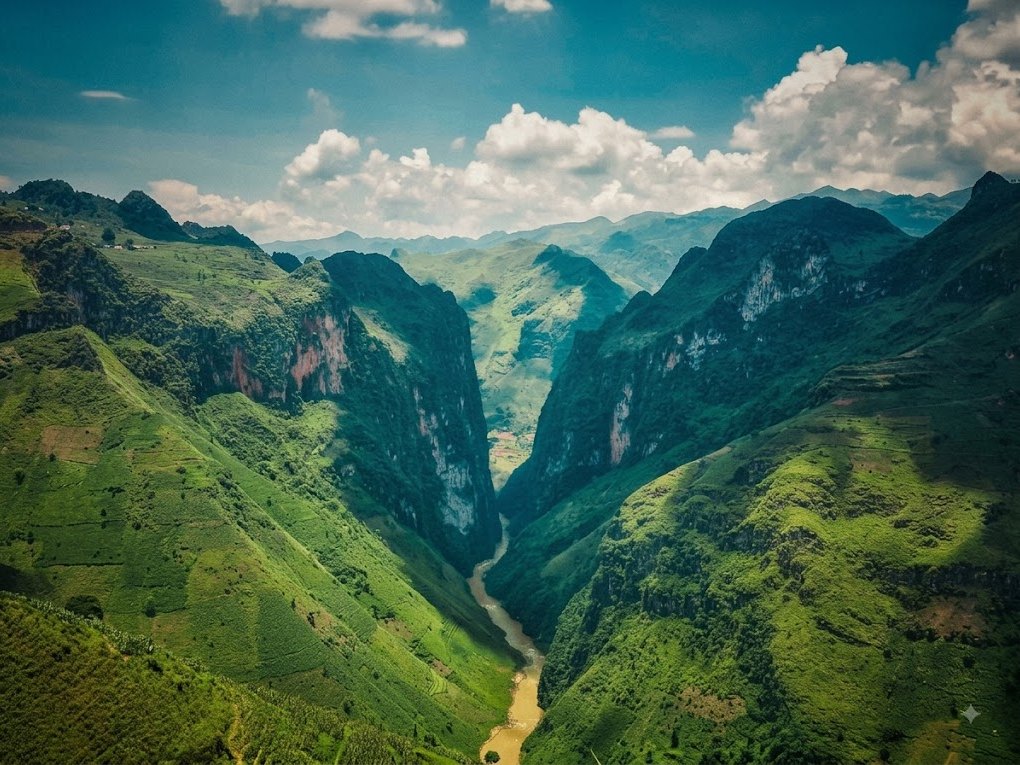
- What you see: the deepest green of the year, full waterfalls, water-filled rice terraces, cloud rolling through the passes and a Nho Que River that swings between jade and brown.
- Crowds on the Ha Giang Loop in July: low-to-mid season on the road; Vietnamese families on summer holiday fill the famous stops at weekends, while European travellers fill the hostels in town.
- Best tour for the Ha Giang Loop in July: the 4-day route via Du Gia Waterfall, with an Easy Rider for first-time riders.
- Price: no summer surcharge. Group tours from 4,250,000 VND (about $163) for 3 days and 5,550,000 VND (about $213) for 4 days, permit and VAT included.
- Verdict: the Ha Giang Loop in July rewards flexible riders who start early and do not mind getting wet once a day.
What is the weather like on the Ha Giang Loop in July?
The long-term averages for the Ha Giang city station, compiled by the Vietnam Institute for Building Science and Technology and published in the climate table for Ha Giang city, put July at a daily mean of 27.8°C, with average highs of 32.6°C and lows of 24.7°C. Rainfall averages 545.3 mm over 24.1 rainy days, relative humidity sits around 86%, and the month still manages 156.5 hours of sunshine. For comparison, February brings under 40 mm. July is, by a clear margin, the wettest month on the Ha Giang Loop.
Three things to read from those numbers before you ride the Ha Giang Loop in July:
- The city is hot, the plateau is not. The station sits at about 100 m in the valley. The Loop climbs onto the Dong Van karst plateau, where Quan Ba, Yen Minh, Dong Van and Meo Vac sit roughly 1,000 to 1,600 m up. Expect comfortable riding temperatures on the passes and a genuinely cool evening in Du Gia or Dong Van.
- Rain comes in bursts, not all day. Over 500 mm in a month sounds frightening, but most of it falls in storms of one to three hours, usually after lunch. July still has more sunshine hours than February, March or June.
- Humidity is the real adversary. At 86%, nothing dries overnight on its own. Pack as if you will get wet every day, because on the Ha Giang Loop in July you probably will, at least once.
Does it rain all day on the Ha Giang Loop in July?
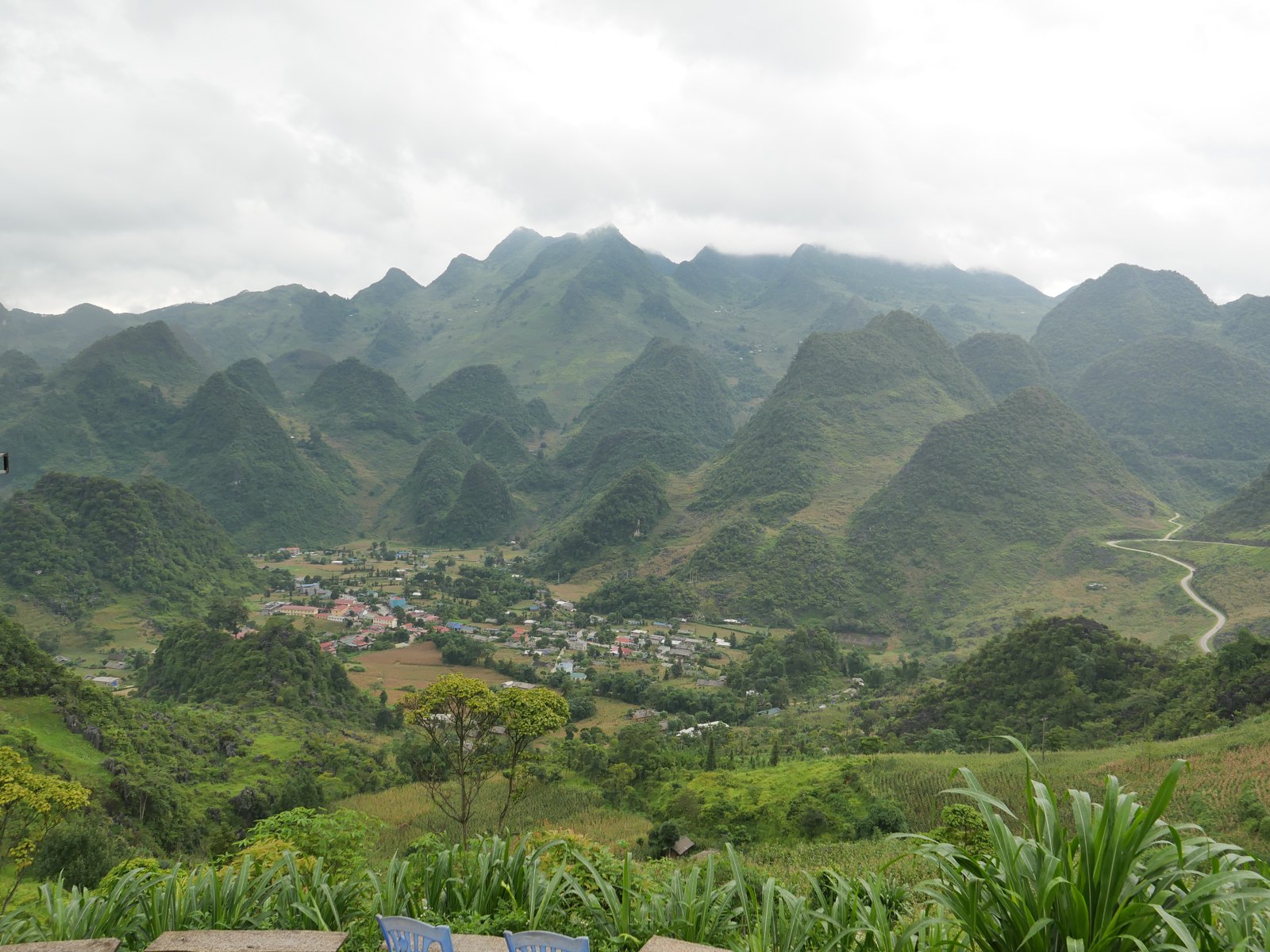
Rarely. The typical day on the Ha Giang Loop in July follows a rhythm our riders know by heart. Mornings are often the best part of the day: low cloud sits in the valleys at dawn, lifts by nine, and you get two or three hours of clear, bright riding. Cloud builds over the karst through the early afternoon, and somewhere between two and five o’clock a storm breaks, usually hard and fast. By evening it has cleared, the air is cooler and the homestay dinner tastes better for it.
The exception is the typhoon pattern. July and August are the heart of the northern storm season, and when a tropical storm or its remnants come in from the Gulf of Tonkin, the whole northern highlands can see two or three days of continuous rain at once. That is the scenario that closes passes and suspends boats, and it is the reason we tell every guest planning the Ha Giang Loop in July to keep one flexible day at the end. Our detailed Ha Giang rainy season guide covers how we read the forecast and what the August 2026 flood and landslide directive means for riders.
How we work around it: our tours meet at Ali Hostel at 08:00, hold the safety briefing at 08:30 and leave at 09:00, so the big passes are ridden before the afternoon build-up. If the radar looks bad, the guide reorders the stops, moving the viewpoints earlier and the markets or village walks later. We check the official forecast from the National Centre for Hydro-Meteorological Forecasting every evening during the Ha Giang Loop in July, and we would rather wait an hour at a café than ride into a wall of water.
What will you actually see on the Ha Giang Loop in July?
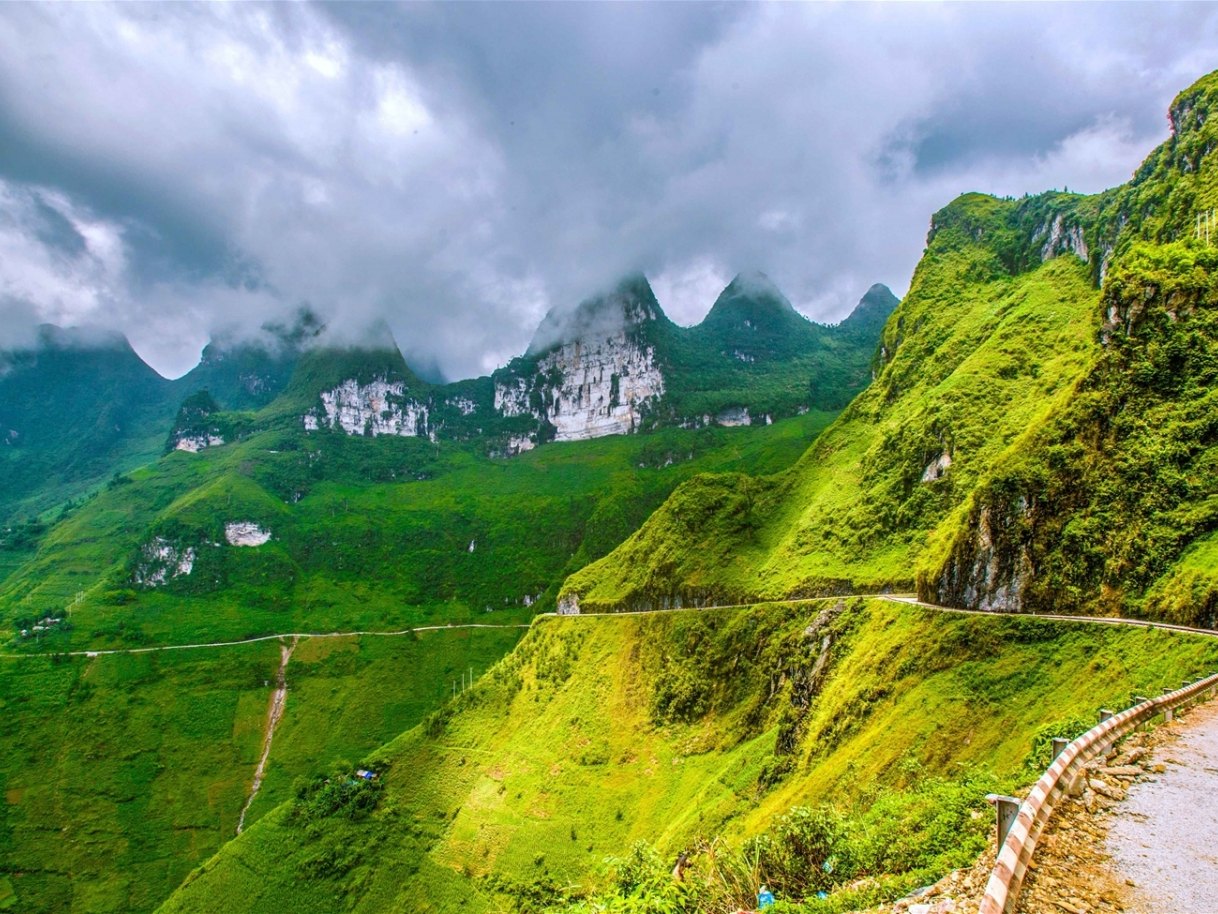
This is the part that makes the rain worth it. The Ha Giang Loop in July is the Loop at its most alive, and a lot of what you see is simply not there in the dry, hazy months.
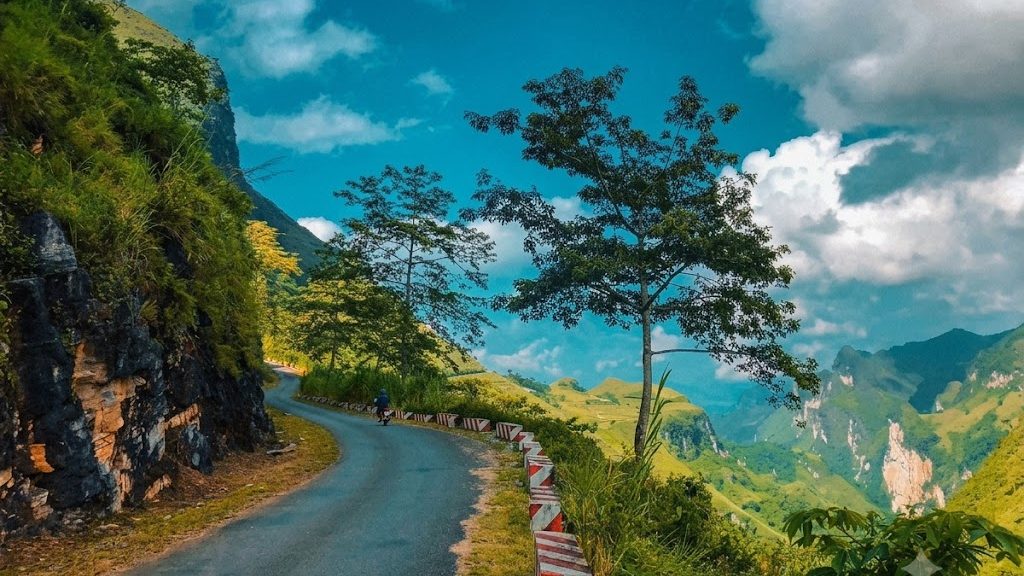
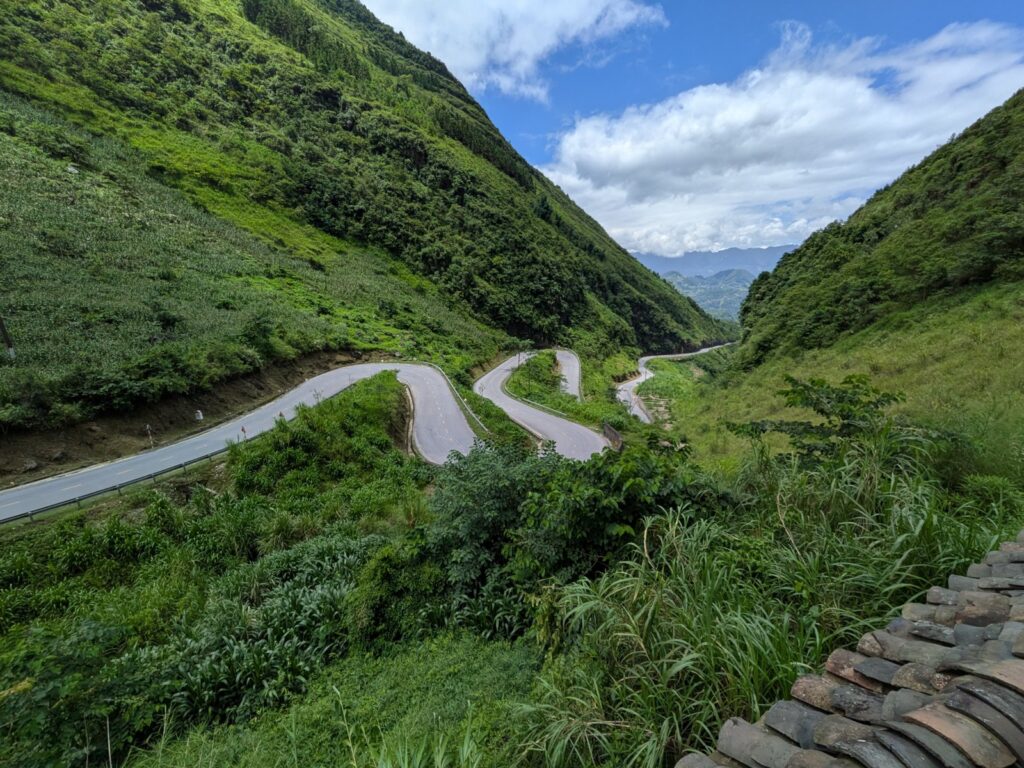
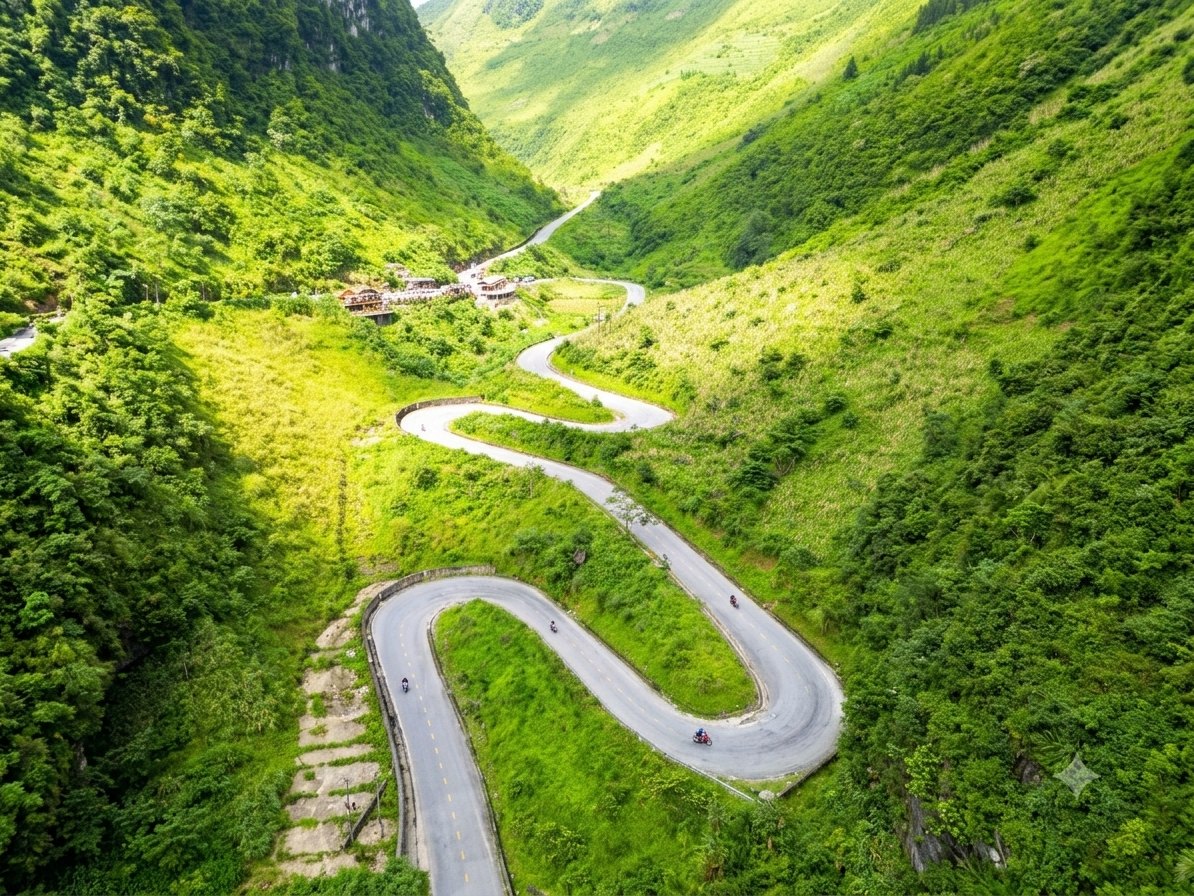
- The deepest green of the year. Every slope from Quan Ba to Meo Vac is covered. Tham Ma Pass, which can look brown and dusty in March, becomes a ribbon of tarmac through a green bowl.
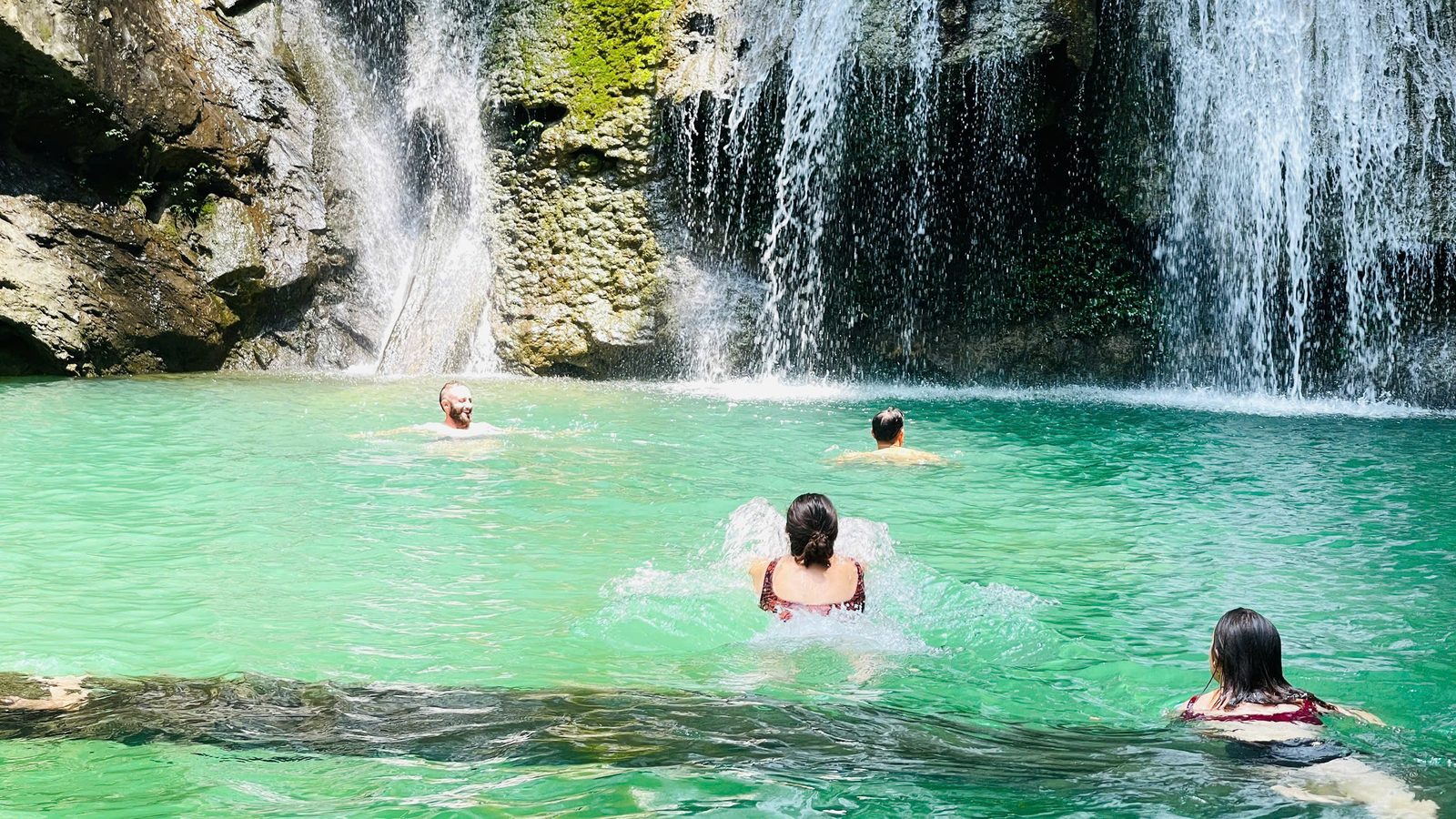
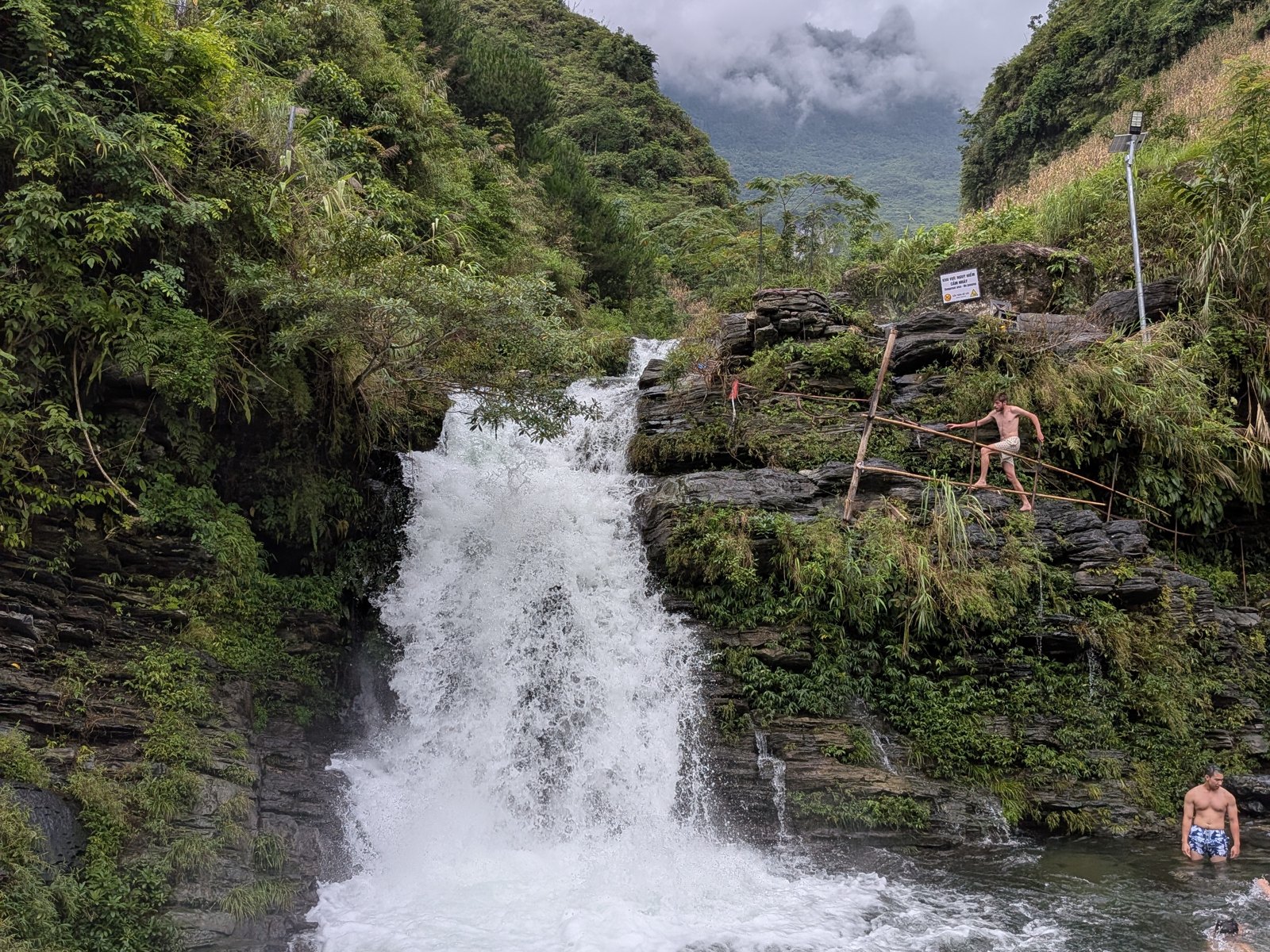
- Waterfalls at full flow. Du Gia Waterfall carries the most water from June to August, and the forest pool at the bottom is at its best for a swim. After a very heavy night of rain, the current is too strong and the water turns muddy, so your guide will call it on the day. Our complete Du Gia Waterfall guide has the safety rules.
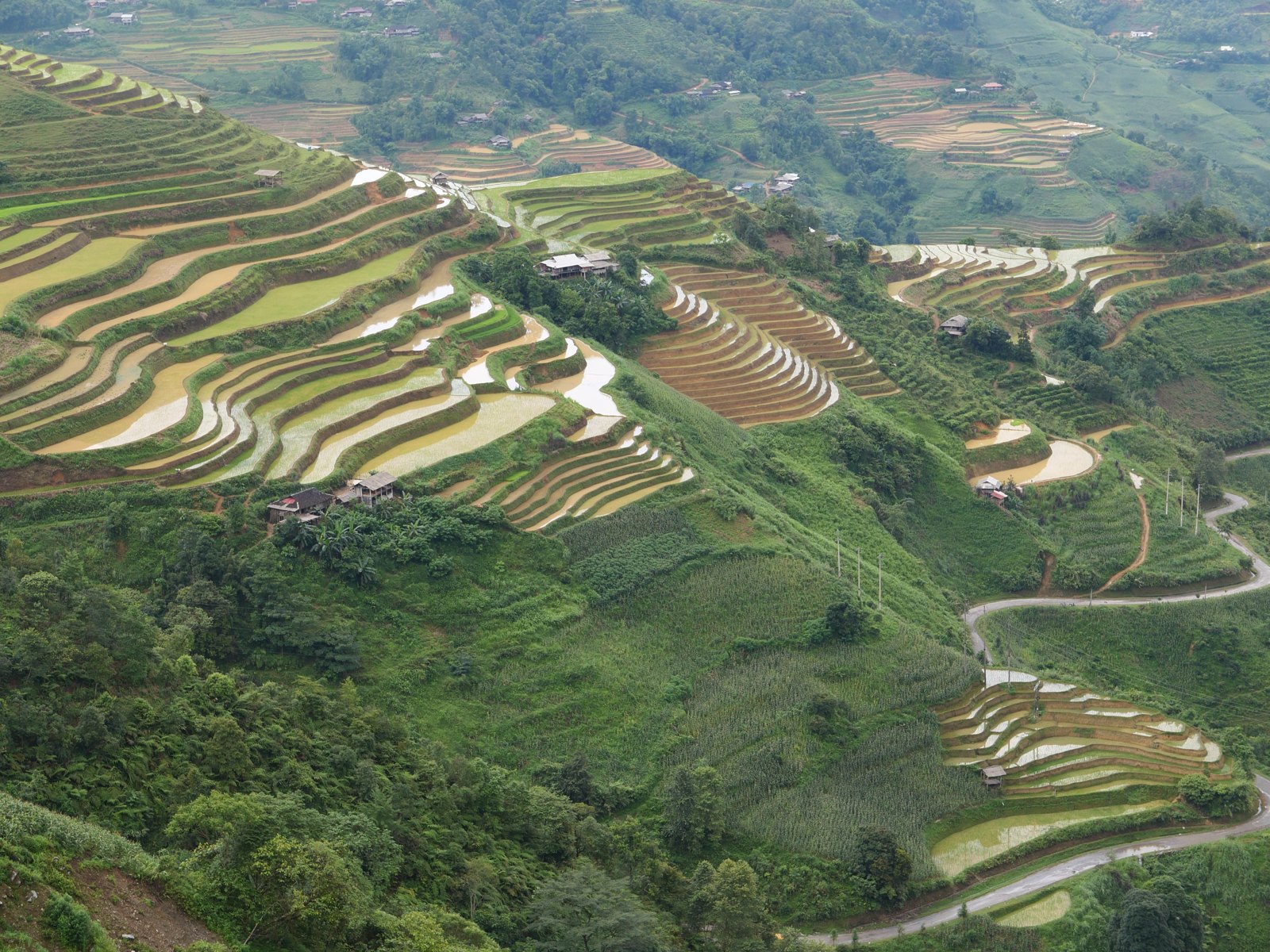
- Terraces holding water. The paddies were flooded and planted in late May and June, so in July they are a mosaic of water and young green rice. The golden harvest comes later; see our Ha Giang rice season guide for the September and October dates.
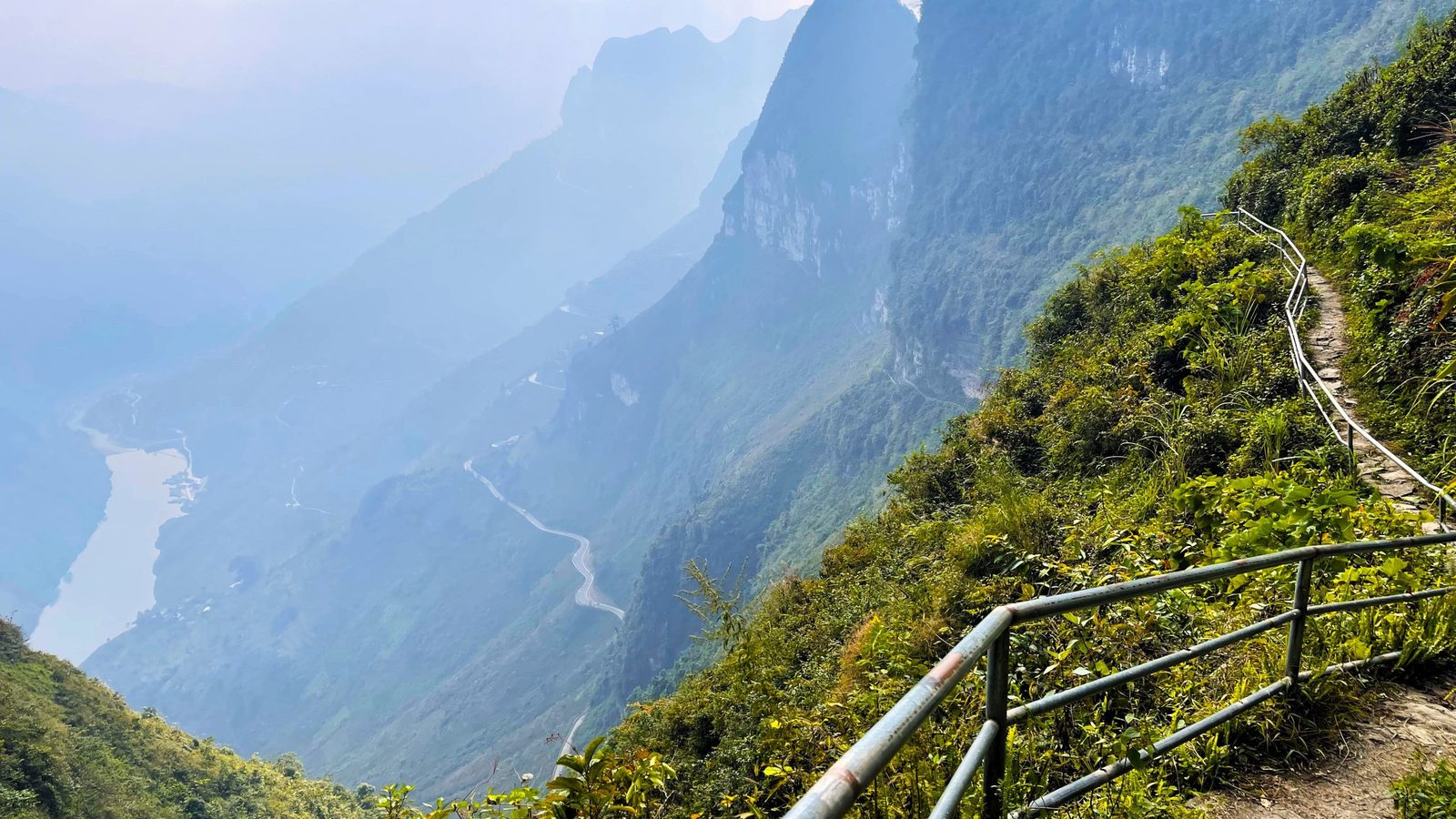
- A two-colour river. On a dry day the Nho Que River through Tu San Canyon is the jade green of the postcards. For a day after a big storm it runs brown and high. Both are real, and the brown version is a sight in its own right from the Ma Pi Leng viewpoints. The Nho Que boat trip usually runs, but it can be suspended for a day when the current is strong.
- Cloud theatre on the Ha Giang Loop in July. Dawn cloud seas in the valleys and storm fronts marching across the karst give the best drama of the year for photographers who are up early.
Is the Ha Giang Loop in July safe to ride?
Yes, with conditions. The rain itself is not the danger; what it causes is. The first drops turn the tarmac slick, storms wash gravel and mud across the bends, fog can sit on the high passes for an hour, and after a big downpour low fords can flood and the occasional slope can slide. None of that is unusual for a mountain road in the monsoon, and thousands of travellers ride the Ha Giang Loop in July safely every year.
What we do about it on our tours:
- We recommend an Easy Rider in July if it is your first time on the Loop. A local driver who rides these bends in the wet every week is the single biggest safety upgrade you can buy. Our Easy Rider vs self-drive comparison is honest about who should ride their own bike.
- Self-riders get a helmet plus body and knee protectors, and we do not offer self-drive on the 2-day tour because it covers 150 to 160 km a day. You also need a valid licence; for most foreigners that means an International Driving Permit under the 1968 Convention.
- Every guest is insured with BIC travel insurance up to 50,000,000 VND per incident, included in the price.
- Flooded fords are never crossed blind. If the guide cannot see the road surface, you wait. Flash floods on the Loop usually fall as fast as they rise.
- If we stop a tour for safety, because of a storm warning, a closed pass, a landslide or an official closure of the border area, you choose a free date change or a full refund of everything paid, whatever the notice period.
Families and anyone who simply does not want to ride the Ha Giang Loop in July in the rain have a third option: the same route in a private car. Our Ha Giang Loop by car guide explains who it suits and what it costs.
Is the Ha Giang Loop in July crowded?
On the road, the Ha Giang Loop in July is not crowded. July sits in the rainy, low-to-mid season, and the Loop is noticeably emptier than it is around Tet, the 30 April holiday or the golden-rice weekends of autumn. The nuance is where the people are. Seven in ten visitors to the region are Vietnamese, and July is the middle of the domestic school holiday, so the headline stops, Lung Cu Flag Tower, the Ma Pi Leng skywalk and the Nho Que boat pier, can be busy with family groups on Saturdays and Sundays. In the third quarter of 2026, July to September, Lung Cu Flag Tower recorded 93,704 visitors, 70% of them Vietnamese. Our Ha Giang Loop crowds guide has the month-by-month picture.
The international side is the opposite: July is the European summer holiday, so the hostels in Ha Giang city fill with first-time riders from Europe, and group tours sell out on popular departure dates. For the Ha Giang Loop in July we suggest booking a week or two ahead, keeping the 500,000 VND deposit to secure the date, and riding weekdays if you have the choice.
Which tour suits the Ha Giang Loop in July?
All our routes run on the Ha Giang Loop in July, but two fit the month especially well.
- Du Gia Waterfall, 4 days: the classic Loop plus the quiet back road south from Meo Vac to Du Gia, about 90 km on day 3, ending with a swim under the waterfall and a night in a Tay stilt-house homestay. In July the falls are at their fullest, which makes this the obvious choice for the month. Day 2 covers about 100 km, the 286 steps at Lung Cu and the Nho Que boat, ticket included.
- Dong Van and Ma Pi Leng, 3 days: the core Loop for riders short on time, with the big viewpoints ridden in the mornings and Bac Sum Pass on the way home.
- Classic private tours run the same lengths with your own group of up to 6 guests, a private en-suite room in the homestays and the option of a private car. Our Essential group tours take up to 10 guests.
Whatever the route, start on the night bus from Hanoi: it arrives in Ha Giang before dawn, you rest in a free dorm bed at Ali Hostel until the 08:00 meeting, and you ride the first morning while the sky is still clear. Fares and the cabin options are in our Hanoi to Ha Giang bus guide.
How much does the Ha Giang Loop in July cost?
There is no summer surcharge on the Ha Giang Loop in July at Ali. The +10% holiday supplement applies only to Vietnamese public-holiday dates and the +30% supplement only to Tet, neither of which falls in July, so the listed price is the price you pay. Every tour price below includes 8% VAT, the border-area permit, one free dorm night at Ali Hostel before departure, pickup within Ha Giang city, homestays with breakfast and dinner, lunches, 1.5 litres of drinking water per person per day, fuel, safety gear, entrance tickets on the itinerary and the 50,000,000 VND travel insurance.
- Dong Van and Ma Pi Leng, 3 days: Easy Rider 4,250,000 VND (about $163) · ride by yourself 3,250,000 VND (about $125).
- Du Gia Waterfall, 4 days: Easy Rider 5,550,000 VND (about $213) · ride by yourself 4,150,000 VND (about $160).
- Classic White Cliff and Sky Path, 3 days: Easy Rider 5,250,000 VND (about $202) · private car 6,850,000 VND (about $263).
- Classic Du Gia Valley, 4 days: Easy Rider 6,950,000 VND (about $267) · private car 8,890,000 VND (about $342).
- Extras: sleeper bus from Hanoi 250,000 VND one way, VIP single cabin 350,000 VND; a dorm bed at Ali Hostel 100,000 VND a night; deposit 500,000 VND per guest, the balance paid before departure.
USD figures are a conversion at 26,000 VND. For the full breakdown of what a Loop costs with and without a tour, read our Ha Giang Loop cost guide.
What should you pack for the Ha Giang Loop in July?
Pack for the Ha Giang Loop in July with heat, rain and a cool homestay evening in mind, all in one small bag. Our rental bikes come with a raincoat and luggage straps; on a tour, your big bag stays free of charge at Ali Hostel and you ride with a soft day bag.
- A real rain jacket with a hood, plus a cheap poncho you can throw over everything. Ponchos are easy to buy in Ha Giang city if you forget.
- Dry bags or zip bags for your phone, passport, camera and spare clothes. Humidity gets into everything.
- Quick-dry clothes, two sets, and sandals with a heel strap for the waterfall and the wet homestay yards.
- Swimwear and a quick-dry towel if your route includes Du Gia. Guests forget this every single week.
- Sunscreen and sunglasses. The sun between storms is fierce, and glare off wet tarmac is tiring.
- Insect repellent for homestay evenings and a light warm layer, because Du Gia and Dong Van nights are cooler than the city.
- A power bank and offline maps. Signal is weak along the route and in the villages.
The full year-round list, with what to leave at home, is in our Ha Giang Loop packing list.
Ha Giang Loop in July vs June vs August
The three summer months share the same pattern, hot valleys, green hills, afternoon storms, but the numbers from the Ha Giang city station separate them:
- June: daily mean 27.7°C, 430.2 mm of rain over 20.8 days, 132.5 sunshine hours. Terraces are being flooded and planted, the greenest start to the season. See our Ha Giang Loop in June guide.
- July: daily mean 27.8°C, 545.3 mm over 24.1 days, 156.5 sunshine hours. The wettest month, the fullest waterfalls and the deepest green.
- August: daily mean 27.6°C, 414.7 mm over 21.5 days, 172.1 sunshine hours. Slightly drier and sunnier, with the rice beginning to turn in the west by the end of the month and the typhoon risk still present.
- September: the rain tails off and the terraces turn gold. If your dates are flexible and you are nervous about rain, our Ha Giang Loop in September guide explains why it is many riders’ favourite month.
For the whole year in one place, use our Ha Giang weather by month overview. The short version: choose the Ha Giang Loop in July for waterfalls, green and quieter roads; choose September for colour and dry tarmac.
FAQ: Ha Giang Loop in July
Is July a good time to do the Ha Giang Loop?
Yes, for travellers who can accept rain. The Ha Giang Loop in July gives you the greenest mountains, full waterfalls and emptier roads than spring; the price is a near-daily afternoon storm and the need for one flexible day in case a typhoon closes a pass.
Does it rain every day on the Ha Giang Loop in July?
Not all day, but most days see rain. The city station averages 24 rainy days in July. The usual pattern is a dry, bright morning and a storm of one to three hours after lunch, which is why our tours leave at 09:00 and ride the passes first.
Is the Nho Que River boat trip running on the Ha Giang Loop in July?
Usually, yes. Boats can be suspended for a day after very heavy rain when the current is strong, and the water may be brown rather than green for a day after a storm. Your guide checks on the morning of the ride.
What happens if a storm cancels my Ha Giang Loop in July?
If we stop the tour for safety, because of a storm warning, a closed pass, a landslide or an official closure, you choose a free date change or a full refund of everything paid, with no deductions and whatever the notice period. Once a tour has started, the guide changes the route or the order of stops and arranges equivalent alternatives.
How hot is the Ha Giang Loop in July?
Ha Giang city averages highs of 32.6°C and nights around 24.7°C, with humidity near 86%. On the Dong Van plateau, 1,000 to 1,600 m higher, days are several degrees cooler and homestay evenings in Du Gia or Dong Van can feel genuinely fresh.
Should I self-drive or take an Easy Rider in July?
For a first Loop in the wet season we recommend an Easy Rider. Self-riding is for confident riders with mountain experience and a valid licence, usually a 1968-Convention International Driving Permit, and it is not offered on our 2-day tour.
Can I swim at Du Gia Waterfall on the Ha Giang Loop in July?
Yes. June to August bring the most water and the best swimming. Skip the swim after a night of heavy rain, when the current strengthens and the pool turns muddy; your guide will tell you on the day. Bring swimwear, a quick-dry towel and sandals with a heel strap.
Plan your Ha Giang Loop in July with Ali
The Ha Giang Loop in July is not the easy, dry-road Loop of October. It is louder, greener and wetter, and the riders who come back most excited are usually the ones who rode it in summer, swam under a full waterfall and watched a storm roll across the karst from a dry café. Ride mornings, keep a spare day, pack dry bags and let a local driver handle the wet bends.
Tell us your Ha Giang Loop in July dates and how you want to ride, Easy Rider, self-ride or private car, and we will confirm availability within the day. Book directly on the Du Gia Waterfall 4-day tour page, browse all Ha Giang Loop tours, or message us on WhatsApp or Zalo at (+84) 787 652 333 or by email at info@hagiangalitravel.com. Ha Giang Ali Travel, To 23 Me Thuong, Ha Giang city.