Ha Giang happy water is corn wine: a clear, home-distilled spirit made by Hmong and other highland families from maize and a leaf yeast, poured into small cups at almost every homestay dinner on the Loop. It looks like water, it tastes smooth, and it is far stronger than beer, which is where the nickname and most of the trouble come from. Enjoy a cup or two with your hosts, learn how to say no politely, and never ride a motorbike with any of it still in your system: in Vietnam the legal alcohol limit for riders is zero.
We are Ha Giang Ali Travel, a licensed tour operator with our own hostel in Ha Giang city, and we sit at those homestay tables with our guests several nights a week. This guide explains what Ha Giang happy water actually is, how strong it can be, how the toasts work, and the simple rules that keep a great evening from turning into a wasted next day. Corn wine is one small thread in the region’s much bigger story, so if you want the wider picture, start with our guide to Ha Giang’s indigenous cultural diversity.
Ha Giang happy water: the short answer
- What it is: rượu ngô, corn wine, distilled at home or in small village cooperatives across the Dong Van Karst Plateau.
- Where you meet it: homestay dinners, weekly ethnic markets, festivals and any evening when hosts and guests sit down together.
- How strong: spirit strength, not beer strength. A well-known cooperative in Thanh Van, Quan Ba, bottles it at 25 and 29 percent, and home batches vary.
- Etiquette: small cups, shared toasts, and it is fine to sip, slow down or refuse.
- The hard rule: no alcohol at all before riding. Vietnam fines any detectable level, and travel insurance will not pay for an accident with alcohol involved.
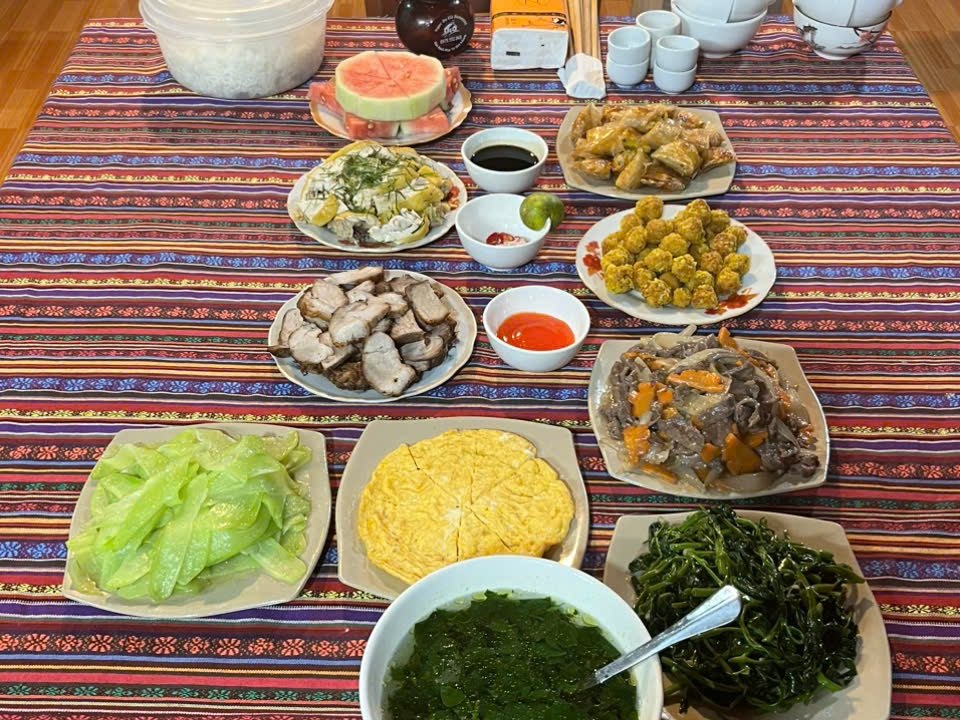
What is Ha Giang happy water?
“Happy water” is the name travellers and guides gave to corn wine, the everyday spirit of the far north. On the rocky plateau around Quan Ba, Yen Minh, Dong Van and Meo Vac, rice is hard to grow, so maize became the staple crop. Families eat it as steamed corn “rice”, feed it to their animals and distil the rest into wine, which we cover alongside the region’s other dishes in our Ha Giang food guide.
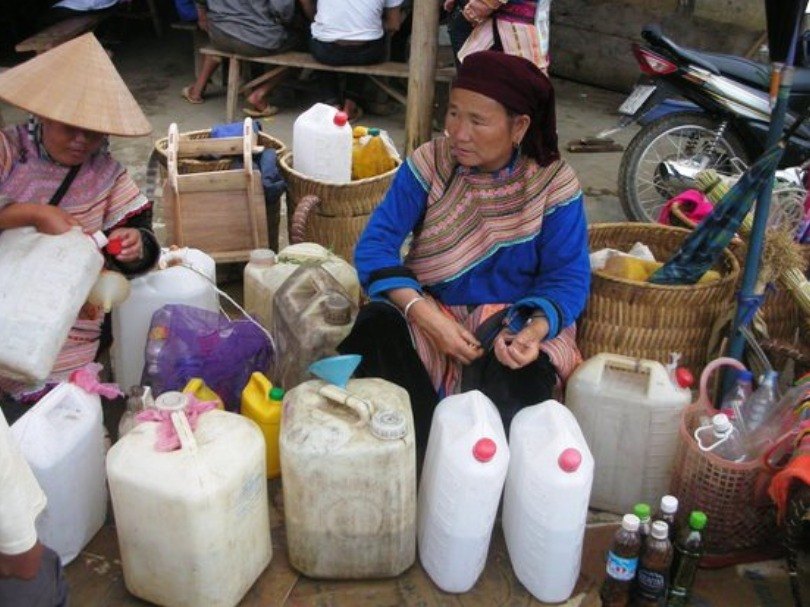
The drink is crystal clear, which is half the joke behind the name: it is poured from plastic bottles and jerrycans that look exactly like drinking water. The other half is what it does to a dinner table. Corn wine is how highland families welcome visitors, close a market deal, celebrate a wedding or end a long day in the fields. When a host fills your cup, they are offering hospitality, not a party drink, and Ha Giang happy water is best understood that way.
How is corn wine made?
The basic method has not changed much in generations. Dried maize is soaked and cooked, mixed with a homemade yeast, left to ferment, then distilled over a wood fire. The yeast is the secret. Many families make a leaf yeast, men lá, from forest herbs, and the recipe is handed down inside the family. The cooperative in Thanh Van commune, Quan Ba, says its leaf yeast uses 36 kinds of forest leaves, and it distils the wine in wooden stills.
Thanh Van corn wine has been put forward under Vietnam’s “One Commune One Product” (OCOP) programme. Most of the corn wine you will taste, though, comes from your homestay family or their neighbours, made in the same way on a much smaller scale.
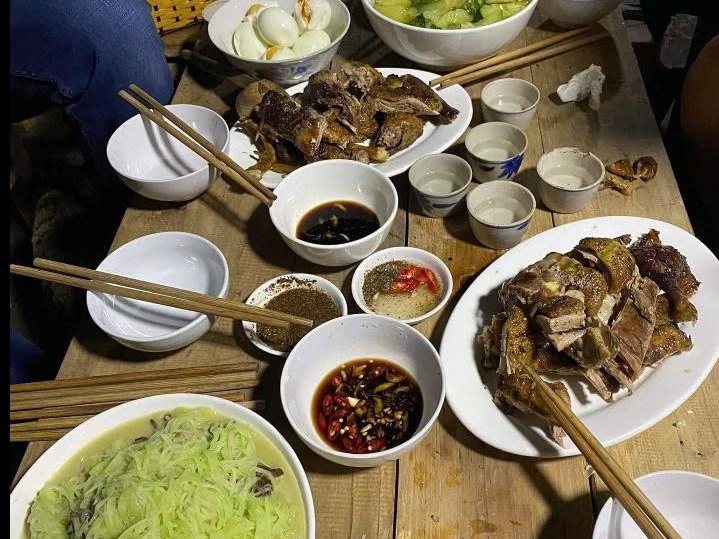
How strong is Ha Giang happy water?
Ha Giang happy water is strong enough to treat like vodka, not like beer. The bottled products from the Thanh Van cooperative are labelled 25 and 29 percent alcohol, roughly five times the strength of a Vietnamese lager. Home-distilled Ha Giang happy water has no label at all, and the strength changes from family to family and from batch to batch, so you never really know what is in the cup.
That is why it catches people out. The taste is mild, the cups are small and the toasts come quickly, so four or five rounds go down before anyone notices. The altitude, a long day on the bike and a late dinner make it hit harder. Our rule of thumb for guests: count your cups, eat before you drink, and drink tea or water between toasts.
Where will you be offered Ha Giang happy water?
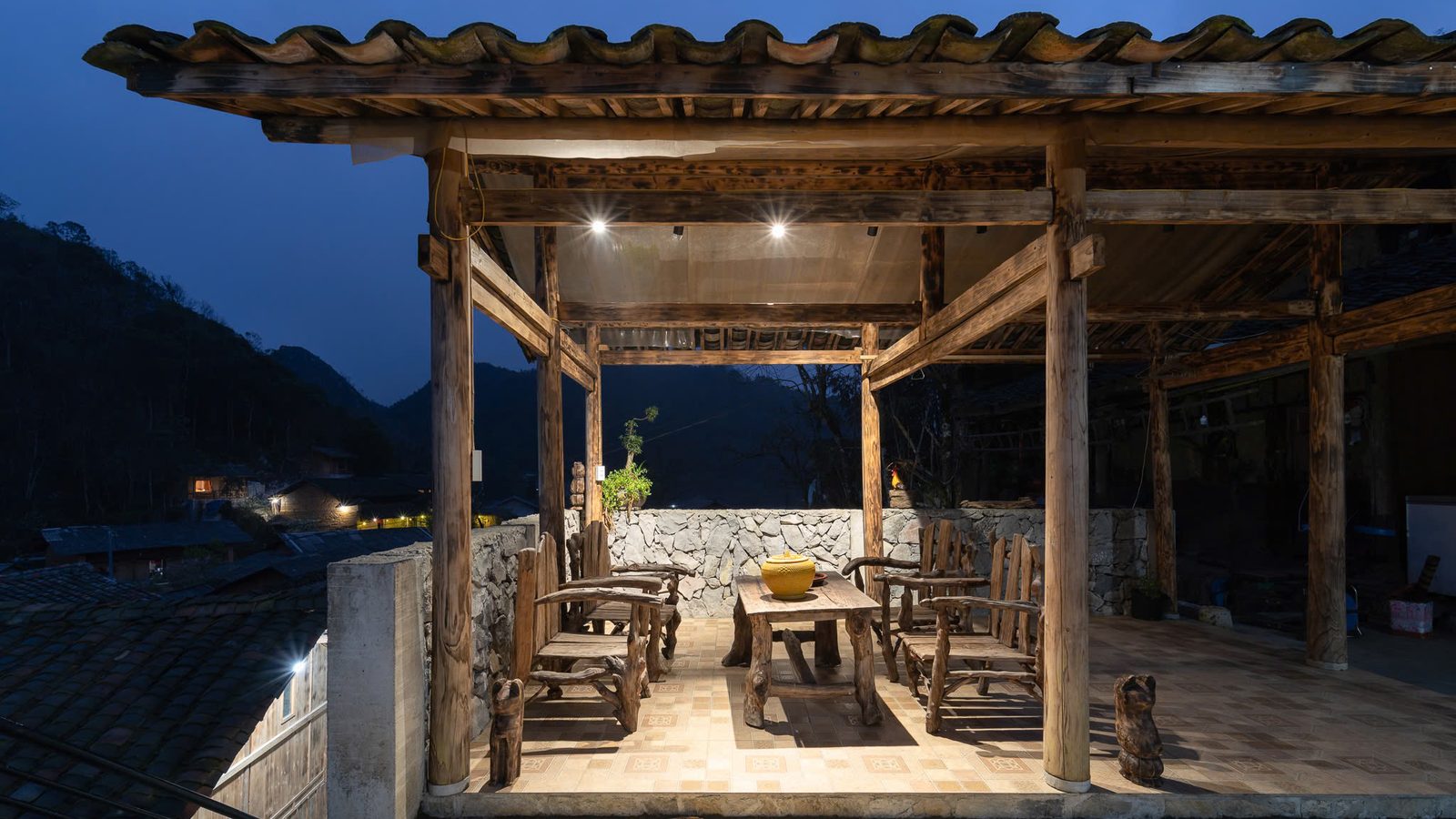
- Homestay dinners: most hosts offer a cup of corn wine with the evening meal. On our tours dinner at the homestay is included; drinks beyond drinking water are not, so beer or extra bottles are paid for separately in cash. Our guide to a Ha Giang Loop homestay night explains the rest of the evening.
- Weekly markets: corn wine is sold by the litre from jerrycans, and men gather around bowls of thang co and a shared bottle. Our guide to Ha Giang’s local markets lists which towns hold markets on which day.
- Festivals and family events: weddings, new houses and Lunar New Year all come with Ha Giang happy water on the table, and visitors are sometimes invited to join.
- Evenings in Dong Van: the old quarter has cafés and bars where travellers try it in a more relaxed setting; see our Dong Van night market guide.
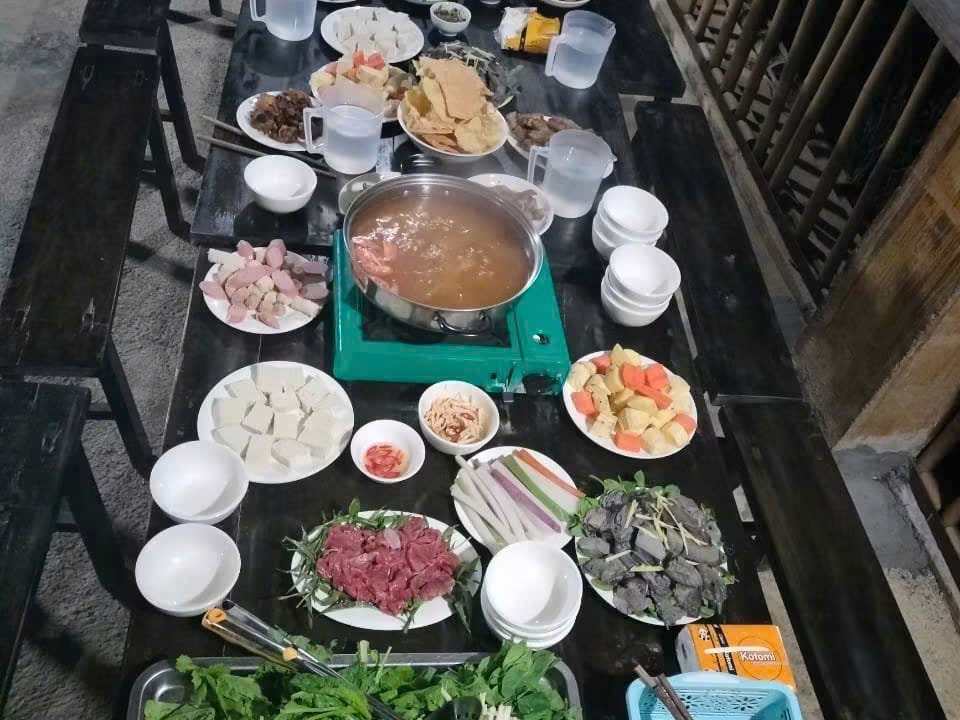
How do you toast with Ha Giang happy water?
Toasting is shared, not solo. In Vietnam people rarely sip alone; someone raises a cup, everyone joins, and the table drinks together. A few habits will make you look like you have done this before:
- The count: the classic call is “Một, hai, ba, dô!” (one, two, three, cheers). Shout the “dô” with everyone else.
- “Trăm phần trăm”: literally “one hundred percent”, meaning empty the cup. You will hear it often. You do not have to follow it every time; a sip is accepted.
- Both hands for elders: when the grandfather or the host toasts you, hold your cup with two hands, or with one hand supporting the other wrist. It is a small sign of respect that hosts notice.
- Let others pour: people usually fill each other’s cups rather than their own. If you want to slow down, simply leave your cup partly full.
- Eat between rounds: a host will keep adding food to your bowl. Accept it, it is the best protection you have.
If a table turns into a long party, your guide is your best friend. Tell them early how much you want to drink and they will steer the toasts for you in a way the family is comfortable with.
How do you say no to Ha Giang happy water politely?
Refusing Ha Giang happy water is completely normal, and no good host will be offended. The trick is to refuse warmly rather than awkwardly:
- Use the phrase: “Không, cảm ơn” (no, thank you), with a smile and your hand placed gently over the top of your cup.
- Give a reason people respect: “I am riding tomorrow”, medication, health or religion. These end the discussion immediately.
- Join the toast anyway: raise a cup of tea or water and say “dô” with everyone. You are still part of the moment, which is what the host really wants.
- Stop clearly: after your last cup, turn it upside down or set it aside and say you are finished. A half-hearted “maybe one more” usually means three more.
Riding after a night of corn wine is on our list of Ha Giang Loop mistakes for a reason: it is the one that turns a good trip into a bad one fastest.
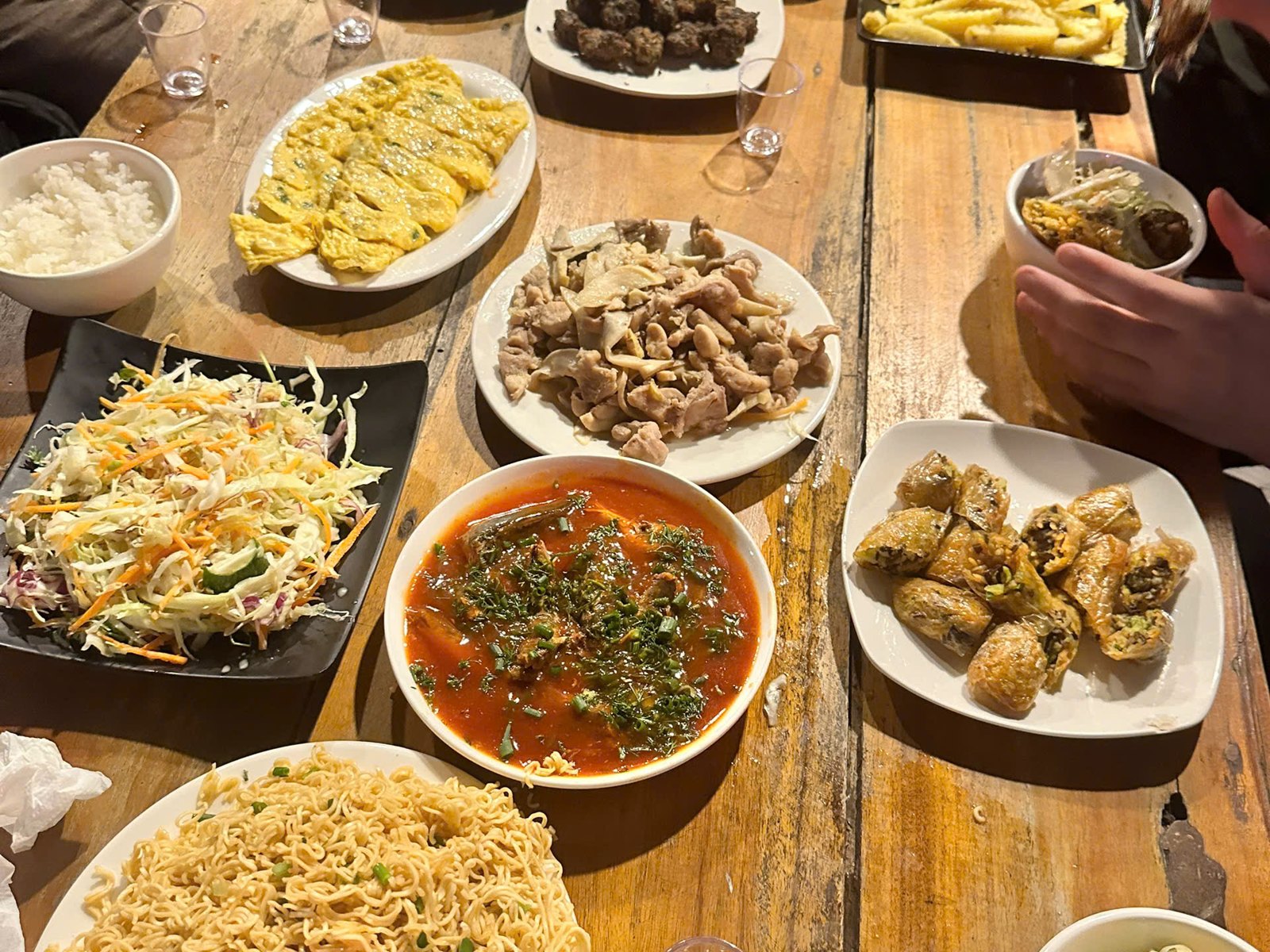
Can you ride after drinking Ha Giang happy water?
No. This is the one part of the evening with no flexibility, for three reasons.
1. The law is zero tolerance. Under Decree 168/2024/ND-CP, in force since 1 January 2025, a motorbike rider with any measurable alcohol is fined. The lowest level, up to 50 mg per 100 ml of blood or 0.25 mg per litre of breath, costs 2 to 3 million VND; the next level 6 to 8 million VND; the highest 8 to 10 million VND plus a 22 to 24 month licence suspension. You can read the official breakdown on this Vietnamese government legal information page.
2. Insurance stops covering you. Every Ali tour includes travel insurance with BIC for each guest, up to 50,000,000 VND. The policy does not pay out for an accident where the rider had alcohol in their system. One evening of Ha Giang happy water can turn a covered accident into one where you pay every hospital bill yourself.
3. The morning after counts. Corn wine drunk late at night can still be in your blood when you start riding the next morning, and mornings on the Loop often lead straight into mountain passes such as Ma Pi Leng. If you drank heavily, tell your guide; it is always better to swap to the back of an Easy Rider’s bike for the morning than to ride tired and over the limit.
Our own team follows the same rule: our Easy Riders and guides do not drink at all while they are leading a group, not even one cup. For the full picture of road risks, read our honest answer to is the Ha Giang Loop safe.
Easy Rider or self-ride if you want to enjoy the evenings?
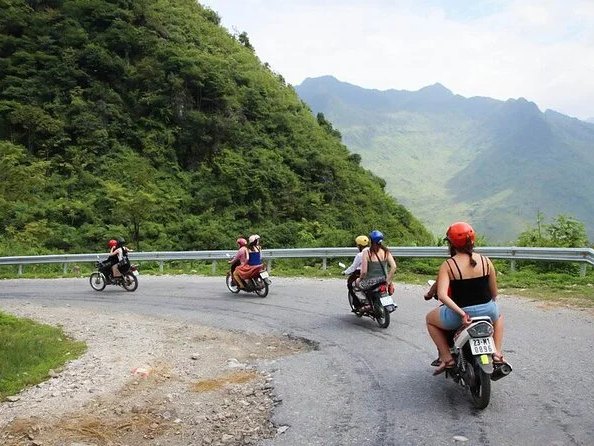
If sharing Ha Giang happy water with your hosts is part of the trip you imagine, the way you ride matters. With an Easy Rider, a local driver who does not drink rides the bike and you sit behind, so a moderate evening at the table does not put the next day at risk. If you ride by yourself, you carry the full responsibility: one or two small cups early in the evening at most, or none.
On our Dong Van & Ma Pi Leng 3-day tour, the price is 4,250,000 VND (about $163) per person with an Easy Rider, or 3,250,000 VND (about $125) riding by yourself. Both include the border permit, 8% VAT, homestay nights with home-cooked dinners and BIC travel insurance. Our Ha Giang Loop cost guide compares every option in detail.
Can you buy Ha Giang happy water to take home?
Yes. Weekly markets and village shops sell Ha Giang happy water, often refilled into plastic bottles, and cooperatives such as Thanh Van sell labelled bottles. A few practical tips:
- Buy sealed bottles if you are carrying them far. Market plastic bottles tend to leak on a bumpy bus.
- Check your airline before packing spirits in checked luggage; rules on alcohol and liquids differ by airline and country.
- Ask your host first: buying a bottle from the family you stayed with is a nice way to support them, and they will tell you whose wine is best in the village.
FAQ: Ha Giang happy water
Is Ha Giang happy water safe to drink?
Ha Giang happy water from a family you know or a registered cooperative is what locals drink every day. Avoid unlabelled wine from unknown roadside sellers, drink it in moderation, and stop if it tastes harsh or chemical.
Why is it called Ha Giang happy water?
Because it is as clear as water, it is poured from bottles that look like water, and a few cups make everyone at the table very cheerful. Locals simply call it rượu ngô, corn wine.
Do I have to drink Ha Giang happy water if my host offers?
No. Say “không, cảm ơn”, cover your cup with your hand and join the toast with tea. Hosts in Ha Giang meet travellers every week and are used to guests who do not drink.
Is Ha Giang happy water included in the tour price?
On our tours, homestay dinners and drinking water are included; other drinks are not. Many hosts offer a cup of corn wine with dinner as a welcome, and anything more you buy is paid in cash at the homestay.
Can my Easy Rider drink with me?
Not on an Ali tour. Our Easy Riders and guides do not drink while they are leading a group, because they are responsible for your safety on the road the next morning.
Raise a cup, then ride with a clear head
Ha Giang happy water is part of what makes a homestay night feel like being welcomed into a family rather than checking into a room. Enjoy the toasts, learn the words, eat everything your host puts in your bowl, and keep the bike for the morning when your head is clear.
Message us on WhatsApp or Zalo at (+84) 787 652 333 or email info@hagiangalitravel.com and we will help you choose between an Easy Rider and riding by yourself, and pick the homestays where the evenings are best. Compare all Ha Giang Loop tours at hagiangalitravel.com. Ha Giang Ali Travel, Group 23, Me Thuong, Ha Giang 1 Ward.