
Ha Giang food is simple mountain cooking built around corn, rice, smoked meat and herbs — and the best way to taste it is at a family table in a homestay, not in a restaurant. The dishes worth seeking out are Dong Van steamed rice rolls with hot broth, grilled buckwheat cake, five-colour sticky rice, smoked buffalo, black chicken hotpot and a glass of corn wine. A few famous specialities, like thang co stew, are an acquired taste, so it helps to know what you are ordering before you sit down.
We run tours and a hostel in Ha Giang city, and our guests eat three meals a day on the road with local families and village kitchens. This guide shares what actually lands on the table, which dishes are worth a detour, where to find them, and the small table manners that make hosts smile.
What Is Ha Giang Food Like?
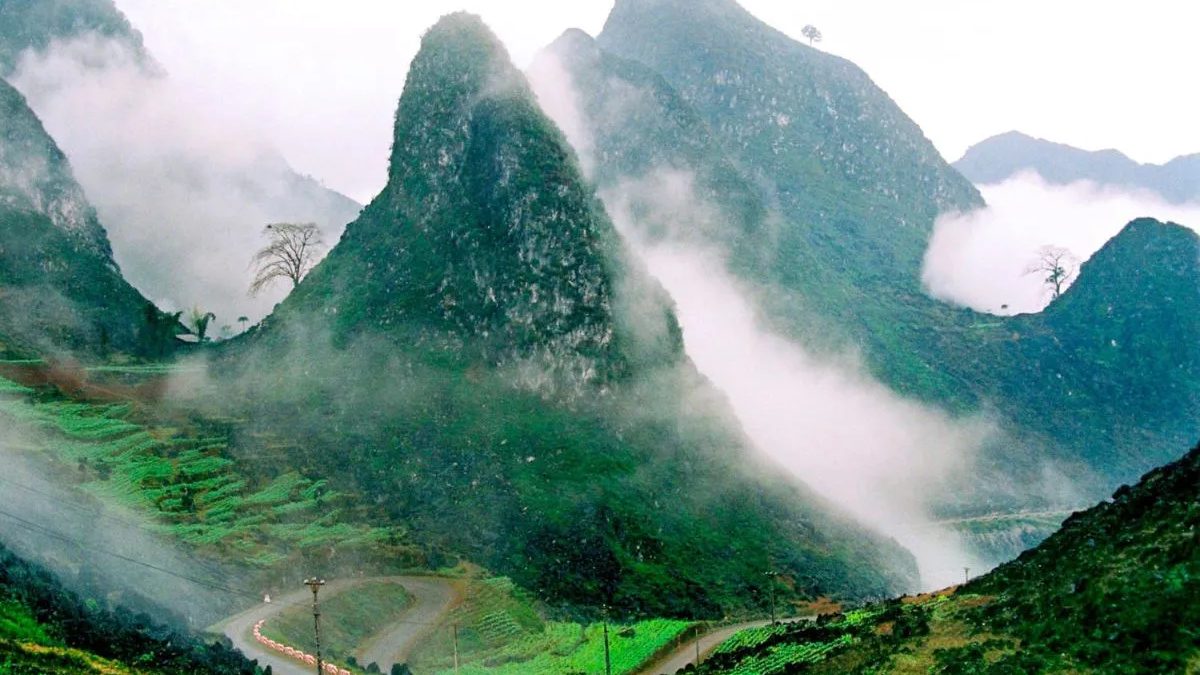
Ha Giang sits on a high limestone plateau on the border with China, where rice paddies are rare and winters are cold. That geography shapes Ha Giang food more than anything else. Corn grows where rice cannot, so the Hmong people turned it into steamed corn “rice” and strong corn wine. Meat is smoked above the kitchen fire so it keeps through winter. Soups and hotpots are everywhere because the evenings are chilly for much of the year.
The province is home to many ethnic groups — Hmong, Tay, Dao, Lo Lo, Giay, Nung and more — and each adds its own dishes to the Ha Giang food map. The Tay in the valleys cook sticky rice and grilled fish; the Hmong on the plateau cook corn, stews and black chicken. You can read more about one of these communities in our guide to the Tay people of Ha Giang.
One reassuring point for first-timers: Ha Giang food is rarely spicy. Chilli usually comes on the side as fresh slices or a dipping sauce, so you decide the heat.
10 Ha Giang Food Dishes You Should Try
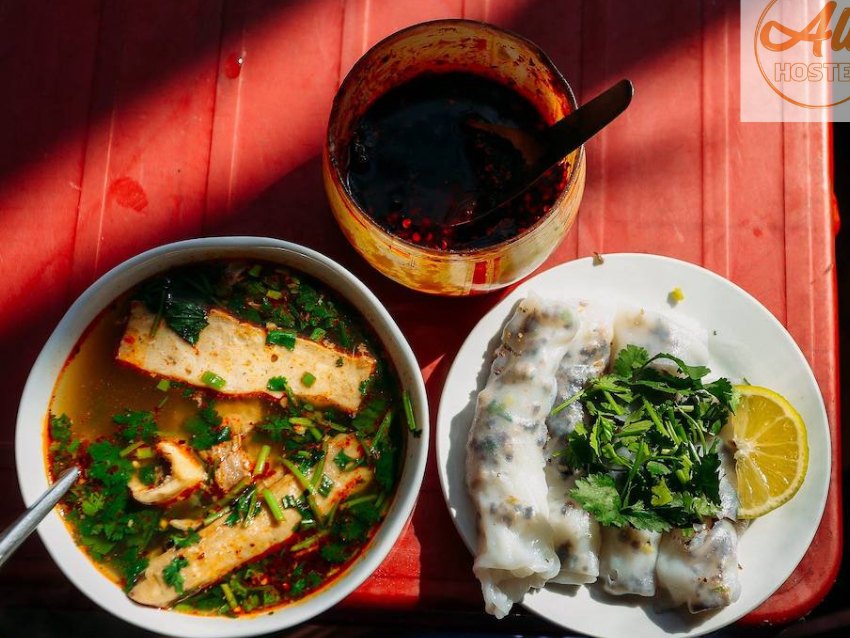
1. Banh cuon with hot broth (Dong Van rice rolls)
In most of Vietnam, steamed rice rolls are dipped in cold fish sauce. In Ha Giang they come with a bowl of hot pork-bone broth, often with a little pork and herbs floating in it. You dip the soft rolls into the broth — for many guests this is their favourite Ha Giang food breakfast. The classic place to try it is a breakfast stall in Dong Van Old Quarter before you ride Ma Pi Leng.
2. Banh tam giac mach (buckwheat cake)
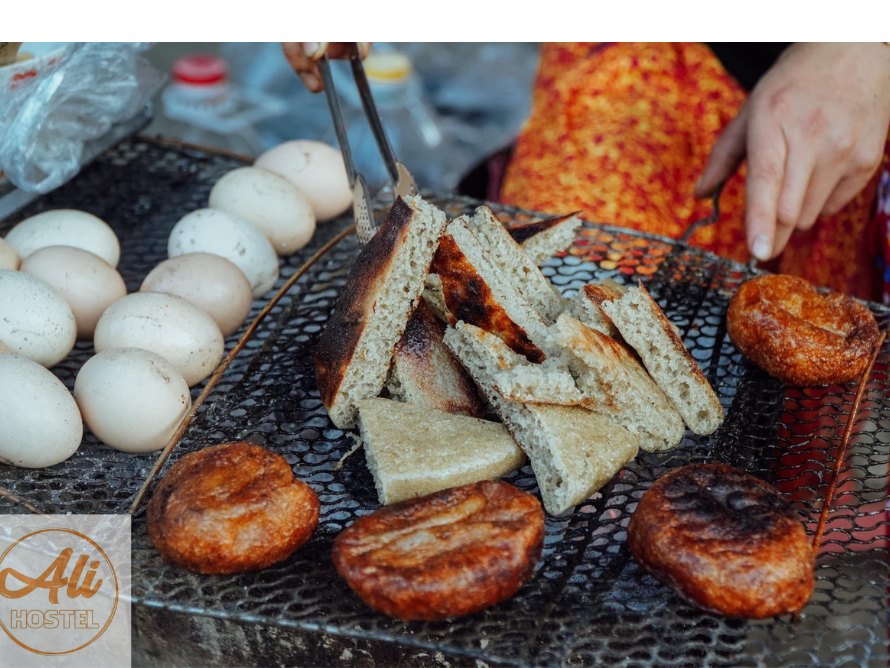
Buckwheat is the plant behind Ha Giang’s famous pink flower fields. The seeds are ground into flour and made into thick cakes that are grilled over charcoal until crisp outside and chewy inside. It is the Ha Giang food you smell before you see: you will find the cakes on grills in Dong Van, around Lung Cu and at roadside stalls, especially during the buckwheat flower season in October and November.
3. Chao au tau (au tau root porridge)
This thick, slightly bitter rice porridge is a night-time favourite in Ha Giang city. It is made with sticky rice, pork trotter and au tau, a mountain root that is toxic when raw and only safe after long soaking and many hours of simmering. Locals swear it warms you up and helps you sleep. Our honest advice for this Ha Giang food: order it only at busy, established shops that specialise in it — never try a home or roadside version from someone you do not know.

4. Men men (steamed corn “rice”)
Men men is the everyday staple of the Hmong on the stone plateau. Dried corn is ground, dampened and steamed twice until it becomes fluffy and grainy, a bit like couscous. It is eaten with soup, vegetables or meat in place of rice. It is plain on its own, but tasting this humble Ha Giang food tells you a lot about how people survive on land where rice will not grow.

5. Thit trau gac bep (smoked buffalo)
Strips of buffalo meat are marinated with spices such as mac khen (a wild pepper) and ginger, then hung above the kitchen fire for weeks. The result is dark, chewy and smoky, and it is usually torn into thin threads and dipped in chilli salt. It is also the most popular Ha Giang food souvenir: sealed packs are sold in shops in Ha Giang city and at the markets. Buy from a shop with clear labels rather than an anonymous bag.

6. Xoi ngu sac (five-colour sticky rice)
Tay families colour sticky rice with leaves, flowers and roots — purple, red, yellow, green and white — then steam it together. Each colour carries a meaning linked to the five elements, and the dish appears at festivals, weddings and market days. It is naturally vegetarian, filling and beautiful on the table.
7. Lau ga den (black chicken hotpot)
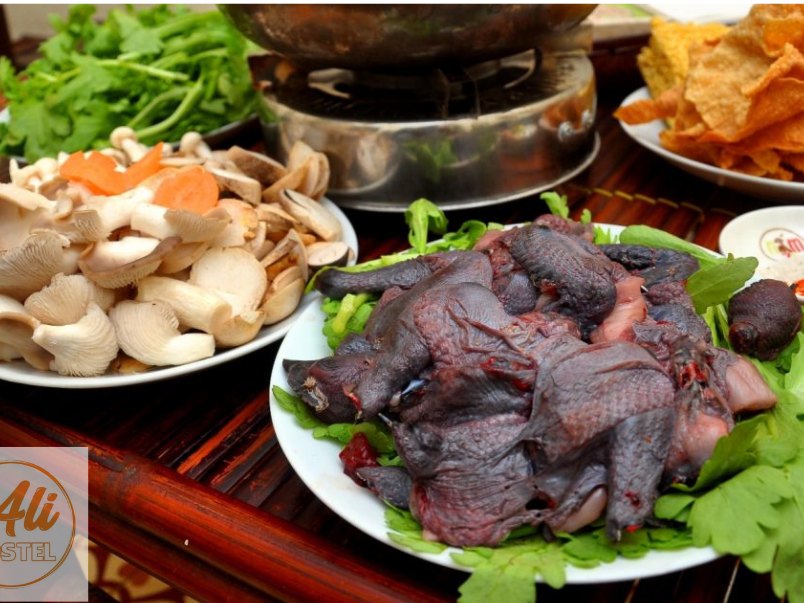
The Hmong black chicken has dark skin and dark bones, and locals prize it for its firm meat. In Dong Van and Meo Vac it is cooked as a hotpot with mushrooms, herbs and greens, shared around the table on a cold night. It is a good Ha Giang food choice for a group dinner when you want something more special than the set meal.
8. Thang co (Hmong market stew)
Thang co is the most famous — and most divisive — Ha Giang food. It is a strong stew traditionally made from horse meat and offal, simmered in a huge pan at the weekly markets while men gather around it with corn wine. It is part of market culture, but many Western travellers find the smell and texture challenging. On our tours we never serve thang co unless a guest asks for it. If you are curious, the local markets in Ha Giang are the place to try a small bowl.
9. Ruou ngo (corn wine)
Corn wine is distilled in almost every Hmong village, and the village of Thanh Van in Quan Ba is especially known for it. At homestays it is poured in small cups with a lot of toasting. It is strong, and it is the one Ha Giang food-and-drink tradition that needs a firm rule: never ride after drinking. Apart from the danger, alcohol cancels your travel insurance — we explain why in our guide to common Ha Giang Loop mistakes.
10. Shan Tuyet tea
To finish a meal, many families pour green tea made from old Shan Tuyet tea trees that grow wild on the misty slopes. It is smooth, fragrant and a lovely gift to take home. Our Ha Giang tea guide explains where the ancient trees grow and how the Dao make the tea.
What Ha Giang Food Do You Eat on a Loop Tour?
On a tour you will not hunt for restaurants — meals are arranged for you. From our own tour kitchens, here is what a typical day looks like:
- Breakfast: before departure at our hostel in Ha Giang city, then at your homestay on the following mornings (often eggs, bread, noodles or steamed buns).
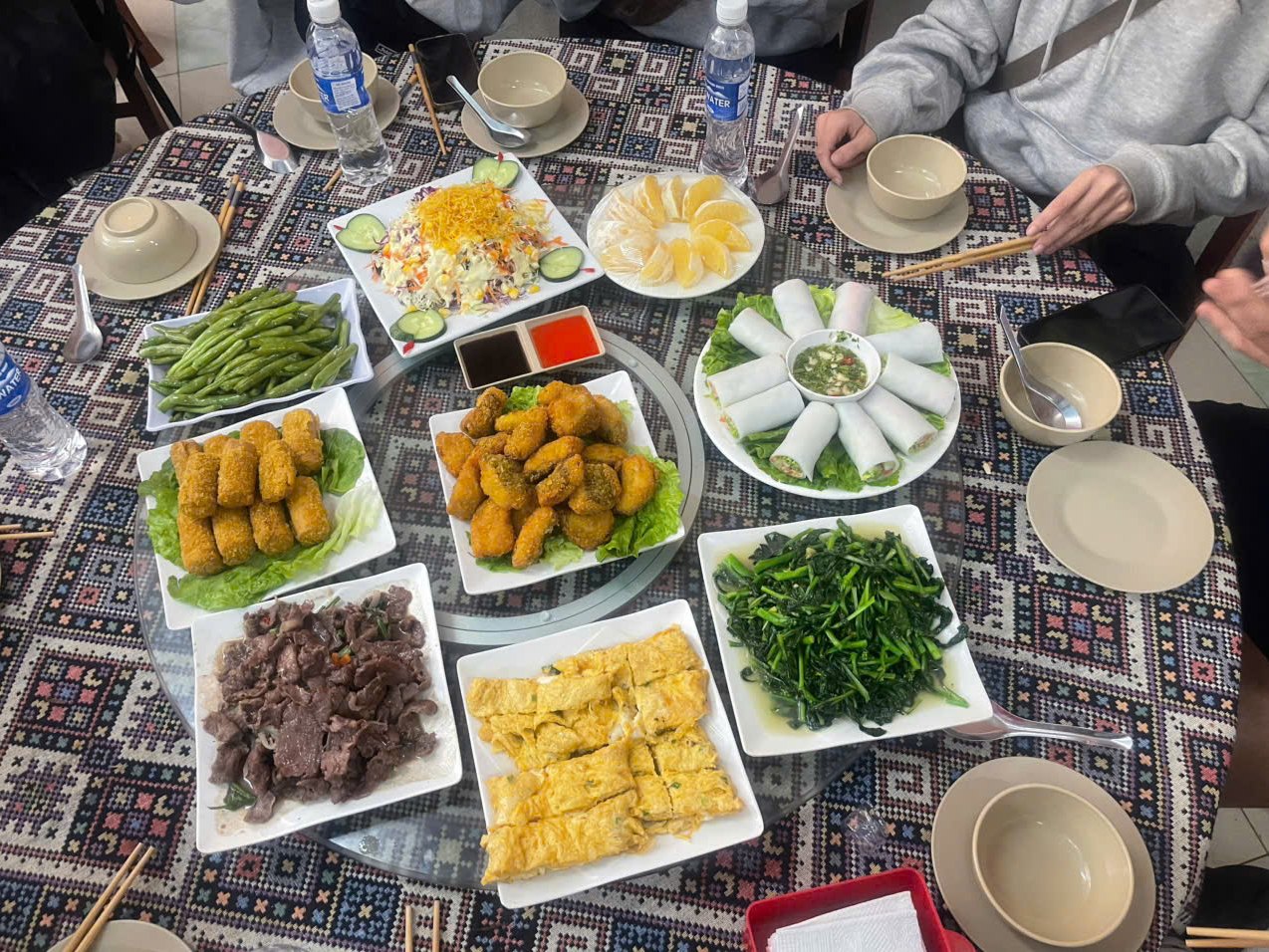
- Lunch: a Vietnamese set meal at a local restaurant on the route — rice, a meat or fish dish, stir-fried vegetables and soup, served on a shared tray.
- Dinner: home cooking by the homestay family, eaten together at one table. This is where you taste real Ha Giang food and meet your hosts — for most guests it is the highlight of the day.
For example, our 3-day Essential Loop includes 3 breakfasts, 3 lunches and 2 dinners. Vegetarian meals and other dietary needs can be arranged — just tell us when you book so we can brief each kitchen before you arrive, rather than on the day. You can compare what is included in each tour on our Ha Giang tours page, and see how meals fit into a trip budget in our Ha Giang Loop cost breakdown.
Where to Find the Best Ha Giang Food
- Ha Giang city — the best place for chao au tau in the evening, smoked-buffalo shops and a wider choice of restaurants before or after the Loop.
- Dong Van Old Quarter — banh cuon for breakfast, buckwheat cakes and grilled skewers at the Dong Van night market.
- Weekly ethnic markets — thang co, corn wine, sticky rice and fresh produce, with the best atmosphere early in the morning.
- Homestays — family cooking, home-grown vegetables and, in the valleys of Hoang Su Phi, meals looking out over the rice terraces. See our Hoang Su Phi homestay guide.
For a wider view of what to see around these food stops, the official Vietnam National Authority of Tourism guide to Ha Giang is a useful background read.
Table Manners: How to Eat Like a Guest, Not a Tourist
- Wait for the host or the oldest person to start eating before you do.
- Do not stand chopsticks upright in your rice bowl — it looks like incense at a funeral altar.
- Take food from the shared plates a little at a time; it is fine to go back for more.
- You can say no to corn wine. A smile, a hand over your cup and “I am riding tomorrow” is understood everywhere.
- Say thank you to the cook — “cam on” — at the end of the meal. It means a lot.
Tips for Eating Safely in Ha Giang
- Choose busy Ha Giang food stalls where dishes are cooked fresh and hot in front of you.
- Drink bottled or boiled water and tea; avoid tap water.
- Only eat au tau porridge at established specialist shops.
- Carry some cash — small stalls and markets rarely take cards.
- If you have allergies, write them down in Vietnamese and show your guide or host.
Frequently Asked Questions About Ha Giang Food
Is Ha Giang food spicy?
Not usually. Most Ha Giang food is mild and savoury, and chilli is served on the side so you can add as much or as little as you like.
Can vegetarians eat well in Ha Giang?
Yes. Sticky rice, tofu, eggs, vegetables and rice dishes are easy to find. On our tours, vegetarian and special diets are arranged in advance with every kitchen — just mention it when you book.
Will I be served thang co or unusual meat on a tour?
No. We ask every kitchen not to serve thang co or other unusual dishes unless a guest specifically asks to try them.
What Ha Giang food makes a good souvenir?
Sealed packs of smoked buffalo, Shan Tuyet tea and buckwheat products are the most popular. Buy from shops with clear labels in Ha Giang city.
Where should I try Ha Giang food on a short trip?
Have chao au tau in Ha Giang city on your first night, banh cuon and buckwheat cake in Dong Van, and a home-cooked dinner at your homestay. That covers the best Ha Giang food even on a 3-day Loop itinerary.
Taste Ha Giang With Us
Ha Giang food is not about fine dining — it is about corn smoke, shared trays and families who cook for strangers as if they were relatives. Join one of our Loop tours and every meal is arranged with local kitchens and homestays, with your dietary needs passed on before you arrive. You can also stay with us at Ali Hostel in Ha Giang city the night before you ride.
📩 Email: info@hagiangalitravel.com · 📱 WhatsApp/Zalo: (+84) 787 652 333 · 🌐 hagiangalitravel.com