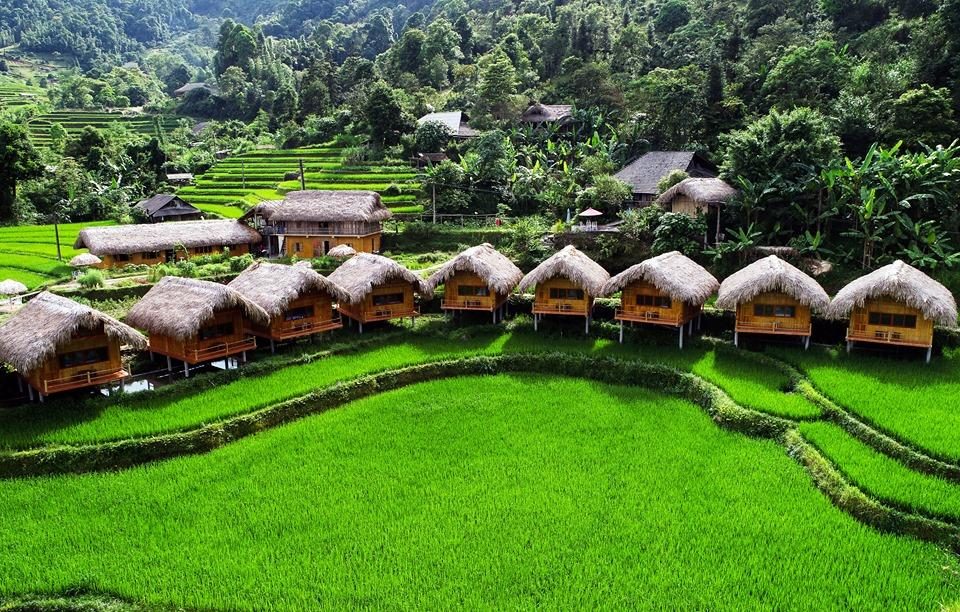

The Tay people are the largest of Vietnam’s 53 ethnic minorities and one of the friendliest cultures you will meet on the Ha Giang Loop. They live in the green valleys of the far north, sleep in wooden stilt houses, dress in plain indigo, and keep some of Vietnam’s most beautiful wedding customs alive. This guide explains who the Tay people are, where to meet them around Ha Giang, and what actually happens inside a traditional Tay wedding — so your visit is richer, and you know how to be a good guest.
Most travellers ride the Ha Giang Loop for the mountain passes, but the memory that lasts is usually a person: a grandmother pouring tea in a stilt house, a homestay family teaching you a card game, a wedding party in silver jewellery walking through the rice fields. Understanding the Tay people is the shortcut to that deeper trip.
Key Takeaways
- The Tay people are Vietnam’s largest ethnic minority — about 1.85 million people (2019 Census) — and live mainly in the northern valleys, including around Ha Giang.
- They speak a Central Tai language, live in wooden stilt houses, and are known for indigo dress, terraced rice, and “Then” ritual singing (a UNESCO heritage).
- On the Ha Giang Loop, the easiest places to meet Tay people are valley villages such as Du Gia and Tha Village, where you can stay in a family homestay.
- A traditional Tay wedding follows a set order of rituals — a gift procession, sung “quan lang” verses at the door, hand-washing, honouring the ancestors, and escorting the bride home.
- In 2026 you can even watch (and join) a reenacted Tay wedding as a living-heritage experience in Tuyen Quang province.
Who Are the Tay People?
The Tay people are a Central Tai-speaking ethnic group native to the mountains of northern Vietnam. With around 1.85 million people recorded in the 2019 Population and Housing Census, they are the largest of the country’s ethnic minorities and the second-largest ethnic group in Vietnam after the Kinh (Viet) majority. Their language belongs to the Tai–Kadai family, so a few Tay words will sound familiar if you have travelled in Thailand or Laos.
Historically, the Tay people are lowland and valley farmers. While the H’Mong tend to live high on the mountain slopes, the Tay people settle along rivers and in the flat valley floors where they grow wet rice — which is exactly why you meet them in the loveliest, greenest corners of the region. They live across the northeast, from Cao Bang and Lang Son to Ha Giang and Tuyen Quang.

Tay vs H’Mong: How to Tell the Difference
Two groups you will meet most on the Loop are the Tay people and the H’Mong. Here is a quick, traveller-friendly way to tell them apart (general patterns, with plenty of local variation):
| In general | Tay people | H’Mong people |
| Where they live | Valleys & riverbanks (lowlands) | High mountain slopes |
| Typical dress | Plain indigo / black, little embroidery | Colourful, heavily embroidered |
| Houses | Wooden stilt houses (nhà sàn) | Ground-level timber / earth-walled homes |
| Known for | Wet rice, Then singing, stilt-house homestays | Terraced fields, hemp textiles, the khèn pipe |
If you sleep in a wooden house on stilts beside a river, you are almost certainly the guest of a Tay family. Ha Giang’s mix of cultures is part of what makes it special — you can read more about the region’s indigenous cultural diversity and the Black Lo Lo of Lo Lo Chai for contrast.
Where You’ll Meet the Tay People on the Ha Giang Loop
You do not need to go looking for the Tay people — the Loop rides straight through their valleys. The most rewarding way to meet them is to slow down and spend a night in a village homestay rather than rushing between viewpoints.
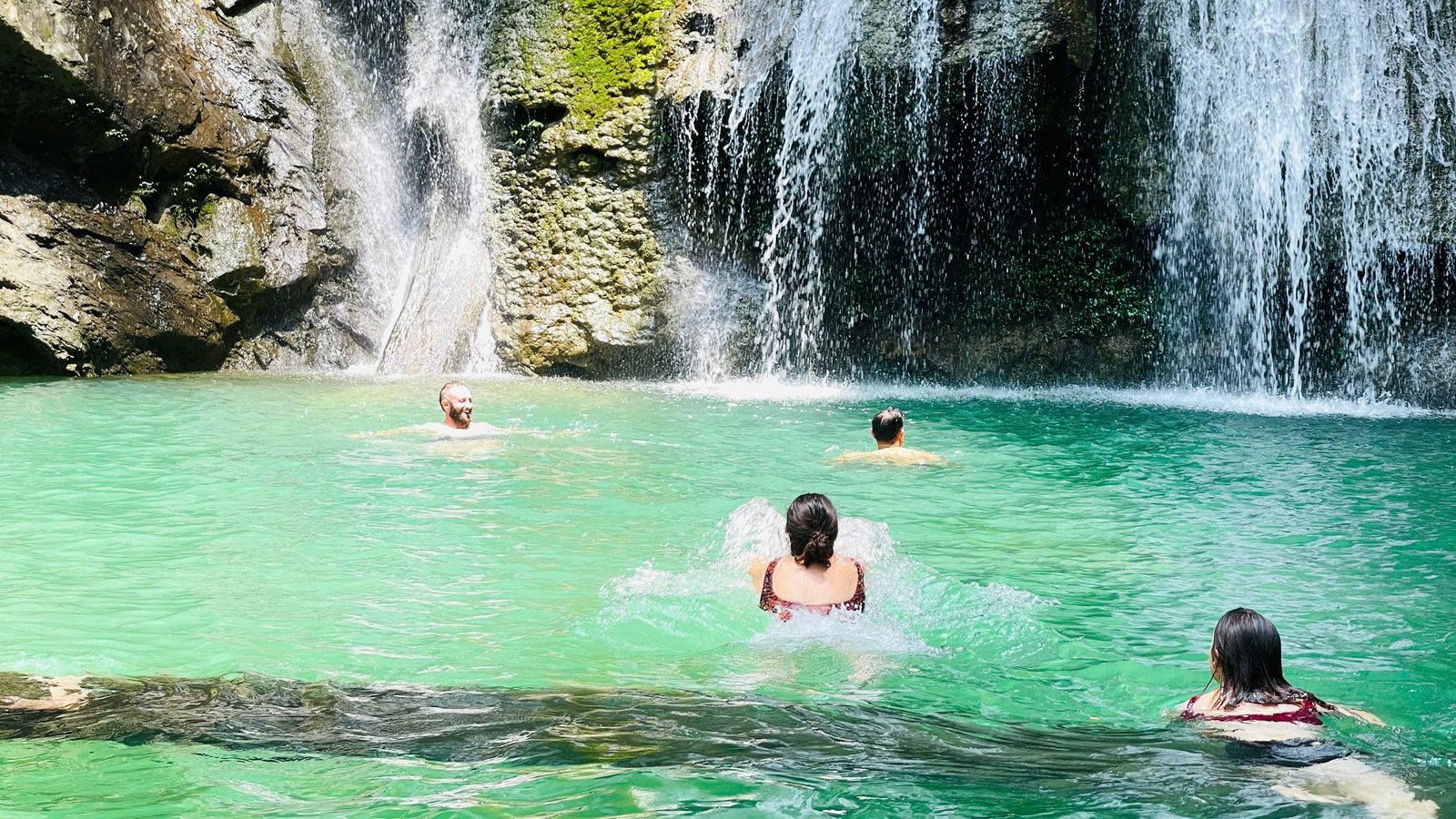
- Du Gia — a relaxed Tay valley on the eastern side of the Loop, famous for its waterfall, its friendly homestays, and its lively local market. It is many riders’ favourite overnight stop.
- Tha Village — a peaceful Tay village only about 10 km from Ha Giang City, with traditional stilt houses and rice paddies. It is the easiest place to experience Tay life if you are short on time.
- Hoang Su Phi — the western terraced-field country, shared by Tay, Dao and Nung families, at its golden best around September and October.

A Tay homestay is comfortable and easy for first-timers: a raised wooden floor, mosquito nets, shared family dinners of sticky rice, grilled meat and rice wine, and often music in the evening. If you are planning your route, our Ha Giang Loop itinerary and accommodation guide show how to build a night in a Tay village into your trip.
Tay Dress, Stilt Houses & Then Singing
Tay culture is understated and elegant. Where some highland groups wear bright embroidery, the Tay people favour plain indigo — long tunics and trousers dyed deep blue-black, set off by silver necklaces, bracelets and a coloured sash. It looks especially striking at a wedding or festival.
Their homes are the classic northern stilt house (nhà sàn): a wooden structure raised on posts, with living space above and storage below. Guests traditionally wash their hands and remove their shoes before climbing the stairs — a small ritual of respect you will see repeated at weddings.
The soul of Tay culture is Then — a ritual form of singing accompanied by the tính lute. In 2019, the “Practices of Then by Tay, Nung and Thai ethnic groups in Viet Nam” were inscribed on UNESCO’s Representative List of the Intangible Cultural Heritage of Humanity. Then songs mark the big moments of life — new year, healing, good harvests, and weddings — which brings us to the most colourful Tay ceremony of all.

Inside a Traditional Tay Wedding
A traditional Tay wedding is not a single event but a sequence of small, meaningful rituals shared between two families — full of sung poetry, symbolic gifts and gentle good humour. Here is the order it usually follows:
- The gift procession — The groom’s family, in traditional indigo dress, carries betrothal gifts (baskets of food, betel, rice wine) to the bride’s home, often walking in a line through the rice fields.
- Singing “quan lang” at the door — A red silk ribbon is stretched across the entrance. The groom’s spokesman must sing the traditional “quan lang” wedding verses to be granted permission to enter.
- Washing hands before the stilt house — Before climbing the wooden stairs, the groom washes his hands as an act of respect and purification.
- The two families meet — Both sides greet one another, introduce their members, and share tea and betel seated on woven mats.
- Asking for the bride — Once the bride’s family gives permission, the groom is led inside to bring the bride out to the gathering.
- Honouring the ancestors — The couple bows at the family altar to report their marriage to the ancestors and ask for their blessing.
- Escorting the bride & the dowry — The groom’s party escorts the bride to her new home, while her sister and relatives carry her dowry alongside.
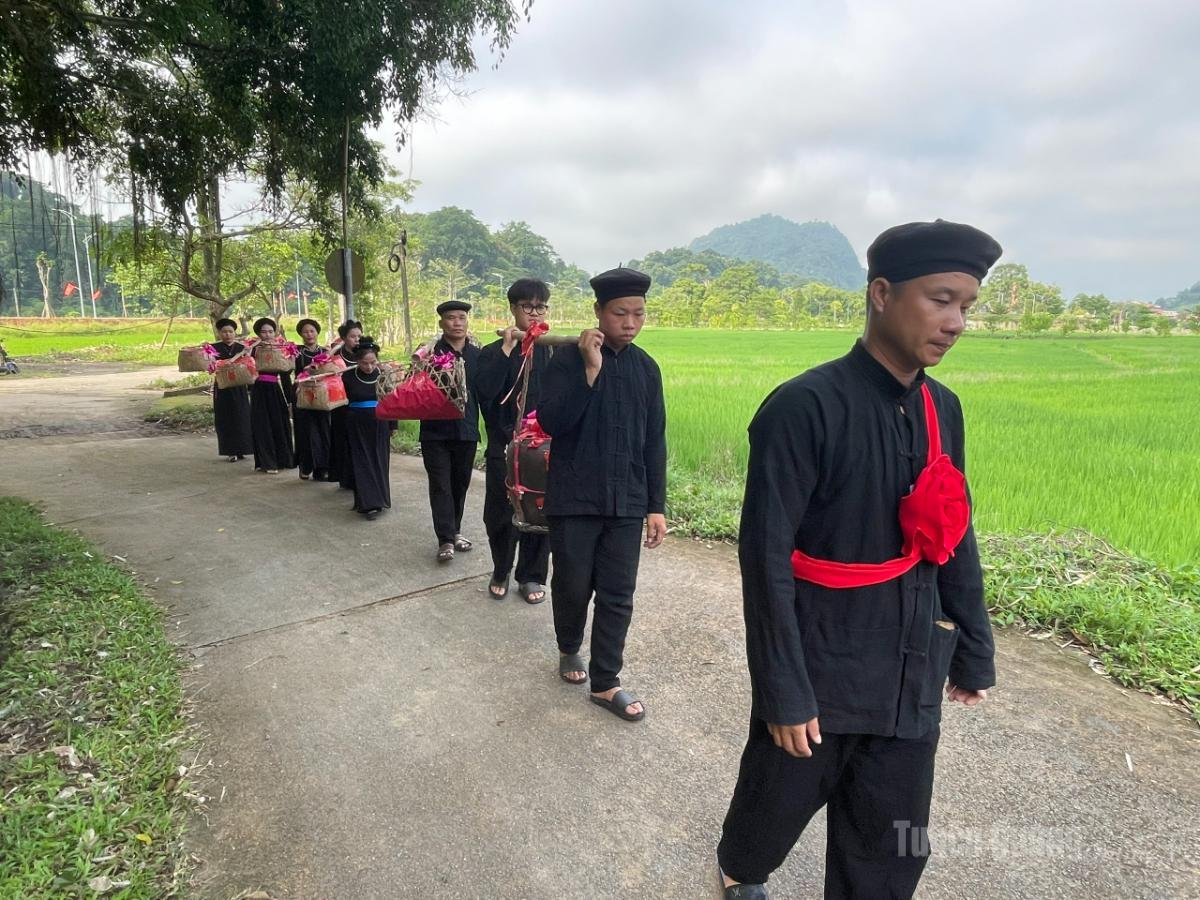
Every step has a reason. The sung “quan lang” verses test the groom’s family’s manners and eloquence; the hand-washing and the ancestor bow tie the couple to home and lineage; the shared feast turns two families into one. It is a window into the values the Tay people hold dear — respect, hospitality and community.

A “Living Heritage” Tay Wedding You Can Watch in 2026
Traditionally you would only see a Tay wedding if you were a guest of the family. In 2026, that changed: a local operator in Tan Lap village (Tan Trao, in the south of Tuyen Quang province) launched a reenactment of a traditional Tay wedding as a cultural-tourism experience. Visitors don’t just watch — they can play a role in the ceremony, follow each ritual, and learn the meaning behind it.
It is worth being clear about geography: Tan Trao lies in the far south of the newly merged Tuyen Quang province and is a full day’s travel from the northern Ha Giang Loop, so it suits travellers with extra time in the region. On the Loop itself, the authentic way to feel this culture is simpler — stay a night with a Tay family in Du Gia or Tha Village, and ask about local festivals while you are there. Experiences like this matter: cultural tourism gives young Tay people a reason to keep their language, dress and songs alive.

How to Experience Tay Culture Respectfully
The Tay people are famously welcoming, and a little courtesy goes a long way. A few simple guidelines:
- Take off your shoes and wash your hands before entering a stilt house — follow your host’s lead.
- Ask before you photograph people, especially elders and children, and especially at ceremonies. A smile and a gesture at your camera is usually enough.
- Accept food and rice wine graciously — sharing a meal is the heart of Tay hospitality. It is fine to sip slowly or decline politely.
- Buy local — a homestay dinner, a woven textile or a basket at the market puts money straight into the community.
- Learn two words: a warm greeting and a thank-you in Vietnamese (“xin chào”, “cảm ơn”) will light up any Tay home.
Frequently Asked Questions
Who are the Tay people?
The Tay people are Vietnam’s largest ethnic minority, numbering about 1.85 million (2019 Census). They are a Central Tai-speaking group of valley farmers who live across the northern provinces, including Ha Giang, and are known for stilt houses, indigo dress and Then ritual singing.
What language do the Tay people speak?
The Tay speak a language in the Tai–Kadai (Central Tai) family, related to Thai and Lao. Most Tay people also speak Vietnamese, so communicating on the Loop is easy, especially in homestays used to foreign guests.
Where can I meet the Tay people in Ha Giang?
The best places are valley villages such as Du Gia and Tha Village, where you can stay in a family stilt-house homestay. You will also meet Tay people at local markets and throughout the Hoang Su Phi terraced-field area.
What is a traditional Tay wedding like?
It is a sequence of rituals rather than one ceremony: a gift procession, sung “quan lang” verses at the door, hand-washing before entering the stilt house, honouring the ancestors, and escorting the bride to her new home with her dowry. Sung poetry and shared feasting run through the whole day.
Can tourists attend a Tay wedding?
Real weddings are private family events, but in 2026 a reenacted Tay wedding launched as a cultural experience in Tuyen Quang province, where visitors can watch and even take part. On the Ha Giang Loop, a homestay night is the natural way to experience Tay culture.
Plan Your Ha Giang Trip with Ali
The Tay people are one of the best reasons to slow down in Ha Giang. Build a village night into your route, share a meal in a stilt house, and you will come home with far more than photos of mountain passes. At Ha Giang Ali Travel we are locals — we can put you in the right Tay homestay and time your ride for a market or festival.
Ready to plan? Message us and we’ll help you design a culture-focused Ha Giang tour around the real north.
- WhatsApp / Zalo: (+84) 787 652 333
- Email: info@hagiangalitravel.com
- Web: hagiangalitravel.com