Lung Tam village is a H’Mong community in Quan Ba, Ha Giang, where women still turn hemp into cloth by hand, from the stalk in the field to the indigo-dyed fabric on the loom. It is worth a stop if you want to see the craft behind the clothes you will notice all along the Loop, and it is easy to fit in: every Ha Giang Loop tour we run stops at Lung Tam village on the first day, a short way past Quan Ba Heaven’s Gate.
We are Ha Giang Ali Travel, a licensed tour operator and hostel in Ha Giang city (now part of Tuyen Quang province). Our guides stop at Lung Tam village on day one of every Loop tour, and the photos in this guide come from our own image library. Below you will find what you will actually see, whether the stop is right for you, what to buy, and how to visit in a way the weavers will welcome.
What Is Lung Tam Village Known For?
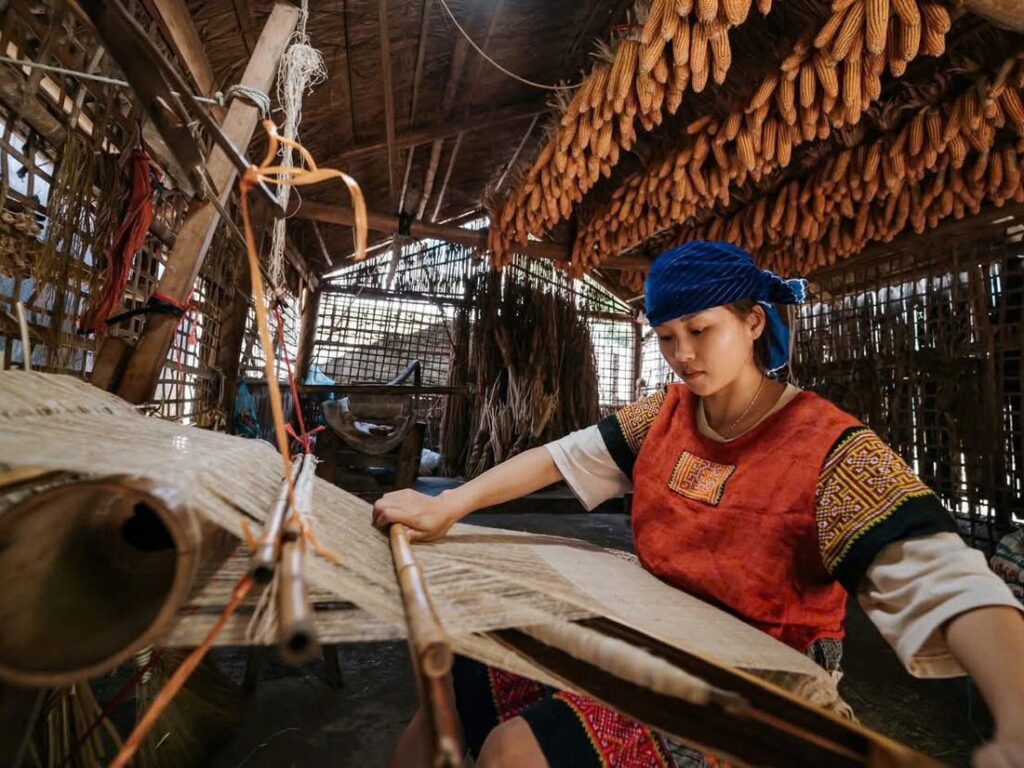
Lung Tam village is known for one thing above all: H’Mong hemp weaving. Signs and shops here say “linen” (the Vietnamese word is lanh), but the plant is hemp, the fibre the H’Mong have grown in the rocky soil of the plateau for generations to make their own clothes. In the old way of thinking, a H’Mong woman was expected to grow hemp, spin it, weave it and sew for her family, and hemp clothing still has a place in funeral customs, helping the dead find their way back to the ancestors.
In 2016, Vietnam’s Ministry of Culture, Sports and Tourism listed the H’Mong technique of growing hemp and weaving hemp cloth in Ha Giang as National Intangible Cultural Heritage (Decision 246/QD-BVHTTDL). The listing belongs to the craft of the H’Mong community rather than to one village, but Lung Tam village is where most travellers see it up close. The village cooperative makes wallets, glasses cases, wall hangings and pillowcases that carry a 3-star OCOP rating, Vietnam’s national label for local products, according to Bao Tuyen Quang, the provincial newspaper.
If you are curious about the other communities you will meet on the road, our guide to Ha Giang’s ethnic cultures is a good companion to this one.
Is Lung Tam Village Worth Stopping At?
For most travellers, yes, because it costs you very little time and explains a lot. After Lung Tam village you start to notice hemp skirts, indigo jackets and beeswax patterns everywhere on the Loop, from Dong Van market to the homestay where you sleep. Here is an honest way to decide:
| You will probably love Lung Tam village if… | You may find it short if… |
|---|---|
| You like seeing how things are made, by hand and up close | You only want big views and riding time |
| You want souvenirs that support local women directly | You are not interested in textiles or shopping at all |
| You enjoy photography of people at work (with permission) | You expect a staged show with a fixed schedule |
| You are on a 2- or 3-day Loop and want one cultural stop on day one | You have already spent time with weavers elsewhere in the north |
Our view after many trips: Lung Tam village is not a “wow” viewpoint like Ma Pi Leng, and it should not be sold as one. It is a quiet, working place. Go in with curiosity rather than a checklist and it becomes one of the most human moments of the first day.
What Will You See at Lung Tam Village? The Hemp Journey, Step by Step
The provincial newspaper counts 21 handmade stages between sowing the seed and finishing a length of cloth. You will not see all of them in one visit, because some happen in the fields and some only in certain months, but the cooperative and the houses around it usually show several at once:
- Growing and harvesting: hemp is planted in the small pockets of soil between the limestone rocks, then cut and dried.
- Stripping the fibre: the bark is peeled from the stalk by hand to free the long fibres.
- Joining and twisting: women join the short fibres end to end and twist them into thread. You will often see them doing this while walking or chatting, a coil of fibre in one hand.
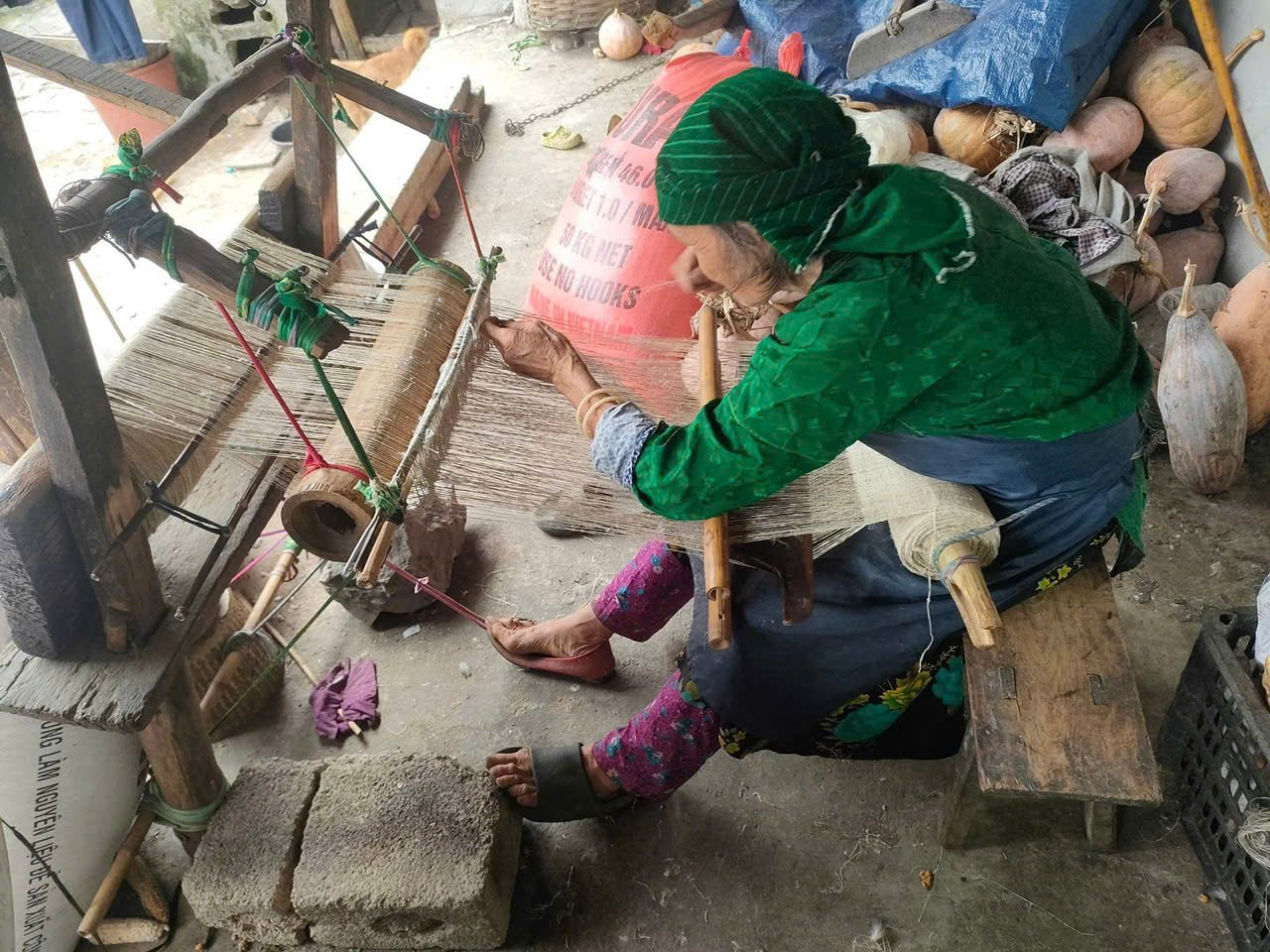
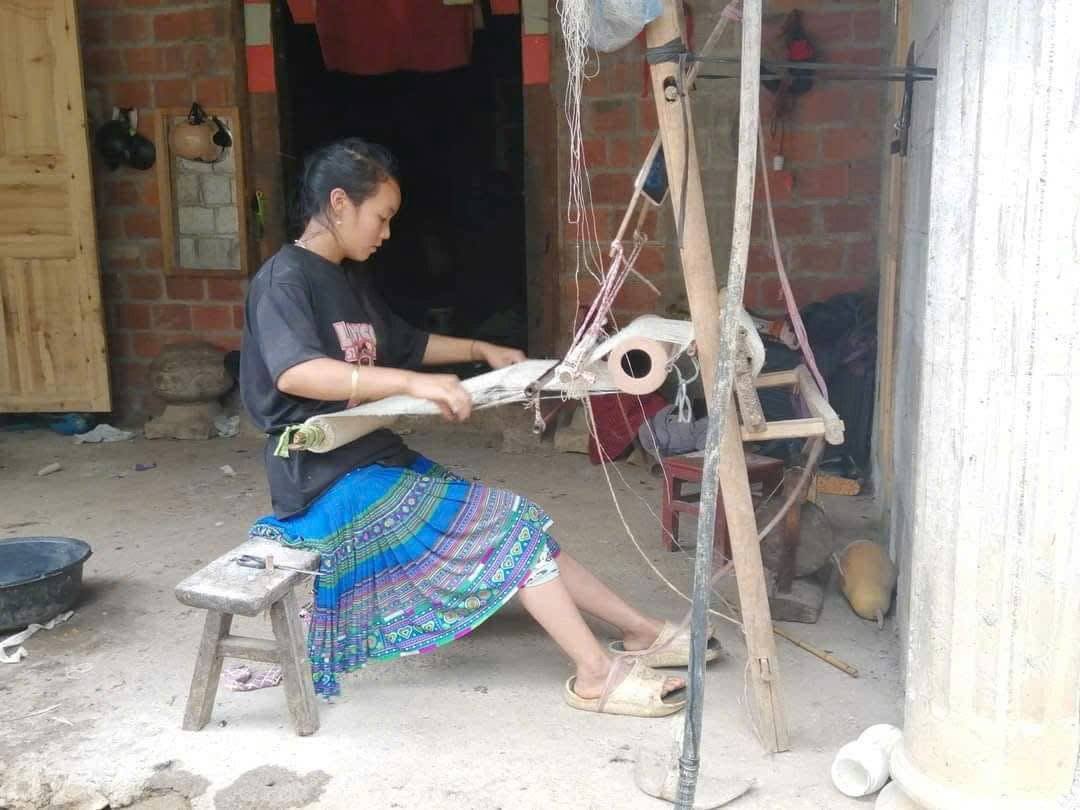
- Spinning and weaving: the thread is wound on a spinning wheel, then woven into narrow cloth on a wooden foot loom.
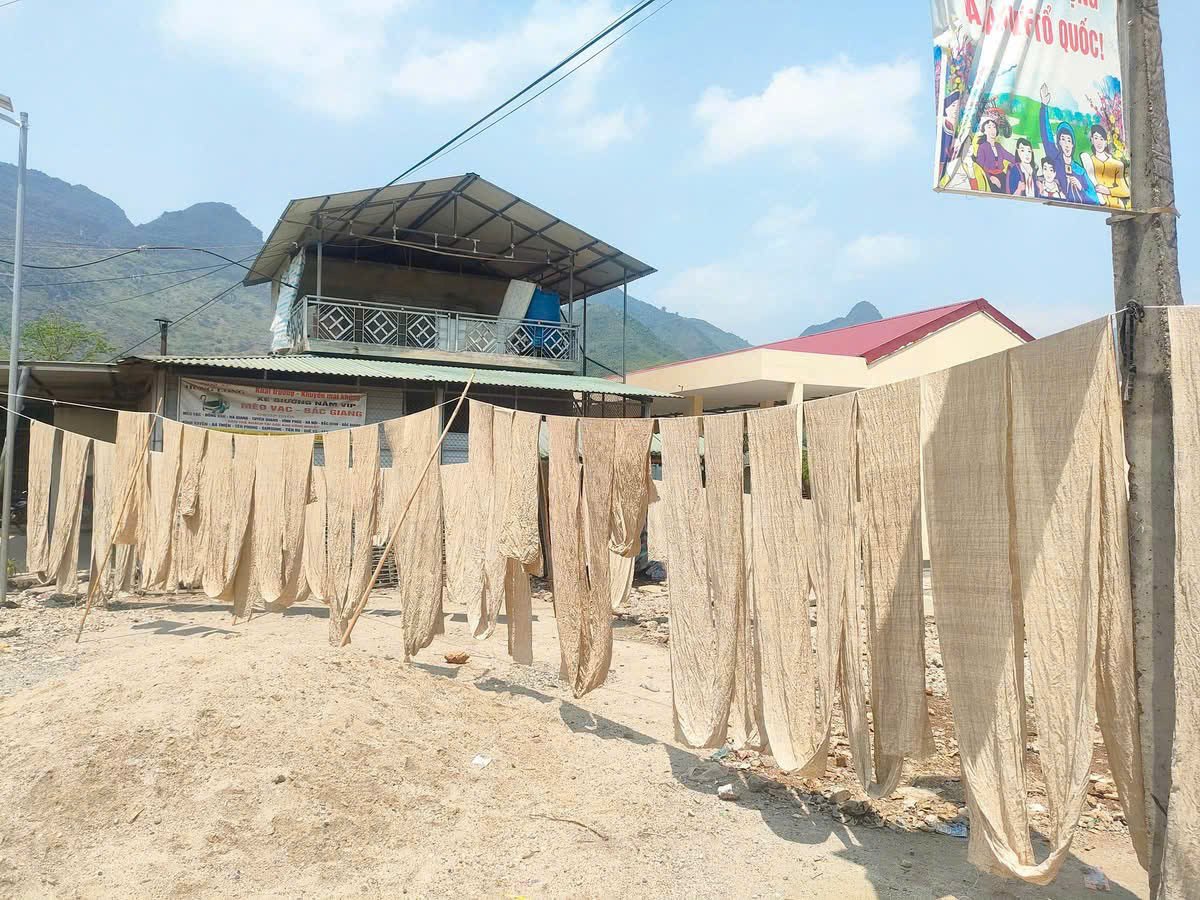
- Washing and drying: the raw cloth is washed, then hung out in long pale strips. Look for them on fences and in front yards.
- Beeswax drawing and indigo dyeing: patterns are drawn in hot wax, the cloth is dyed with plant colours, and the wax is boiled off to reveal the design.
The beeswax drawing: the hardest stage to master
The most remarkable thing to watch at Lung Tam village is the batik. Yellow and dark beeswax is melted at around 70°C, and the artist draws with a simple pen made of a bamboo stick and two small copper blades that hold the hot wax. She has to move quickly and evenly, because the wax sets in seconds. The patterns are not copied from a template: spirals, crosses, bird feet, snails and suns are drawn freehand, each one carrying a meaning about nature, seasons and belief.
One of the best-known artists at the cooperative is Sung Thi Co, who Bao Tuyen Quang reported in September 2026 was 97 and still drawing wax patterns by the fire most days, while teaching younger women such as Mua Thi Dinh to hold the pen. If she is working when you visit, watch quietly. It is a rare thing to see.
Where Is Lung Tam Village and How Does It Fit into the Ha Giang Loop?
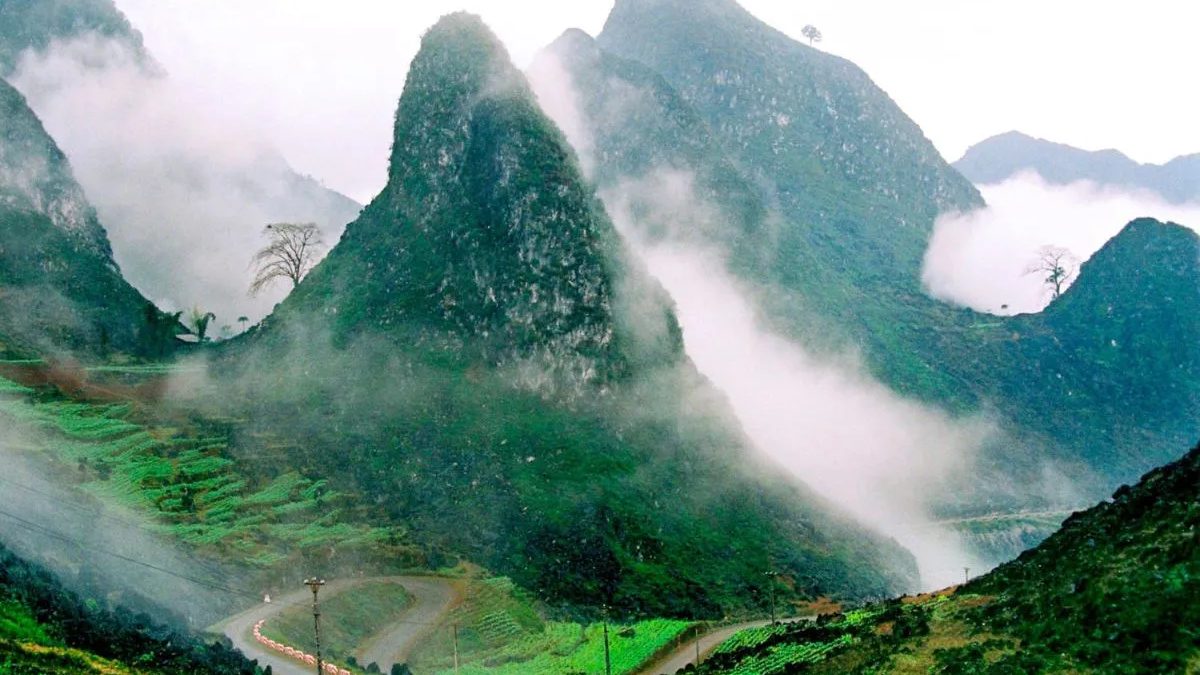
Lung Tam village lies in Lung Tam commune (formerly Quan Ba district), on the road from Quan Ba towards Yen Minh. In 2025 the commune was merged with neighbouring Thai An and Dong Ha. On our routes you ride north from Ha Giang city on Road 4C, stop at Quan Ba Heaven’s Gate about 46 km out for the view over the Fairy Bosom Hills, then drop into the valley to Lung Tam village before lunch. Day one covers about 150 to 160 km in total, so this is a well-placed break from the saddle.
Every Ha Giang Loop tour on our website includes the stop. Prices below are from our current price list, per guest, and include 8% VAT and the border-area permit:
| Tour | Day 1 route through Lung Tam village | Price per guest |
|---|---|---|
| Ha Giang Loop Express, 2 days | Quan Ba → Lung Tam → H’Mong King’s Palace → Dong Van | Easy Rider 2,790,000 VND (about $107) |
| Dong Van & Ma Pi Leng, 3 days | Quan Ba → Lung Tam → H’Mong King’s Palace → Dong Van | From 2,850,000 VND (own bike) · Easy Rider 4,250,000 VND |
| Du Gia Waterfall, 4 days | Quan Ba → Lung Tam → H’Mong King’s Palace → Dong Van | From 3,650,000 VND · Easy Rider 5,550,000 VND |
| Private Trail, 2 days (Classic) | Khau Lan waterfall → Quan Ba → Lung Tam → Lao Va Chai → H’Mong King’s Palace → Lao Sa | Easy Rider 3,490,000 VND · Private car 4,450,000 VND |
On the Essential tours the group keeps a set pace. On the Classic private tours you travel with your own guide, so there is more room to linger if the weaving is your thing. For how the rest of the route unfolds after Lung Tam village, see our Ha Giang Loop itinerary. Riding on your own? Just follow Road 4C past Quan Ba and look for the cooperative sign and the hemp drying by the road.
What to Buy at Lung Tam Village (and How to Spot Real Hemp)
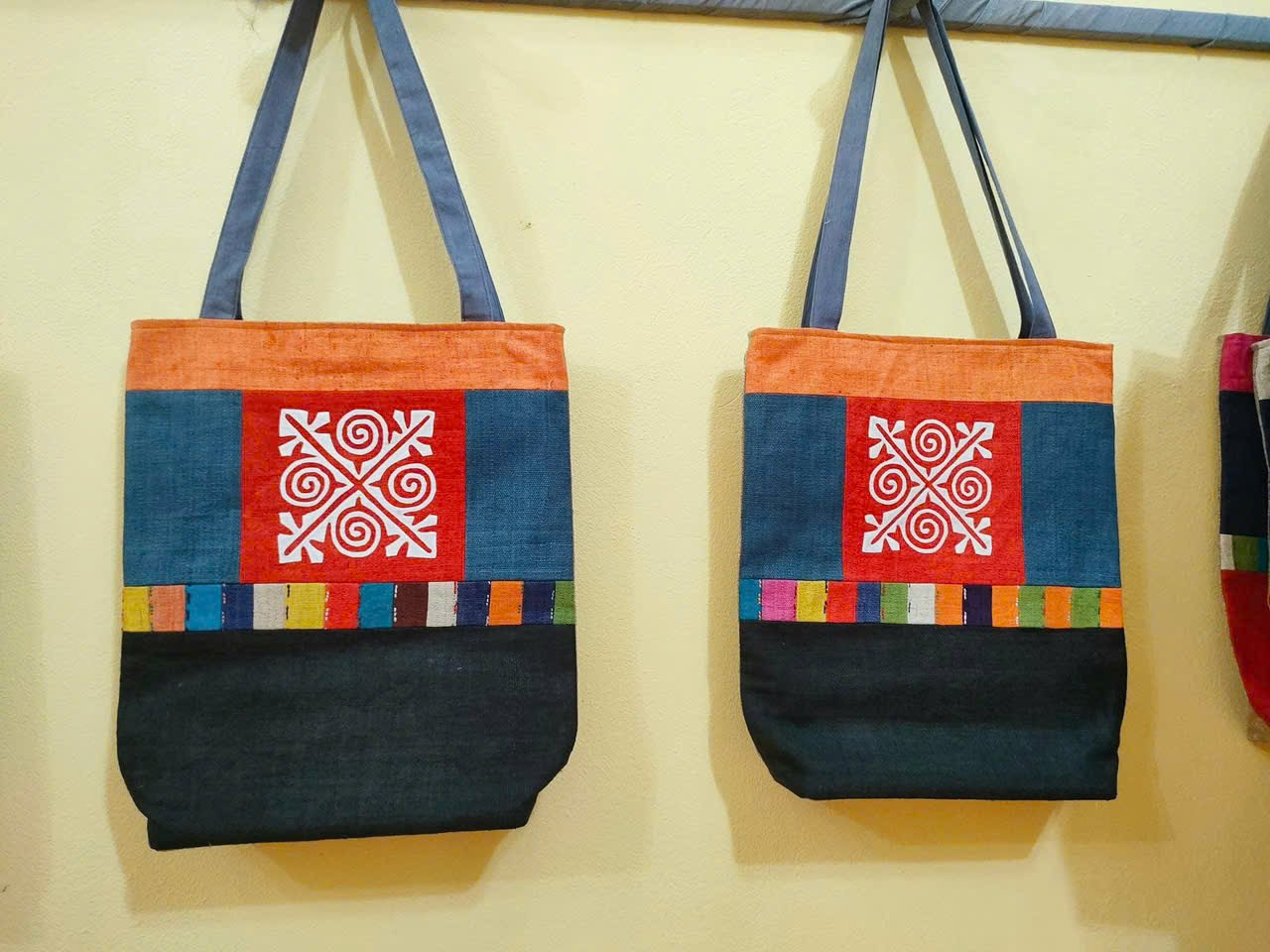
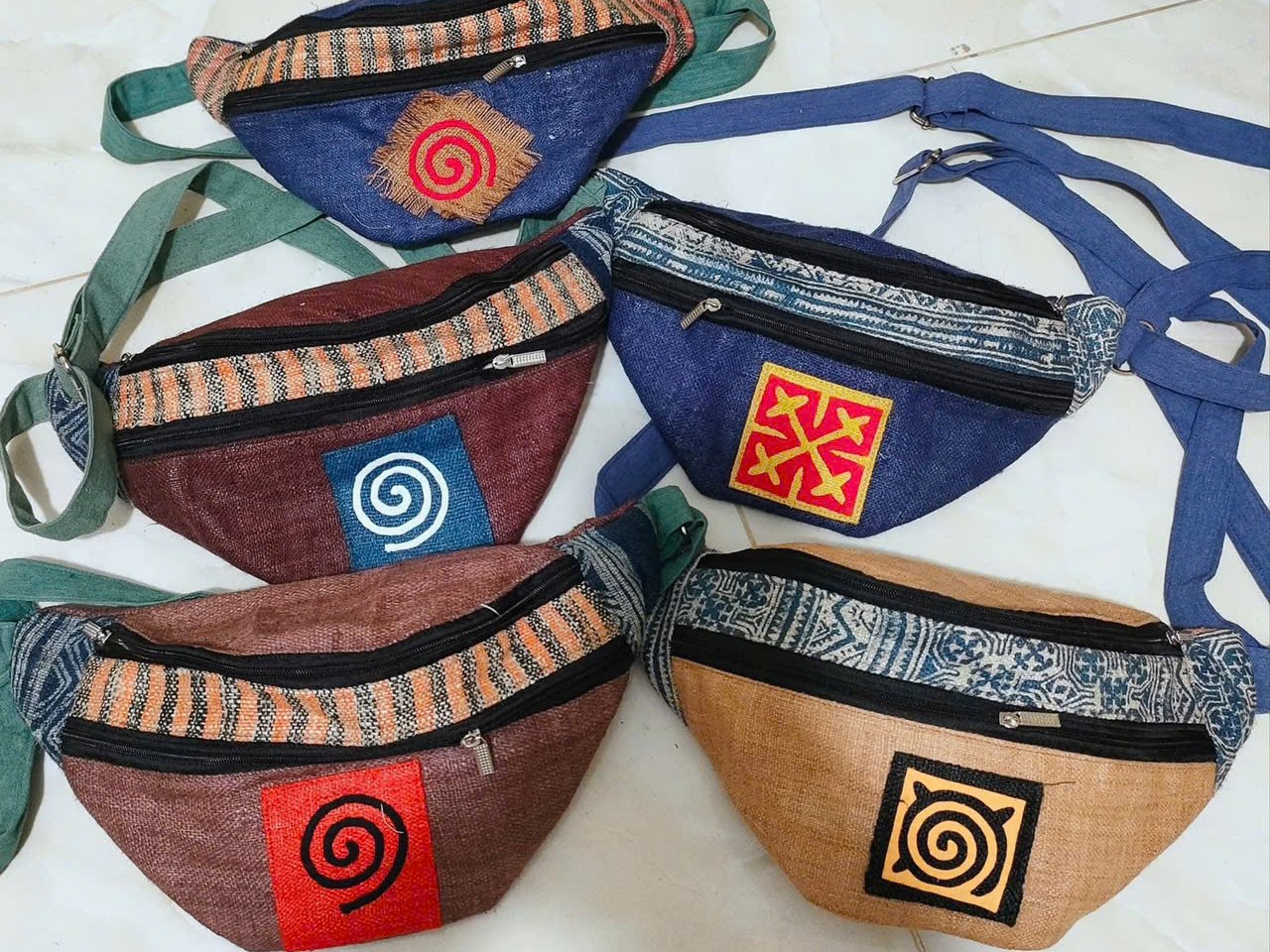
The cooperative shop sells the things the weavers make: wallets, glasses cases, wall hangings, pillowcases, tote bags, belt bags, scarves and pieces of patterned cloth. Because each beeswax design is drawn by hand, no two pieces are exactly the same. A few tips from our guides:
- Feel the fabric. Handwoven hemp feels firm, a little coarse and slightly uneven, with tiny joins in the thread. Very smooth, perfectly regular cloth is usually factory-made.
- Look at the pattern edges. Hand-drawn wax lines have small variations. Printed “batik” is too perfect and the colour sits on top of the fabric.
- Buy from the makers. Buying at the cooperative means the money goes to the women who wove it. Ask your guide to help with questions about how a piece was made.
- Pack light, buy small. On a motorbike tour, wallets, glasses cases and scarves travel better than big wall hangings.
- Wash indigo gently. Natural indigo can release colour at first, so wash it on its own in cold water the first few times.
If you miss something you liked, hemp skirts and textiles also turn up at the weekly markets further along the Loop. Our guide to local markets in Ha Giang lists which day each market runs.
How to Visit Lung Tam Village Respectfully
Lung Tam village is a place where people live and work, not a museum. These simple habits make the visit better for everyone:
- Ask before you photograph people, especially older women and children. A smile and a gesture to your camera is enough, and accept a shake of the head.
- Do not touch a loom or a wax pot unless you are invited. A loom is set up thread by thread, and the wax is hot.
- Bargain lightly, if at all. A piece can take weeks of work. If a price feels fair, pay it.
- Do not hand out sweets or money to children. It encourages begging. Buying from the cooperative supports families in a better way.
These ideas run through how we plan all our trips; our page on responsible travel and ecotourism in Ha Giang explains more.
When Is the Best Time to Visit Lung Tam Village?
The weaving goes on all year, but the most comfortable months to visit Lung Tam village are September to April, when the weather is drier and the road is at its best. In the rainy summer months you can still visit, but expect wet roads on the way and plan extra time; our Ha Giang weather by month guide shows what each season brings. Our day-one tours reach the village in the late morning, before lunch.
FAQ: Lung Tam Village
Is Lung Tam village famous for linen or hemp?
Both words are used, but the fibre is hemp. Local signs translate the Vietnamese word lanh as “linen”, so you will see “Lung Tam linen” on shops and labels. It is the same hemp cloth.
Can I try weaving at Lung Tam village?
Visitors can often try spinning, weaving or simple decoration under a weaver’s eye. A longer hands-on session needs to be arranged with the cooperative in advance, so tell us when you book a private tour and we will ask for you.
Is Lung Tam village the same as Can Ty?
No. Can Ty is a neighbouring commune with its own hemp weaving cooperative. Both keep the same H’Mong craft alive, but they are different places. Our tours stop at Lung Tam village.
Can I see Lung Tam village on a 2-day tour?
Yes. Both of our 2-day tours, the Express and the Private Trail, pass through Lung Tam village on day one.
Do I need a permit to visit Lung Tam village?
The Ha Giang Loop runs through a border area that requires a permit for foreign visitors. On our tours the border-area permit is included in the price and we handle the paperwork at Ali Hostel before you leave.
Visit Lung Tam Village with Ha Giang Ali Travel
Tell us your dates and how many of you are travelling, and we will suggest the right route. The 3-day Dong Van & Ma Pi Leng tour is our most popular way to see Lung Tam village and the best of the plateau, and a 500,000 VND deposit per guest holds your place. WhatsApp/Zalo (+84) 787 652 333 · info@hagiangalitravel.com · hagiangalitravel.com.
See more: