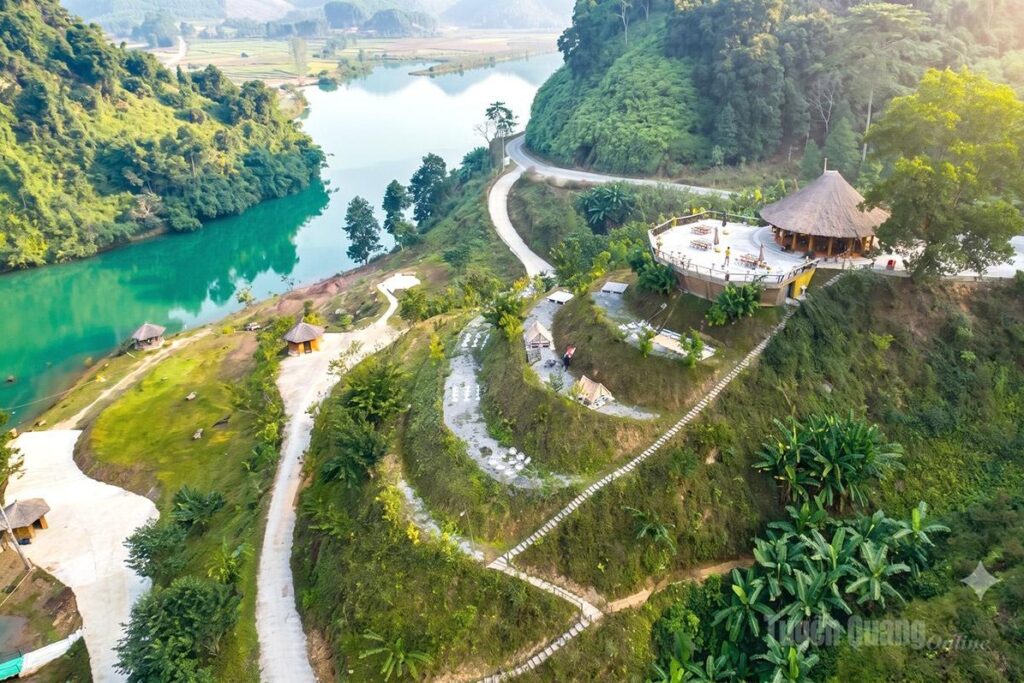
Ha Giang ecotourism is quietly opening a new chapter on the banks of the Song Mien River. In the tiny hamlet of Thang Neng – just nine Tay families in Thuan Hoa commune, a short ride north of Ha Giang City – you can paddle a bamboo raft across emerald water, soak in a natural hot spring, and sleep in a stilt house that has stood for generations. This is Ha Giang ecotourism at its most honest: small, local and unhurried. Below is exactly where it is, what to do, what to eat, and how to fold it into your Ha Giang Loop.
In short: Thang Neng is a Tay community-tourism hamlet on the Song Mien (Mien) River in Thuan Hoa commune, less than an hour north of Ha Giang City in an area that is now part of Tuyen Quang province. The draw of this slice of Ha Giang ecotourism: bamboo rafting, wild hot-spring bathing, riverside camping, home-cooked Tay food, and homestays run by just nine host families.
What Is Ha Giang Ecotourism – and Why Thang Neng?
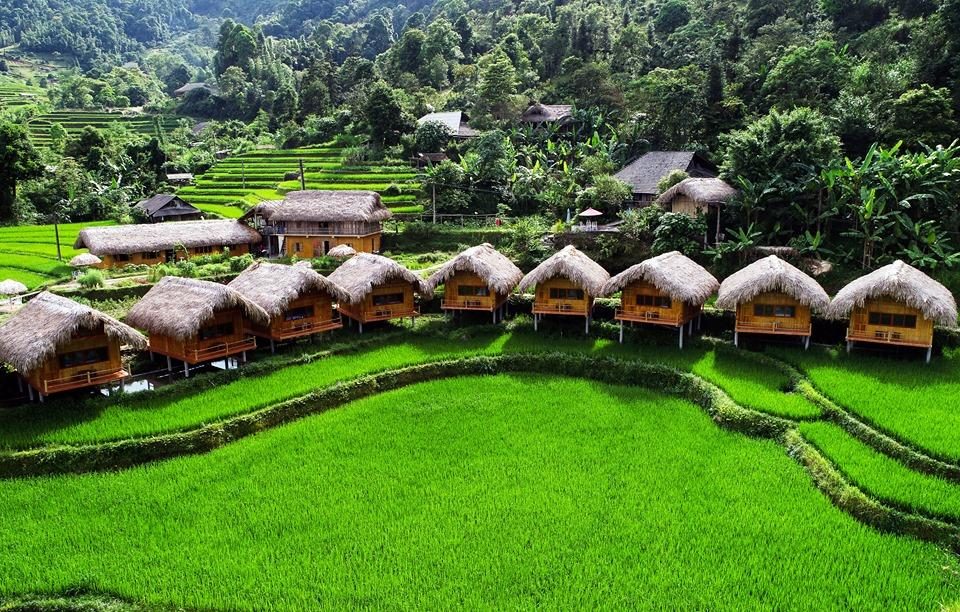
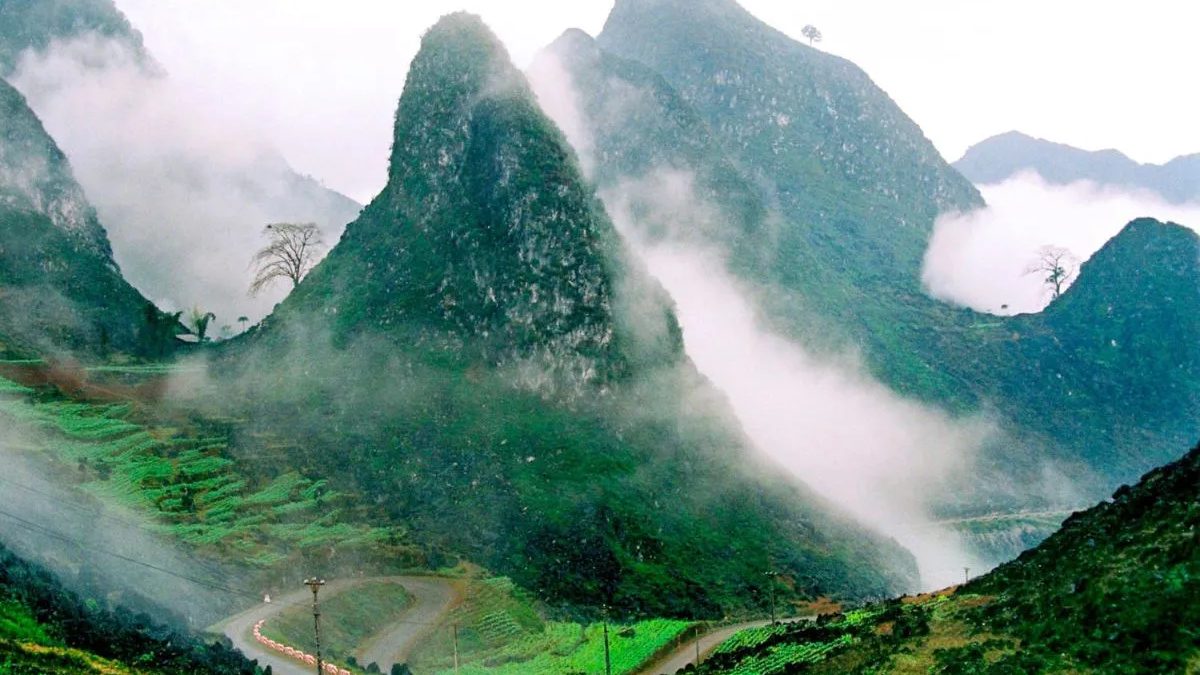
Most travellers meet Ha Giang through its greatest hits: the Ma Pi Leng Pass, the Nho Que River, the karst towers of Dong Van. Ha Giang ecotourism is the quieter counterpart to that adventure – small community-run projects where a handful of local families host you directly, cook what they grow, and share their own culture rather than a staged show. Thang Neng, first profiled by Bao Tuyen Quang in August 2026, is one of the newest examples: a nine-household Tay hamlet in the sub-village of Hoa Bac that has turned its riverbank, its stilt houses and its hot springs into a gentle, low-impact experience.
Why does it matter for foreign riders? Because this is the kind of Ha Giang ecotourism that puts money straight into a mountain community and lets you slow down between big riding days. At Ha Giang Ali Travel we have spent years guiding travellers through these valleys, and the villages that stay with people longest are almost always the small ones like this – where you eat with the family, not in a restaurant. If you want the wild scenery of the north with a softer, more human pace, Thang Neng belongs on your list.
Where Is Thang Neng and How Do You Get There?
Thang Neng sits on the Song Mien River in Thuan Hoa commune, in the former Vi Xuyen district just north of Ha Giang City. The same emerald river you see winding through town flows down from these hills, so the village feels remote but is genuinely close – usually less than an hour by motorbike or car. It lies broadly on the road toward Quan Ba and the Twin Mountains, which makes it an easy detour at the very start of a Loop. That accessibility is exactly why it works so well as a first taste of Ha Giang ecotourism.
Because the whole province was reorganised in 2025, you will now see this address written as Tuyen Quang rather than Ha Giang – but for travellers it is the same landscape, the same people, and the same Ha Giang ecotourism you came north to find. A glass-bridge project is also being developed in the neighbouring Hoa Thuan area, a sign that this quiet valley is slowly being opened up.

What Can You Do in Thang Neng?
The pleasures here are simple, outdoor and tied to the river. A day of Ha Giang ecotourism in Thang Neng usually mixes several of these:
- Bamboo-raft paddling along the calm, jade-green Song Mien – the signature Thang Neng activity.
- Wild hot-spring and stream bathing, a warm soak after a day on the road.
- Riverside camping overnight in Ha Giang under the karst peaks, or a stilt-house homestay.
- Brocade weaving (tho cam) with local women, watching the patterns take shape on the loom.
- Slow village walks through banana groves, vegetable plots and the nine host homes.
None of it is rushed, and that is the point. Thang Neng is Ha Giang ecotourism built around presence rather than a checklist.

What Do You Eat at a Tay Homestay?
Food is half the reason to stay the night. The Tay families of Thang Neng cook from the forest, the river and their own fields, and dinner usually arrives as a shared spread on the stilt-house floor. This is Ha Giang ecotourism you can taste. Here is what to look out for:
| Dish | What it is |
| Xoi ngu sac | Five-colour sticky rice, dyed with forest leaves |
| Thit trau gac bep | Buffalo smoked slowly above the kitchen fire |
| Grilled stream fish | River fish grilled over coals, dipped in wild hat doi seed salt |
| Mang rung nhoi thit | Forest bamboo shoots stuffed with minced meat |
| Ruou ngo men la | Corn spirit fermented with mountain-leaf yeast |
After dinner, hosts may bring out the dan Tinh, a long-necked gourd lute, and sing hat Then – the haunting spiritual folk songs of the Tay. It is an unhurried, genuinely local evening, and one of the clearest signs that Ha Giang ecotourism here is about culture, not performance.
Thon Tha: Another Tay Village Near Ha Giang City
If your dates or route do not reach Thang Neng, you can taste the same living culture much closer to town. Tha Village (Thon Tha) is an established Tay community-tourism hamlet only about 10 kilometres from Ha Giang City, with wooden stilt houses, an ancient stone well, and rice terraces framed by mountains. It is one of the easiest introductions to the Tay people of Ha Giang and a reliable first or last night of any trip.

Between Thang Neng and Tha Village, you can see how Ha Giang ecotourism is spreading valley by valley – each hamlet keeping its own character while opening its door to visitors. For a bigger version of the same idea, the terraced homestays of Hoang Su Phi homestay country and the boat villages around Na Hang Lake are well worth building into a longer route.

When to Go, and How to Be a Good Guest
The best window for Ha Giang ecotourism along the Song Mien is the drier half of the year, roughly October to April, when the river runs clear and the rafting and hot springs are at their best. From late summer, heavy rain can swell the river and make mountain roads slippery, so check conditions before you ride.
Responsible Ha Giang ecotourism starts with how you show up, and because Thang Neng is only nine households, it matters even more here:
- Book ahead through your hostel or a local operator so hosts can prepare – walk-ins can overwhelm a tiny hamlet.
- Keep groups small, buy the local food and crafts, and pay fairly.
- Ask before photographing people or homes, and take your rubbish out with you.
How to Fit Ha Giang Ecotourism Into Your Loop
You do not need to rebuild your trip to include a place like this. The simplest way to build in some Ha Giang ecotourism is to add Thang Neng or Tha Village as a half-day or overnight stop on your first day out of town, before you climb toward Quan Ba – a calm start that eases you into mountain riding. If you would like it woven into a full route, our Ha Giang Loop itinerary shows where a river-village night fits best, and our team can arrange transport, a guide and the homestay booking as part of your Ha Giang tours.
Think of it this way: the passes give you the adrenaline, and Ha Giang ecotourism gives you the memory of a family, a fire and a song by the river.
Frequently Asked Questions
Where is Thang Neng?
Thang Neng is a small Tay hamlet in the sub-village of Hoa Bac, Thuan Hoa commune, on the Song Mien River just north of Ha Giang City. Since the 2025 provincial merger the address is written under Tuyen Quang province, but it is the same northern highland landscape long known as Ha Giang.
How do I get to Thang Neng from Ha Giang City?
It is usually less than an hour north of Ha Giang City by motorbike or car, roughly on the way toward Quan Ba. Most visitors ride out as a day trip or an overnight add-on at the start of the Loop.
What is there to do in Thang Neng?
Bamboo-raft paddling on the Song Mien, bathing in natural hot springs, riverside camping or a stilt-house homestay, brocade weaving, and a home-cooked Tay dinner with Then singing in the evening – a full day of Ha Giang ecotourism.
Is Thang Neng in Ha Giang or Tuyen Quang?
Both, in effect. Ha Giang province was merged into Tuyen Quang province in 2025, so official addresses now say Tuyen Quang. Travellers and guides still call the region Ha Giang, and the Ha Giang Loop experience is unchanged.
Do I need a border permit to visit?
The Song Mien valley around Thuan Hoa is not in the tightly controlled far-northern border strip, so a routine visit generally does not require the special permit that Dong Van and Meo Vac border areas do. Rules near the frontier can change, so confirm with your host or operator if you plan to ride close to the border.
Ride North, Slow Down
Thang Neng is a reminder that the best of the north is not only on the high passes – it is also on a quiet riverbank where nine families share their home. That is the heart of Ha Giang ecotourism, and it is easy to reach. Come for the Loop, but leave a day for the river.
Plan your trip with Ha Giang Ali Travel. We can arrange homestays, transport, guides and the full Loop around a river-village stop like Thang Neng. Message us on WhatsApp/Zalo (+84) 787 652 333, email info@hagiangalitravel.com, or visit hagiangalitravel.com.
See more: