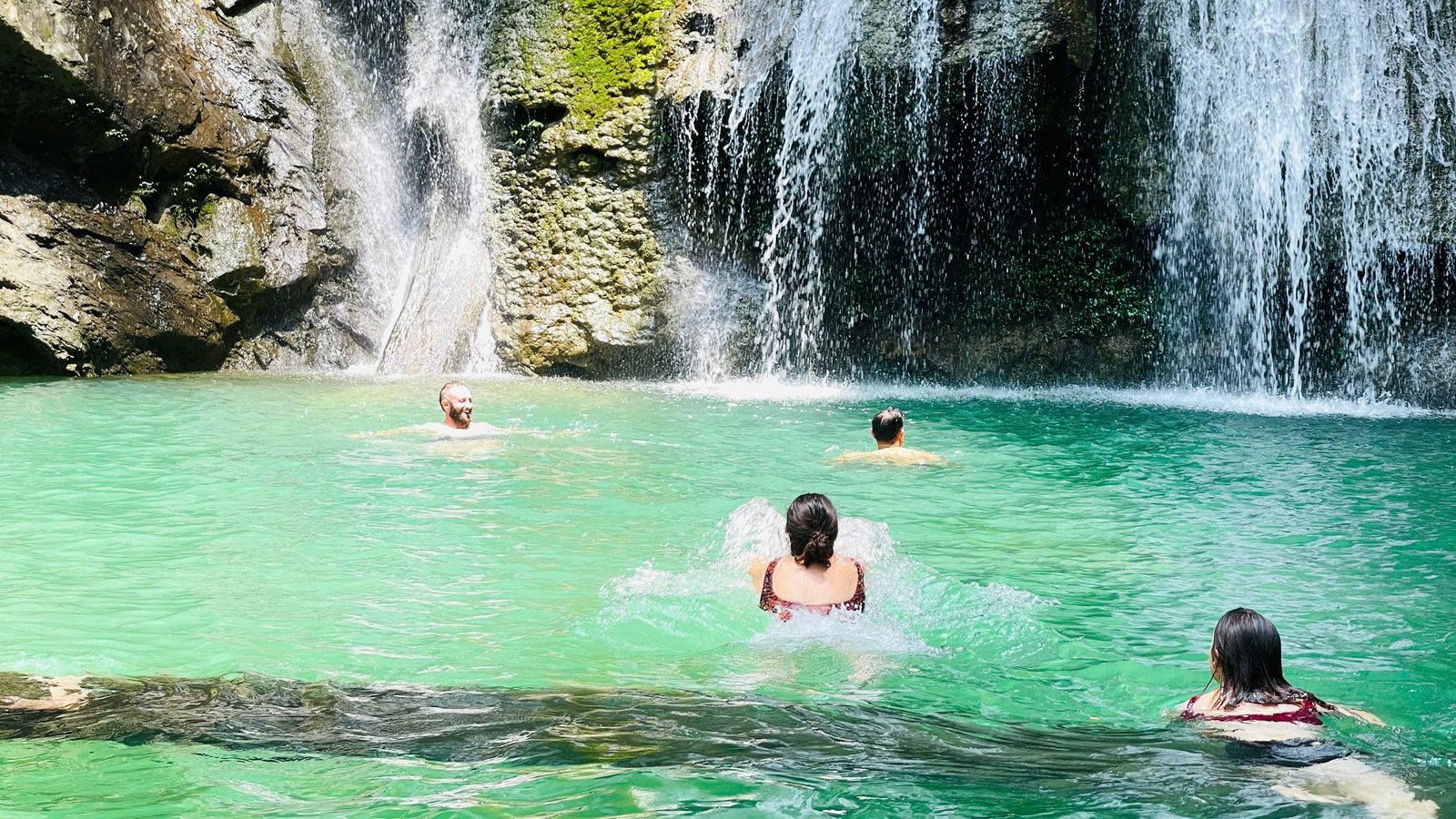
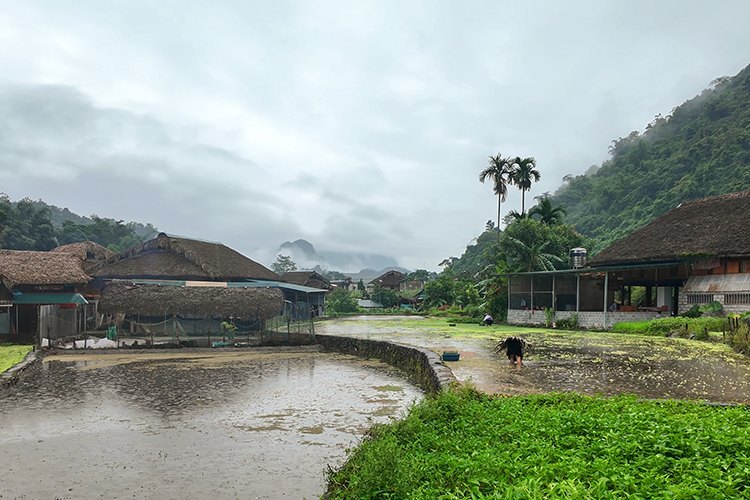
Most travellers arrive in Ha Giang, sleep one night, and roll out for the Loop at eight the next morning. Almost none of them find out that Tha Village sits just 10 kilometres away — closer than the first mountain pass — and that in 2026 it was named the best community tourism village in the whole of Vietnam.
Tha Village (in Vietnamese, Thôn Tha) is a Tay ethnic village of wooden stilt houses, wet rice fields, fish ponds and bamboo fences, tucked into a valley under limestone mountains. It is not a museum and it is not a resort. People still farm there, still speak Tay at home, and still draw meaning from a stone well their great-grandparents drank from. That is exactly why it won.
This guide covers what Tha Village is, how to get there, what you can actually do, and — the part most articles skip — how to visit without being part of the problem.
Why Tha Village Just Won a National Award
In 2026, at the VITA Awards ceremony held in Ninh Binh, the Vietnam Tourism Association gave Tha Village the title of “Best Community Tourism Village 2025.” It was not a one-off. In 2025 the village was already among the six community tourism destinations that welcomed the most visitors in the entire country, and its cluster of homestays had earlier earned an ASEAN Homestay Award.
What is worth understanding is what was rewarded. Not a new visitor centre. Not a cable car. The judges recognised the things the community already had — the rural landscape, the stilt houses, Tay customs, and the fact that ordinary villagers, not an outside operator, run the tourism themselves.
You can read the original Vietnamese report on the award and the village’s approach at Suc khoe & Doi song newspaper.
Where Is Tha Village and How Do You Get There?
Tha Village lies in Ha Giang 1 Ward, about 10 km from the centre of Ha Giang City — the same ward our own hostel sits in. (Administratively the area is now part of Tuyen Quang province after the 2025 provincial merger, but everyone, including every road sign and every traveller, still calls it Ha Giang.)
- By motorbike: roughly 20 minutes on sealed road. The easiest option, and the ride out of town through rice fields is half the pleasure.
- By bicycle: about an hour each way, flat enough for most people. This is the nicest way to arrive if the weather is kind.
- By taxi or car: 15–20 minutes. Worth it if you are travelling with family or arriving late in the day.
Because Tha Village is so close to town, it works as a half-day trip rather than a whole expedition. Leave after breakfast, be back for lunch. Or better: go out in the late afternoon, when people are cycling home from the fields and the light drops behind the ridge.

The Village in Numbers
Tha Village is small, and that is the point. It counts more than 130 households and over 600 residents, around 99% of them Tay people — one of the largest ethnic groups in northern Vietnam, but one that most visitors to the region never spend real time with.
More than 100 traditional stilt houses are still standing and still lived in. Together with the bamboo fences, the wet rice paddies and the palm-leaf roofs, they give Tha Village a visual coherence that is genuinely rare now: nothing jars, nothing is out of scale.
The Ancient Well: The Heart of Tha Village
If you only stop at one spot, make it the old well. For generations this was the village’s drinking and washing water, and the community has kept it rather than paving it over. The basin is lined with river cobbles; the shelter above it was restored using palm leaf, timber and stone rather than concrete.
In local belief, clean water stands for vitality, sufficiency and peace — so the well was never only plumbing. It was where people met. It still is: come at the right hour and you will find neighbours talking there, which is a far better introduction to Tha Village than any signboard.

Bilingual Vietnamese–English panels near the well explain its history, so you can understand what you are looking at even without a guide.
Reading a Tay Stilt House
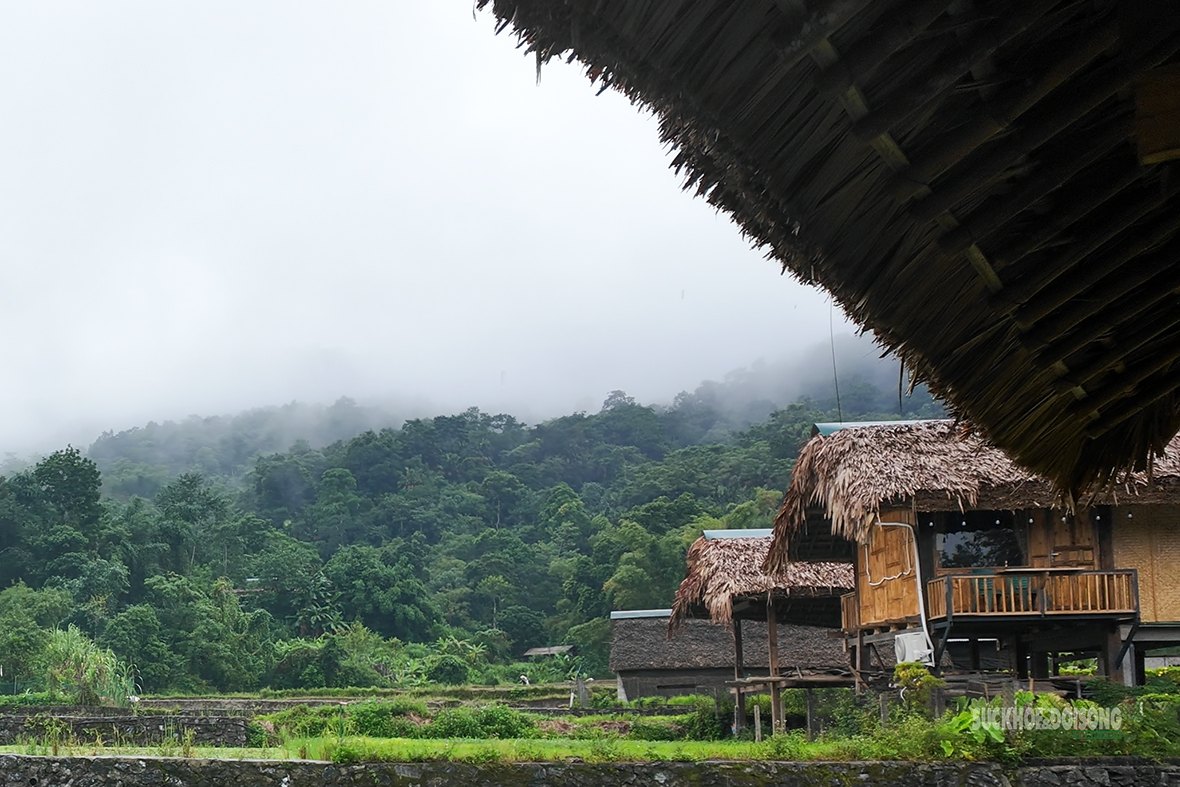
The stilt house is the single strongest signature of Tha Village. Most are built from timber, bamboo and nua reed, roofed with palm leaf. The logic is simple once someone points it out:
- Upper floor — the living space: sleeping, cooking, receiving guests, the family altar.
- Ground level — traditionally storage for farm tools, grain and produce, and shelter for the work of the farm.
- Wide verandah — the in-between room where most of village social life actually happens.
As tourism grew, households in Tha Village were encouraged to hold the line on materials: keep the timber frame and the palm-leaf roof, and avoid the three things that quietly destroy a village’s character — concrete boxes, high solid fences, and oversized signage. Walk around and you will notice how consistently that has been held.
What You Can Actually Do in Tha Village
This is not a place with an activities menu on a laminated card. What is on offer grows out of what people already do:
- Pound banh day sticky rice cakes — heavier work than it looks, and reliably the funniest half hour of the day.
- Make com — young green rice, pounded and roasted, seasonal and delicious.
- Indigo dyeing and weaving — the fabric traditions behind the clothes you will see elders wearing.
- Listen to hat then — Tay ritual song accompanied by the dan tinh gourd lute. Younger villagers are learning it and performing it.
- Eat a Tay home meal — cooked by the household, from the household’s own garden, pond and livestock.
- Walk the village — marked walking routes take you past the well, the paddies and the fish ponds.
A deliberate decision has shaped Tha Village: instead of racing to add guest rooms, the community has chosen to raise the quality of the experience. The longer a visitor stays, the more meals, crafts and guiding fees flow into the village — which is a healthier economics than simply pushing headcount through.

Staying Overnight in a Stilt House
Several families have converted part of their stilt house for guests — adding bedding, bathrooms and the comforts you need, while keeping the timber structure, the palm-leaf roof, the wide verandah and the shared living space. The income lets owners maintain buildings that would otherwise be expensive to keep standing, so the homestays are part of what preserves the architecture rather than a threat to it.
Just as importantly, households that don’t host guests still earn from tourism in Tha Village — by supplying food, cooking, performing music, making handicrafts or guiding walks. That spread is the difference between community tourism and a handful of families getting rich.

How to Visit Tha Village Respectfully
The village’s own planners are open about the risks that come with success: over-commercialisation, a changing landscape, more rubbish, more noise, and traditional space turned into a stage set. Visitors decide a lot of that. A short, honest list:
- Ask before you photograph people, especially elders and children. A gesture at the camera and a smile is enough.
- Take your rubbish back to town. Waste handling in a village of 130 households is not built for tourist volumes.
- Keep the volume down. No speakers. People live and work here on a farming schedule.
- Spend money inside the village — eat a meal, buy the textiles, pay for a guided walk. This is the mechanism that makes preservation pay for itself.
- Take off your shoes before you step up into a stilt house, and follow your host on where to sit — the space near the family altar is not for guests.
- Stay a night if you can. One overnight guest contributes far more than ten people who stop for photos.
When to Go
Tha Village is a working rice landscape, so the paddies drive the view. Roughly: green and full through early summer, gold before harvest in late summer and autumn, mirror-flat water after transplanting. Autumn is generally the most reliable window — drier air, clearer mountains — but the village is worth a visit year-round, and in poor weather the indoor crafts and a home-cooked meal are the point anyway. See our Ha Giang weather by month guide to plan around the rain.
Fitting Tha Village Into a Ha Giang Loop Trip
Almost everyone arrives in Ha Giang City on a night bus and leaves the next morning — which wastes the best half-day in the whole itinerary. Two easy ways to fix that:
- Day 0 — arrive a day early, sleep in town, and spend the afternoon in Tha Village before the Loop starts. You meet Tay culture before you ever reach Hmong and Lo Lo country, which makes the rest of the trip read very differently.
- Last day — after you come off the Ha Giang Loop, most people have hours to kill before the night bus. Tha Village is a much better use of them than a café.
It also pairs naturally with the ethnic-village theme of the Loop itself — compare the Tay stilt houses here with the Black Lo Lo earth-walled homes at Lo Lo Chai Village up near Lung Cu, and you will have seen two completely different answers to the same mountains.
Frequently Asked Questions About Tha Village
Is Tha Village worth visiting?
Yes — particularly if you have a spare half-day in Ha Giang City and want something real rather than a viewpoint. It is the only place this close to town where you can walk through a living Tay village of more than 100 stilt houses.
How far is Tha Village from Ha Giang City?
About 10 kilometres, or roughly 20 minutes by motorbike. It is in the same ward as the city centre, so you do not need a border permit or any special paperwork.
Do I need a guide to visit Tha Village?
No. You can walk in and explore on your own, and there are bilingual information panels. But a local guide, or a host family, turns a pretty walk into an actual understanding of what you are seeing — and the fee stays in the village.
Can I stay overnight in Tha Village?
Yes. Several families run homestays in converted stilt houses, and the cluster has won an ASEAN Homestay Award. Book ahead in peak season — the village has deliberately not expanded its room count.
What ethnic group lives in Tha Village?
The Tay, who make up about 99% of residents. Tay is still spoken day to day, and elders keep the language, dress and customs while younger villagers learn hat then singing and the dan tinh lute.
Come and See It Before Everyone Else Does
Awards attract crowds. Right now Tha Village is still quiet on a weekday morning, still a working farming village where the tourism is an addition to life rather than a replacement for it. That window will not stay open forever.
We are based in the same ward, 10 kilometres down the road, and we send guests out to Tha Village all the time — on a bicycle, on a rented motorbike, or with a driver if you would rather not ride. Tell us how much time you have and we will build it into your trip.
Ha Giang Ali Travel · Booking: info@hagiangalitravel.com · WhatsApp / Zalo: (+84) 787 652 333 · hagiangalitravel.com
See more
- Ha Giang City: The Gateway to the Ha Giang Loop
- Lo Lo Chai Village: A Timeless Black Lo Lo Hamlet
- The Perfect Ha Giang Loop Itinerary: 3 & 4 Days
- Best Ha Giang Loop Accommodation
If you would rather ride it with someone who knows the road, these are the tours we run ourselves.
Dong Van & Ma Pi Leng3 days 2 nightsSee dates & prices →Deep Loop – Du Gia Waterfall4 days 3 nightsSee dates & prices →
Free cancellation up to 24 hours before departure — 100% refund, deposit included.