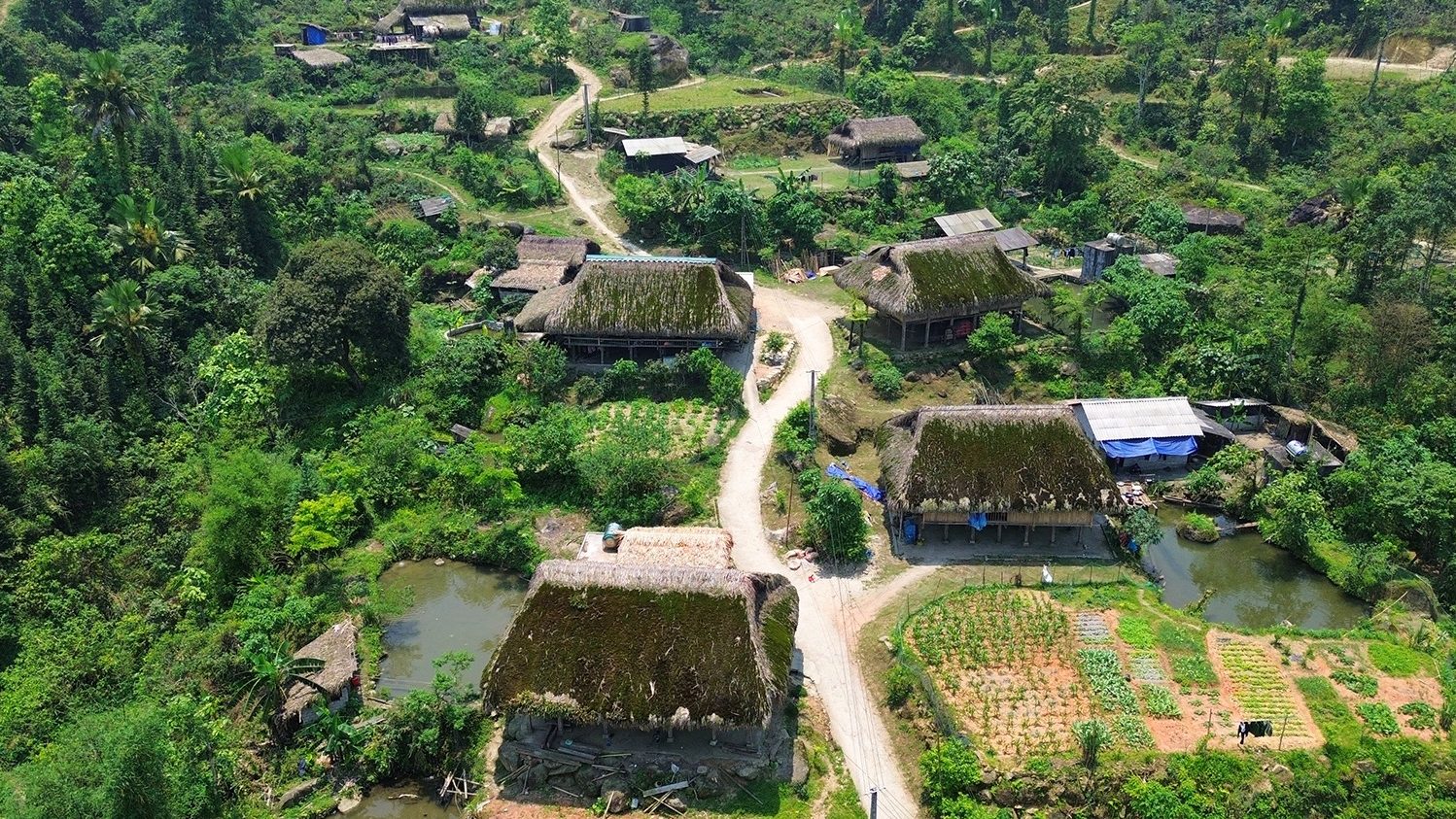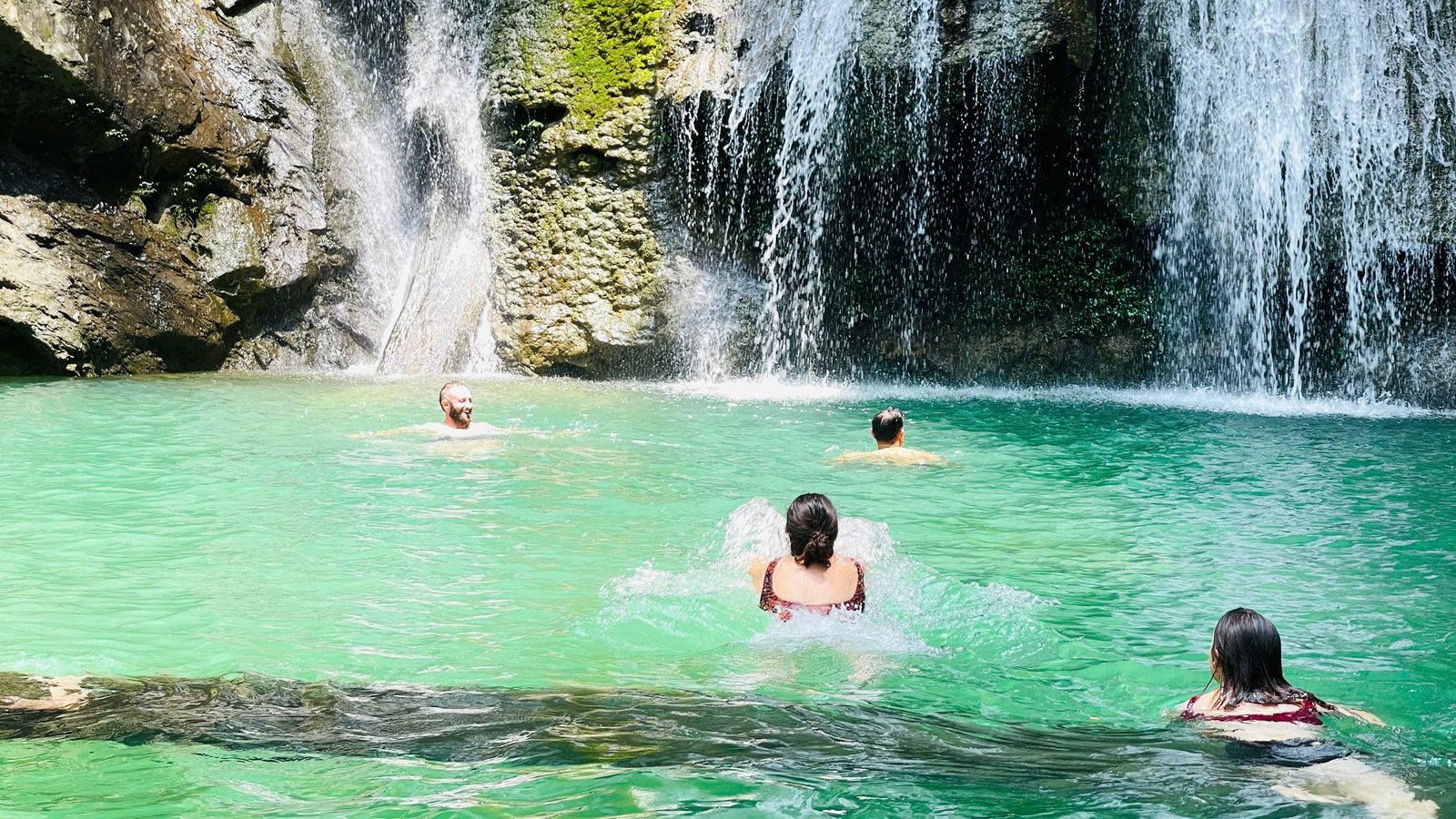

Ha Giang tea is some of the oldest, cleanest tea in the world — grown on ancient Shan Tuyet trees that have stood for centuries on the misty slopes of the Tay Con Linh mountains. The most famous of these forests is in Cao Bo, a Dao village less than an hour from town, where families still climb the trees to hand-pick a single bud and two leaves, then roast the harvest over a wood fire the way their grandparents did. If you are riding the Ha Giang Loop, a morning spent learning to make Ha Giang tea is one of the region’s most underrated experiences.
At Ali Travel we’ve been guiding foreign riders through these highlands for years, and Cao Bo is the stop guests keep telling us they wish they’d known about sooner. This guide explains exactly what Ha Giang tea is, where to find it, when to go, what you’ll do, and how to bring some home — all from real time on the ground, not a brochure.
What is Ha Giang tea (Shan Tuyet)?
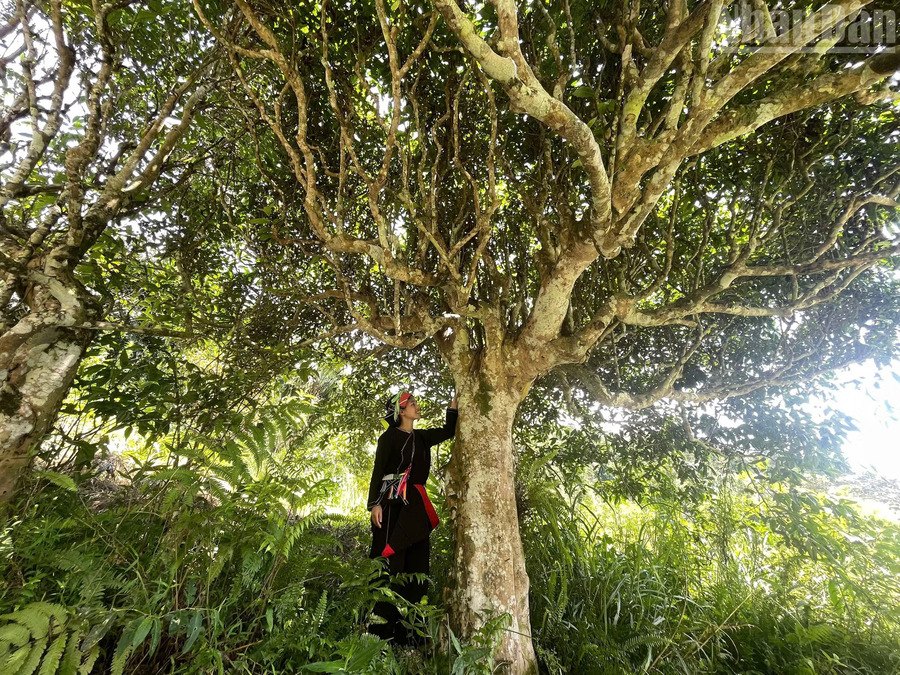
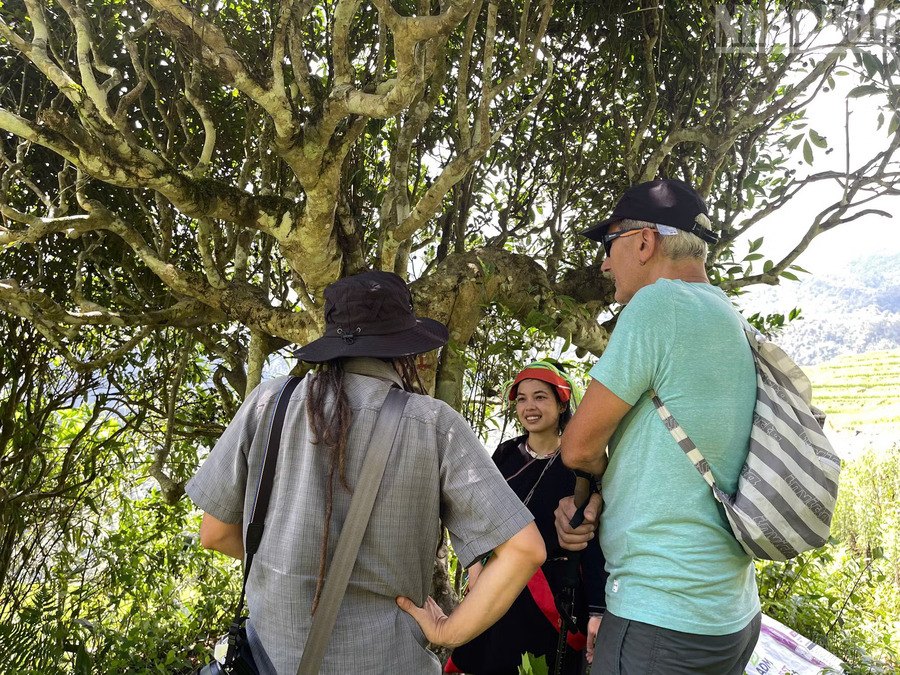
Ha Giang tea usually means Shan Tuyet tea — literally “snow mountain tea,” named for the fine white down that covers the young buds. Unlike the neat, waist-high plantation bushes you see elsewhere in Vietnam, Shan Tuyet grows as a full tree. The oldest specimens in Cao Bo are hundreds of years old, moss-covered, and so tall that harvesters have to climb into the branches to reach the leaves. The trunks are thick — locals say a single tree can be too wide for one person to wrap their arms around.
Because these trees grow wild at high altitude with no chemicals, the leaves are prized for a clean, sweet, slightly smoky cup. This is the tea that put Cao Bo on the map, and tasting it at the source is what makes a Ha Giang tea trip worth the detour.
Where is Cao Bo, Ha Giang’s ancient tea village?
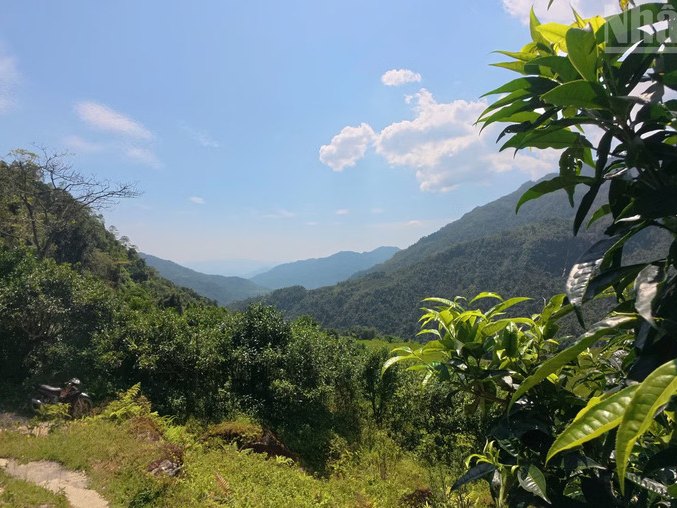
Cao Bo is a commune in the former Vi Xuyen district, on the western slopes of the Tay Con Linh massif — the highest mountain in Vietnam’s north-east. It sits at roughly 800–1,000 metres above sea level, high enough for the cool, damp climate that Shan Tuyet loves — the mountain terroir behind the best Ha Giang tea. The heart of the tea area is Lung Tao hamlet, tucked inside the buffer zone of the Tay Con Linh Nature Reserve, where wooden Dao stilt houses look out over terraced rice fields and forest.
It’s a short but steep detour of roughly 20–30 km from Ha Giang city, so most travellers visit as a half-day trip either at the start of their loop or on the way back. After the 2025 provincial merger the area is now part of Tuyen Quang province on paper, but locals, riders and tea buyers still call it Ha Giang — and so do we.
What makes these ancient tea trees so special?
In 2015 the Vietnam Association for Conservation of Nature and Environment recognised a group of 220 ancient Shan Tuyet tea trees in Cao Bo as official Vietnam Heritage Trees — a rare status that protects them and marks their cultural value. The wider commune holds more than 820 hectares of Shan Tuyet, with over 750 hectares in harvest, and more than 95% of residents are Dao people who depend on the crop.
That combination — centuries-old trees, a single ethnic community, and a protected mountain reserve — is why Ha Giang tea tastes and feels different from tea grown anywhere on a flat plantation. You are not looking at a farm; you are walking through a living heritage forest.
How is Shan Tuyet tea made by the Dao?
The magic of Ha Giang tea is in the hand-work. Here is the traditional process the Dao still use, step by step:
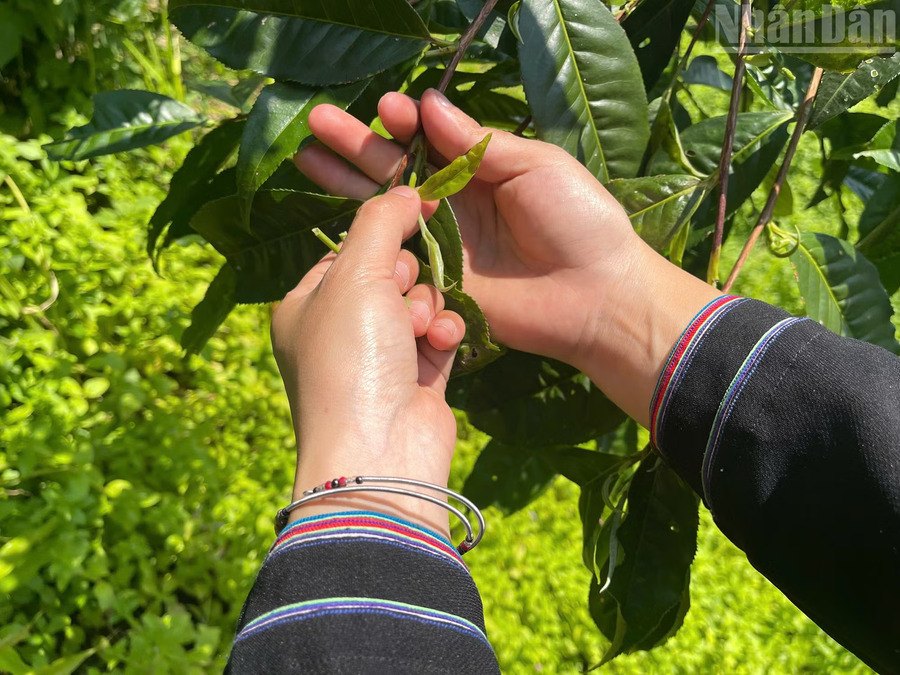
- Picking — only the top bud and one or two young leaves are taken, often by climbing the tree.
- Withering — fresh leaves rest and soften for a few hours.
- Pan-firing — leaves are tossed in a hot wok over a wood fire to stop oxidation.
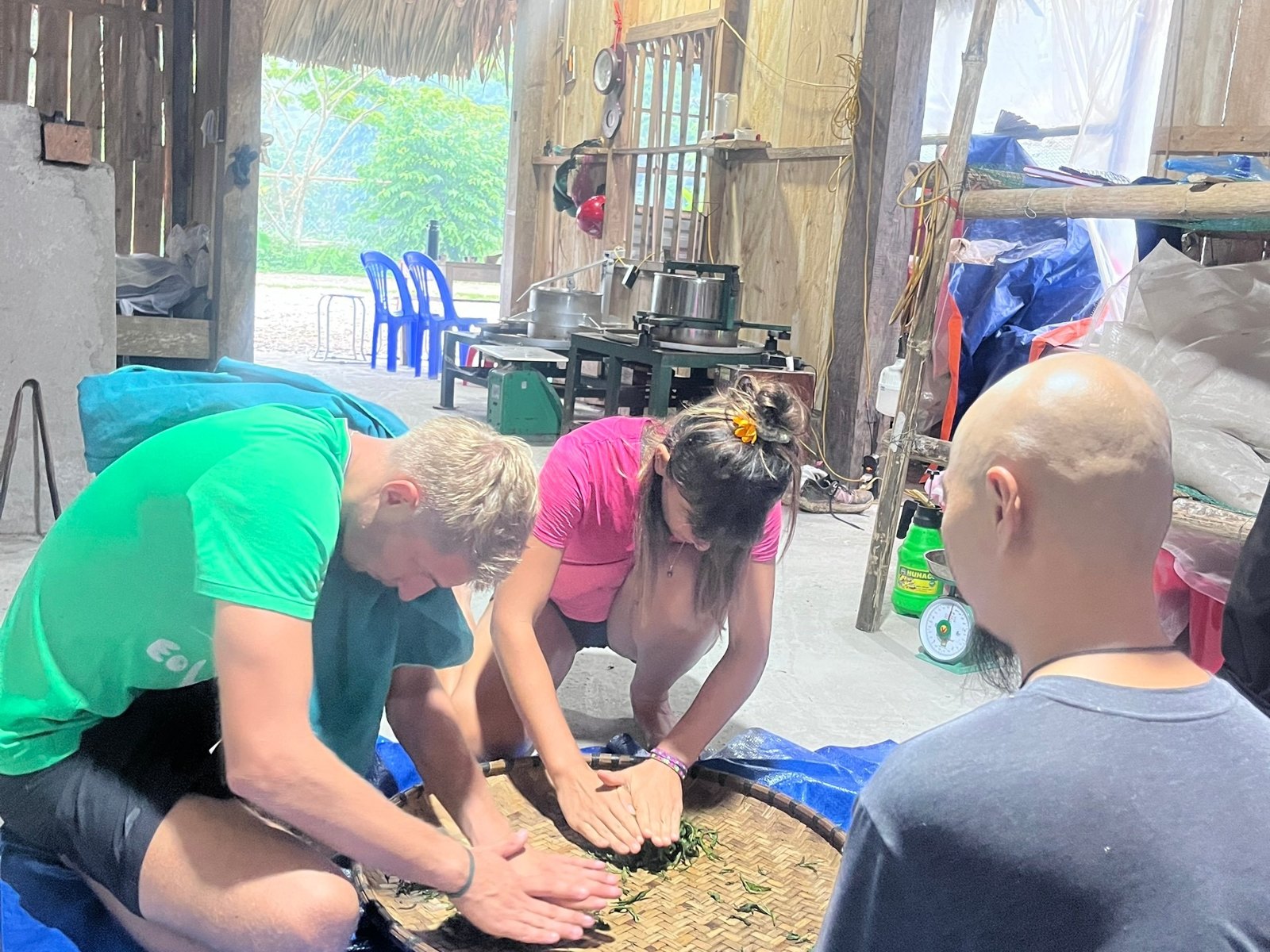
- Hand-rolling — the warm leaves are rolled by hand in a bamboo tray to shape them and release their oils.
- Drying — a final low, slow dry locks in the flavour and the snowy white tips.
From the same tree, families make several styles — delicate white tea, golden (Pu-erh-style) tea, darker black tea, and even tea pressed into bamboo tubes. Watching one leaf become five different teas is half the fun.
Can you visit Cao Bo and taste the tea?
Yes — and a Ha Giang tea visit is easier to arrange than most people expect. Cao Bo has quietly welcomed visitors since community-based tourism began in Lung Tao back in 2009, and a handful of Dao families now run homestays and tea workshops. In recent years guests from Japan, Switzerland, France, the UK, the USA, Australia and Italy have made the trip specifically for the tea. You do not need to be a tea expert — the whole point is to learn, taste and slow down.
This is exactly the kind of community-based tourism that keeps money in the village and the old trees standing, so a visit here does real good.
What will you actually do on a Ha Giang tea experience?
A typical Ha Giang tea morning with a Dao family looks like this:
- Trek a short trail into the heritage tea forest to see (and hug) the ancient trees.
- Pick your own basket of fresh buds alongside your host.
- Pan-fire and hand-roll the leaves yourself over the fire.
- Sit down to a tasting of white, golden and black tea from the same trees.
- Share a home-cooked Dao lunch with mountain and rice-terrace views.
On our trips, rolling the warm leaves by hand is always the moment guests remember — messy, fragrant and completely hands-on. It pairs beautifully with a slow day off the bike between harder riding sections of your Ha Giang Loop itinerary.
When is the best time to visit Ha Giang tea country?
Shan Tuyet is harvested in several rounds through the warmer months, so there is almost always something happening in the tea forest from spring to autumn. Here is a simple guide to plan around:
| Season | What’s happening |
| March–May (spring) | The prized spring harvest — youngest, sweetest buds and the best white tea. |
| June–August (summer) | Green, misty forest; frequent afternoon rain, so ride carefully. |
| September–October (autumn) | An autumn pick plus golden rice terraces below the tea trees — our favourite combination. |
| November–February (winter) | Cold and quiet; tea slows down but the mountain views are crisp and clear. |
For the wider picture of rain, temperature and road conditions, check our month-by-month Ha Giang weather guide before you lock in dates.
How do you get to the Cao Bo tea forest?
Cao Bo is reached by a paved-then-winding mountain road climbing off the main valley south-west of town. You have three easy options:
- By motorbike — the most flexible way; the climb itself is scenic. See our motorbike rental options if you’re self-riding.
- By Easy Rider — let a local driver handle the steep bends while you enjoy the view.
- By car — comfortable for families or in the rainy season.
Good news for paperwork: Cao Bo is inland, so you do not need the border permit required for the northern frontier near Lung Cu and Dong Van. It also pairs neatly with other Vi Xuyen highlights like the moss-roofed Xa Phin village and the rice terraces of Hoang Su Phi to the west.
Is Ha Giang tea worth buying to bring home?
Absolutely — a bag of genuine Shan Tuyet is one of the best, lightest and most useful souvenirs you can carry out of the mountains. When you buy directly from a Cao Bo family you know it is real, chemical-free and freshly made, and your money goes straight to the people who protect the trees. Look out for these styles:
- White tea (bạch trà) — the most delicate and prized; snowy tips, light and floral.
- Green tea — the everyday cup, grassy and slightly smoky.
- Golden / aged tea — deeper and smoother, good for keeping.
- Bamboo-tube tea — pressed and smoked in bamboo; a fun, giftable form.
Buy vacuum-sealed if you can, keep it away from strong smells, and you’ll be brewing a piece of Ha Giang tea heritage long after you get home.
Frequently asked questions about Ha Giang tea
What is Shan Tuyet tea?
Shan Tuyet (“snow mountain”) is a high-altitude Vietnamese tea grown on old-growth trees. In Ha Giang the most famous forest is in Cao Bo, where some trees are officially recognised heritage trees hundreds of years old.
How old are the Cao Bo tea trees?
Many are hundreds of years old. In 2015, 220 of them were certified as Vietnam Heritage Trees, and the commune has over 820 hectares of Shan Tuyet in total.
Do I need a permit to visit Cao Bo?
No. Cao Bo is inland, so the border permit needed for frontier areas like Lung Cu does not apply here. You can visit freely.
Can I do a tea experience without speaking Vietnamese?
Yes. Going with a guide or operator like Ali Travel means everything — picking, roasting and tasting — is explained in English, and your Dao hosts are used to welcoming international guests.
Is a Ha Giang tea trip suitable for families?
Very much so. The trek is short, the tea-making is hands-on and safe for children, and travelling by car makes the mountain road easy for all ages.
Plan your Ha Giang tea experience with Ali Travel
Cao Bo is proof that the best moments on the Ha Giang Loop are not only the famous passes — sometimes they are a quiet morning in a heritage tea forest with a Dao family. If you’d like us to build a Ha Giang tea visit into your route, or arrange a bike, driver or homestay, we’re happy to help. Message us on WhatsApp/Zalo at (+84) 787 652 333, email info@hagiangalitravel.com, or browse our Ha Giang tours at hagiangalitravel.com.
See more: