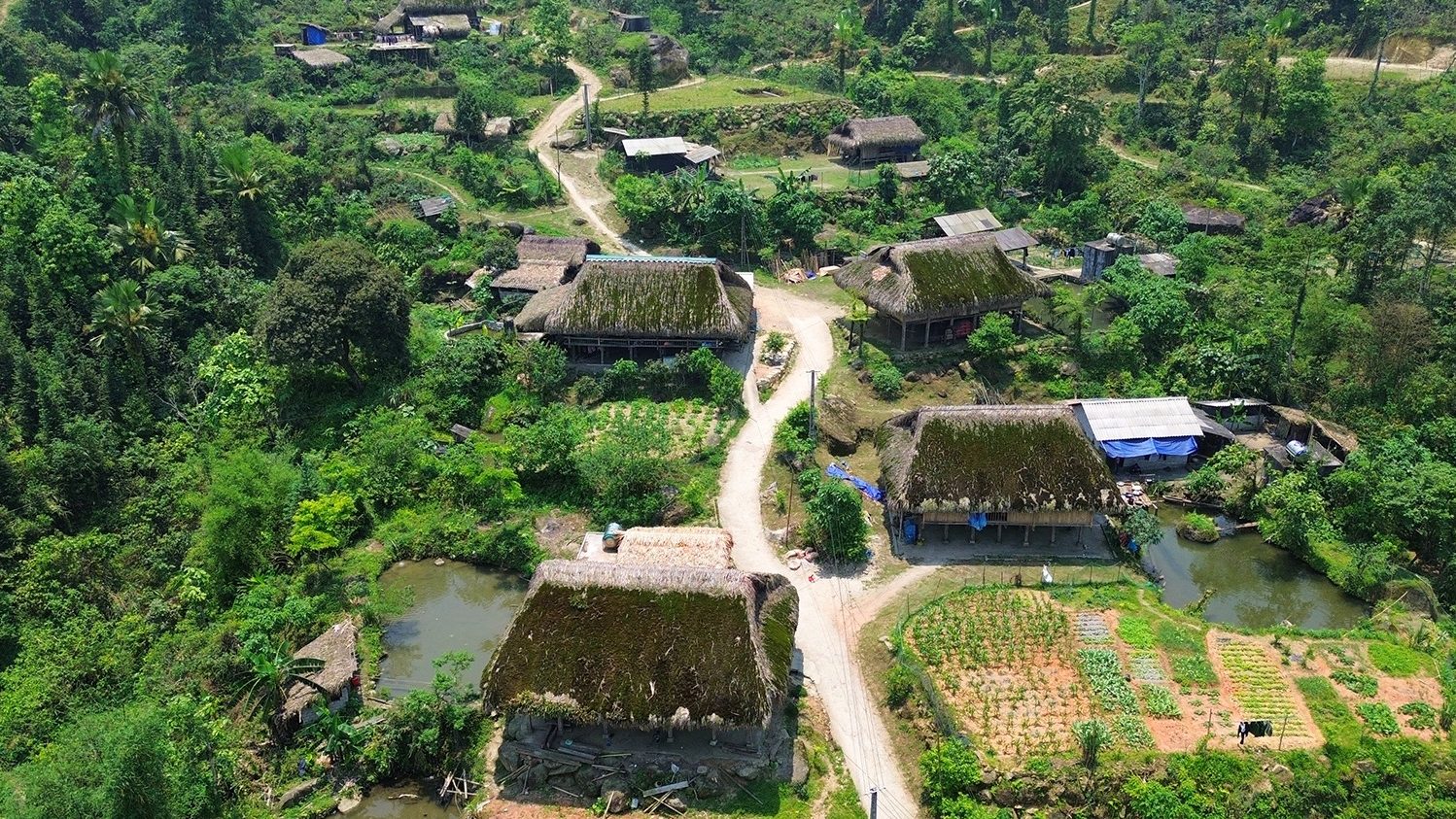

Xa Phin village is a small Dao hamlet hidden under the Tay Con Linh range, about 20 km from Ha Giang City, famous for its moss-covered roofs and golden rice terraces. It is one of the most photogenic — and least visited — corners of the Ha Giang region, and right now the rice is turning gold. If you want an authentic mountain village that most Loop riders drive straight past, this is it.
In this 2026 guide we cover exactly what Xa Phin village is, why its roofs are green with moss, when to visit for the golden harvest, how to get there, where to stay, and how to add it to your Ha Giang Loop responsibly.
What is Xa Phin village?
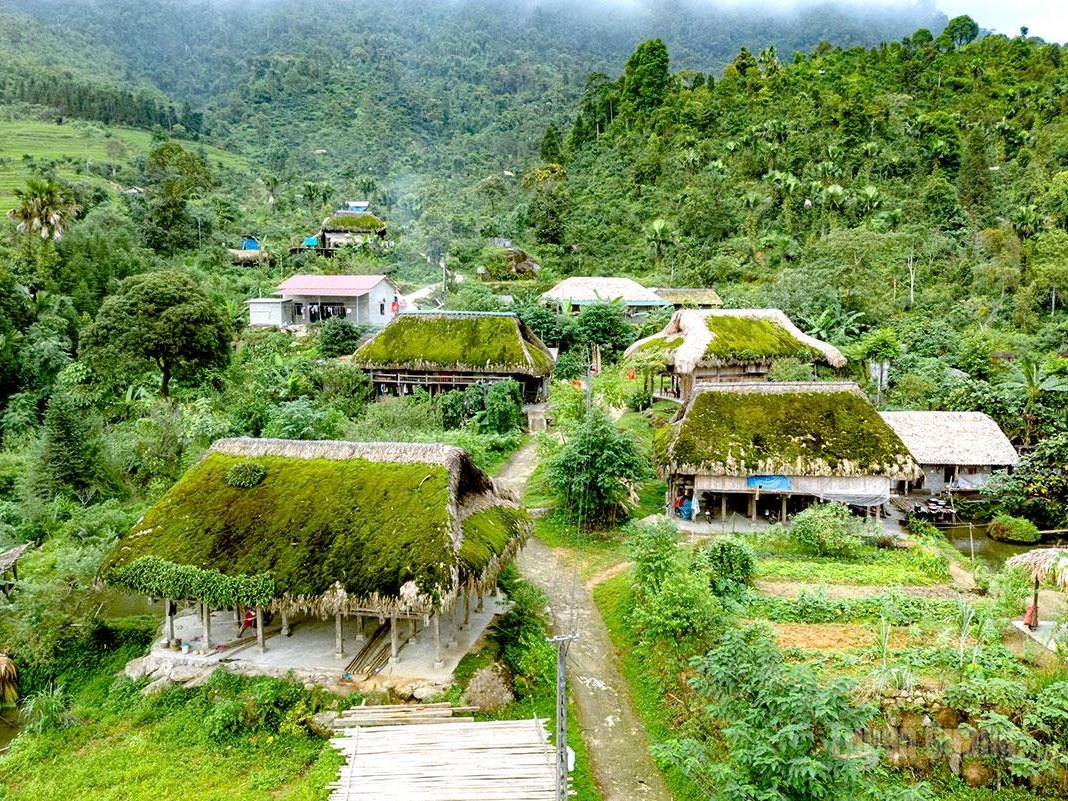
Xa Phin village (thon Xa Phin) sits in Thanh Thuy commune — formerly Phuong Tien, in the old Vi Xuyen district — in what is now Tuyen Quang province after the 2025 provincial merger. Locals and travellers still call this the Ha Giang region, and for planning purposes it belongs to the same highland world as the rest of the Loop.
The village is home to 54 households and around 270 people, all of the Dao ethnic group. It clings to a slope beneath Tay Con Linh, the highest peak in Northeast Vietnam (2,428 m). What sets Xa Phin village apart from the dozens of other hamlets you pass on the road is a rare combination: ancient palm-leaf roofs cloaked in living moss, wrapped by terraced rice fields that glow gold every autumn.
Quick facts for planning your visit:
- Where: Thanh Thuy commune, ~20 km from Ha Giang City, under Tay Con Linh.
- People: Dao community, 54 households / ~270 residents.
- Signature sight: 11 remaining moss-roof houses + 28 hectares of rice terraces.
- Best season: the golden harvest from mid-September to mid-October.
- Good for: photography, homestays, tea, slow travel and culture.
Why are the roofs of Xa Phin village covered in moss?
The magic of Xa Phin comes from its palm-leaf roofs. Year after year of mountain rain, thick fog and high humidity lets moss take hold naturally on the leaves, layering the roofs in green. Some are bright new-leaf green, others a deep, mossy shade — a slow, living process that takes many years to form.
Two important things to understand. First, the moss was never created for tourism: it simply grew from the Dao way of building with traditional materials. Second, these are real family homes — places where grandparents, parents and children still live, cook and sleep. Today only 11 moss-roof houses remain, which is exactly why a visit here feels so special, and why respect matters.
When is the best time to visit Xa Phin village?
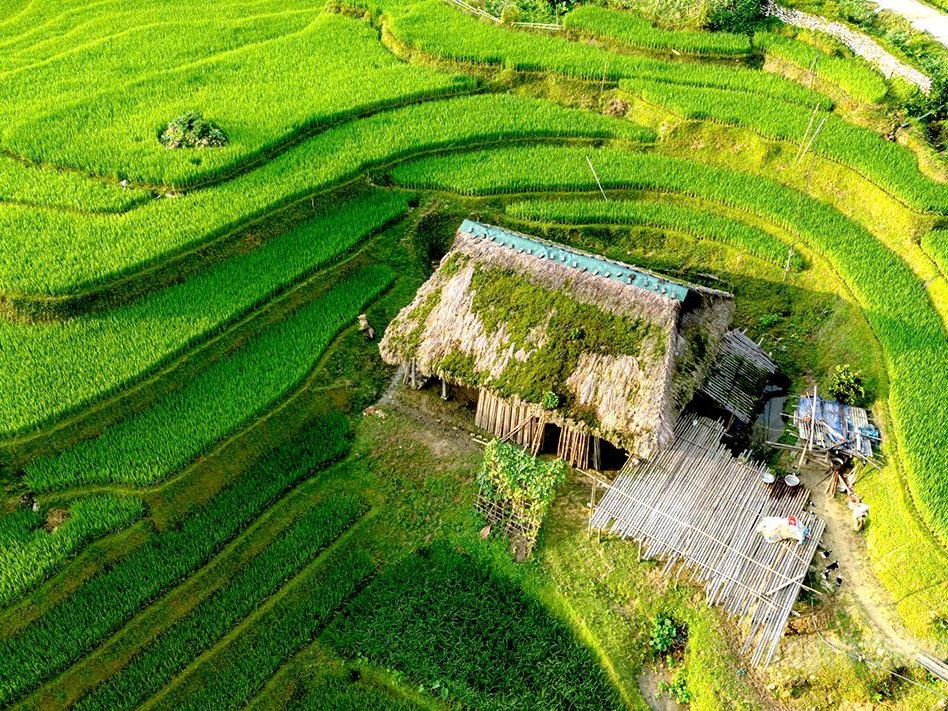
The most spectacular window is the golden rice season. Across the village’s 28 hectares of terraces, the rice ripens and turns gold from around mid-September into October, with the harvest arriving in late September and early October. This is when the contrast is at its best: gold fields below, green moss roofs above, dark forest and drifting cloud behind — a scene you won’t find anywhere else in Ha Giang. For a wider view of the region’s harvest, see our guide to the Ha Giang rice season.
The moss itself looks greenest just after rain, so a misty morning can be magic rather than a disappointment. Outside harvest time, spring brings fresh green paddies and the dry winter months bring clearer mountain views. Check our Ha Giang weather by month guide to match your trip to the conditions you want.
There is also a fixed date worth planning around. On 10 October 2026, Thanh Thuy commune hosts the “Golden Season – Moss House Village” festival right here in Xa Phin, with a traditional rice-harvesting contest, glutinous rice-cake (banh day) pounding, Dao cuisine, Shan Tuyet tea roasting and a showcase of local OCOP farm products.
How do you get to Xa Phin village from Ha Giang?
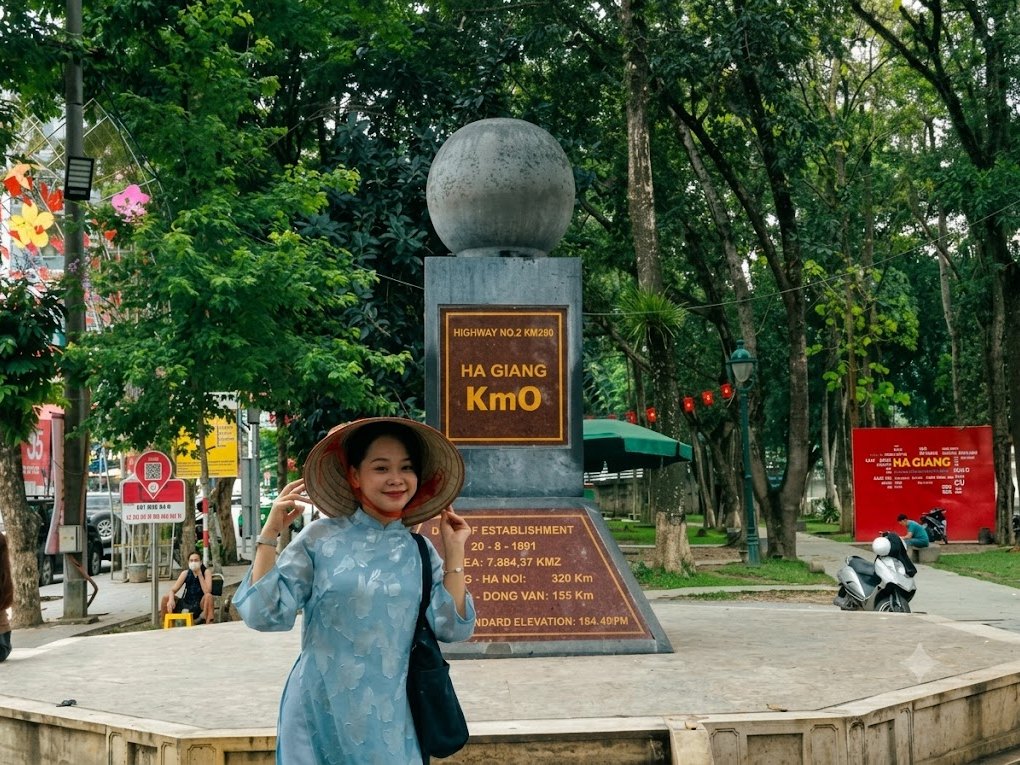
Getting to Xa Phin is refreshingly simple. From the centre of Ha Giang City it is a little over 20 km, following a road that winds up toward Tay Con Linh. As you climb, the air cools and forest, tea gardens and terraced fields open up around each bend.
Most travellers ride a motorbike or take a private car. Because the village sits close to Ha Giang City rather than deep on the northern circuit, it works beautifully as a half-day or full-day trip at the start or end of your adventure — the perfect warm-up before, or wind-down after, the big passes. New to the route? Start with our Ha Giang Loop itinerary and pick your riding style with our motorbike rental options.
Note on permits: Xa Phin lies inland beneath Tay Con Linh, not in the China-border strip, so the special border zone permit that some Loop stops require does not normally apply here. Rules can change, so it is always worth confirming locally — our Ha Giang border permit guide explains exactly where you do need one.
What can you do in Xa Phin village?
The best way to experience Xa Phin is slowly. Wander the small paths between the moss-roof homes, follow the terraces down the slope, and take time to meet the people who live here. A few highlights:
- Stay in a Dao homestay. A handful of families have restored their stilt houses to welcome guests — sleep in a traditional home, share a local meal and feel the cool mountain night.
- Taste Shan Tuyet tea. Ancient tea trees grow on the surrounding slopes. You can learn how the leaves are picked and pan-roasted, sip a fresh cup, and take some home as a gift.
- Hear Pao Dung singing and see traditional Dao dress — part of everyday culture here, not a staged show.
- Explore the wider valley: cardamom forests, the Deer Waterfall (Thac Huou) and a local sturgeon farm add extra stops to a day around the village.
- Photograph the harvest. When the rice ripens, the gold spreads across the slope beneath the green roofs — best shot from the yards of the stilt houses or the little path along the hillside.

Xa Phin village vs Hoang Su Phi terraces
If you have seen photos of Ha Giang’s most famous rice terraces, they were probably from Hoang Su Phi. So how does Xa Phin compare? Honestly, its terraces are far smaller — just 28 hectares — and they do not sweep across whole valleys the way Hoang Su Phi’s terraced fields do.
But that is also its charm. Here the fields are intimate, tucked between moss roofs and tea bushes, and the scenery changes with every step rather than opening into one grand panorama. Think of Xa Phin as the quiet, close-up counterpoint to Hoang Su Phi’s epic scale — and if you love terraces, consider pairing this trip with a stay in the Hoang Su Phi homestay villages further west.

Responsible travel tips for Xa Phin village
Because Xa Phin is a living community with only 11 moss-roof homes left, how you visit really matters. A few simple habits keep it welcoming for the next traveller:
- Ask before photographing people or stepping into a yard — these are homes, not exhibits.
- Spend locally: stay in a village homestay, eat a Dao meal and buy tea directly from families. When guests come for the beauty of the roofs, keeping those roofs alive becomes part of local livelihoods.
- Take your rubbish with you and stay on the paths between the fields.
- Give it time. A quick photo stop misses the point; a slow afternoon over a pot of tea is what makes Xa Phin unforgettable.
Is Xa Phin village worth adding to your Ha Giang Loop?
Yes — especially if you value authenticity over ticking off famous viewpoints. Because it is so close to town, Xa Phin is one of the easiest “hidden gems” to add without reshaping your route. Ride out on your arrival day while you get used to the bike, or save it as a gentle final morning before the bus back to Hanoi.
Pair it with a highland cloud-hunting sunrise over Tay Con Linh and you have a side-trip that feels a world away from the crowds. If you would rather have it all arranged — bike, guide and homestay — our Ha Giang tours team can build Xa Phin village into your trip.
Frequently asked questions about Xa Phin village
Where is Xa Phin village?
Xa Phin village is in Thanh Thuy commune (formerly Phuong Tien, Vi Xuyen) in the Ha Giang region — now part of Tuyen Quang province — about 20 km from Ha Giang City, at the foot of the Tay Con Linh range.
How many moss-roof houses are left in Xa Phin?
Just 11 traditional moss-roof houses remain, out of a village of 54 Dao households, which is why locals are working to preserve them.
When do the rice terraces turn gold?
The terraces ripen from mid-September to mid-October, with harvest around late September and early October — the same window as most of the region’s golden season.
Can you stay overnight in Xa Phin village?
Yes. Several Dao families now run homestays in restored stilt houses, where you can sleep in a traditional home, eat local food and taste Shan Tuyet tea.
Do I need a permit to visit Xa Phin village?
No special border permit is normally required, as the village is inland rather than in the China-border zone. Always confirm current rules locally before you ride.
Plan your visit with Ha Giang Ali Travel
As a Ha Giang-based team, we ride these back roads year-round and love sending travellers to quiet places like Xa Phin village. Whether you want a self-guided motorbike, an Easy Rider or a full private tour with a homestay night among the moss roofs, we can help you do it well — and responsibly.
Message us anytime on WhatsApp/Zalo at (+84) 787 652 333 or email info@hagiangalitravel.com, and explore more at hagiangalitravel.com. Source and local details: Bao Tuyen Quang.