The best Ha Giang Loop photo spots are Quan Ba Heaven’s Gate, the Tham Ma Pass switchbacks, the H’Mong King’s Palace at Sa Phin, Lung Cu Flagpole, Dong Van Old Quarter, Ma Pi Leng Pass above the Nho Que River, the M-shaped road near Meo Vac and Bac Sum Pass. All eight sit on the standard 3–4 day route, so you do not need detours to get the shots. What makes the difference is when you arrive and where you stop.
We are a local team in Ha Giang City and our riders stop at these viewpoints every week. This guide lists the Ha Giang Loop photo spots in the order you meet them on the road, with the best light, the safe place to pull over and one honest tip for each.
Where Are the Best Ha Giang Loop Photo Spots?
Most travelers ride the Loop anticlockwise: north on Road 4C to Quan Ba and Yen Minh, up to Dong Van and Lung Cu, across Ma Pi Leng to Meo Vac, then back south. Here are the Ha Giang Loop photo spots in that order:
- Day 1: Quan Ba Heaven’s Gate and the Fairy Bosom Hills, Yen Minh pine forest, Tham Ma Pass, the H’Mong King’s Palace at Sa Phin.
- Day 2: Lung Cu Flagpole, Lo Lo Chai village, Dong Van Old Quarter, Ma Pi Leng Pass, the Tu San canyon viewpoint and the Nho Que River.
- Day 3: the M-shaped road near Meo Vac, then Bac Sum Pass on the way back to Ha Giang City.
This is the same order as our Dong Van & Ma Pi Leng 3-day tour, and the full route is explained in our Ha Giang Loop itinerary.
1. Quan Ba Heaven’s Gate: What Is the Best Time for Photos?
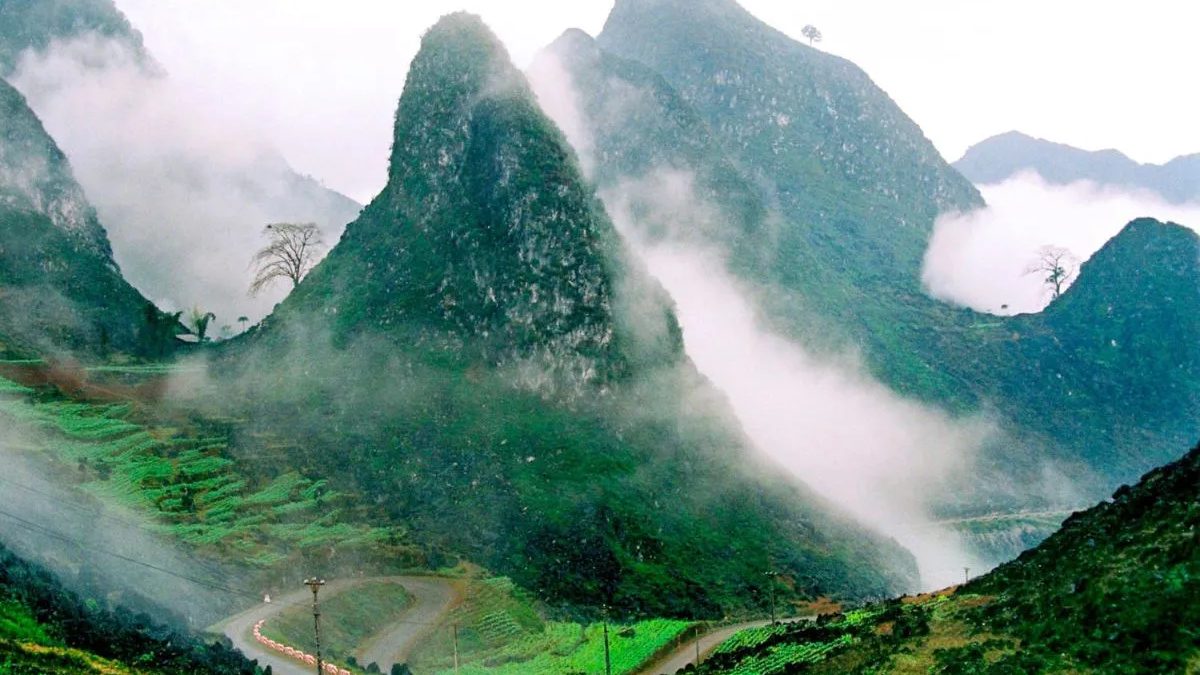
Heaven’s Gate is the first big view of the trip, on Road 4C north of Ha Giang City. From the top of the pass you look down on the Quan Ba valley and the two rounded Fairy Bosom Hills (the “Twin Mountains”) sitting in the rice fields.
- Best light: mid-morning, when the early mist has lifted but the sun is still soft on the valley.
- Where to stop: the viewpoint area at the top of the pass, not on the bends below it.
- Tip: a longer lens (or phone zoom) makes the Twin Mountains look bigger against the valley.

Read more in our guide to Quan Ba Heaven’s Gate and the Twin Mountains. The Yen Minh pine forest an hour later is a quieter bonus stop, best with low afternoon sun through the trees.
2. Tham Ma Pass: The Classic Switchback Shot
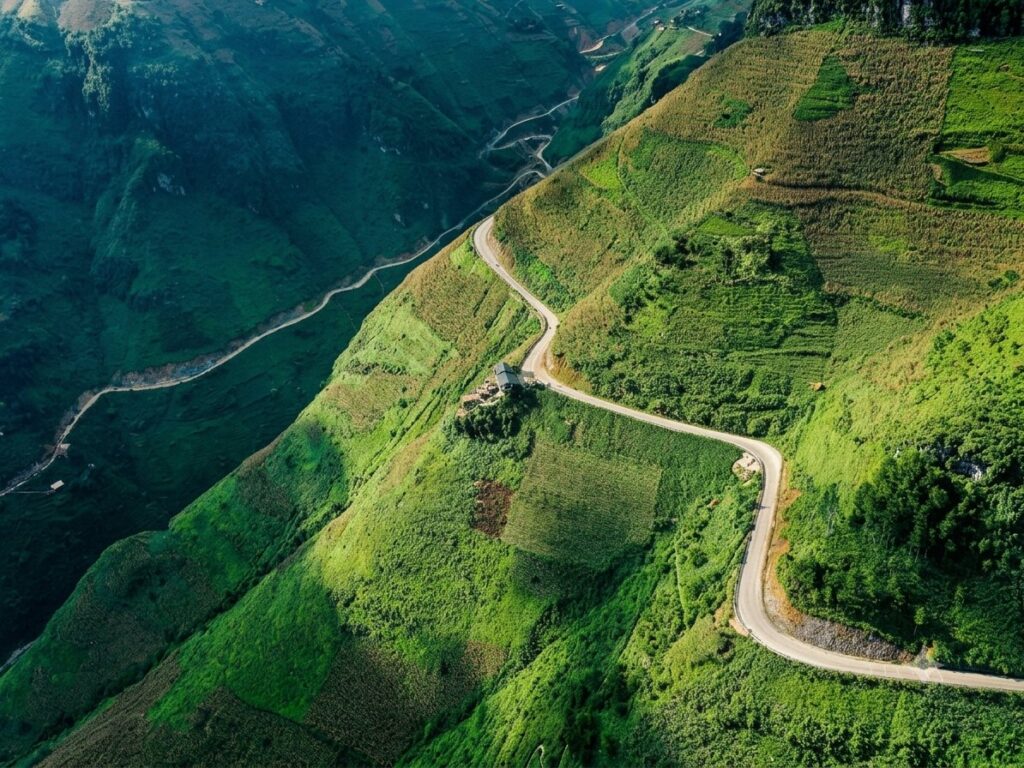
Among the Ha Giang Loop photo spots, if there is one picture everyone takes, it is the zigzag road of Tham Ma Pass seen from the top. The switchbacks look best from above, with riders climbing the bends.
- Best light: afternoon, when the sun lights the slope and the road shines against the green.
- Where to stop: the flat area at the top of the pass, where vendors and local families gather. Never stop on the bends themselves.
- Tip: local children and women often offer photos with flower baskets for a small fee. That is fine if you want it – agree before you shoot, and do not photograph people who say no.

3. The H’Mong King’s Palace at Sa Phin
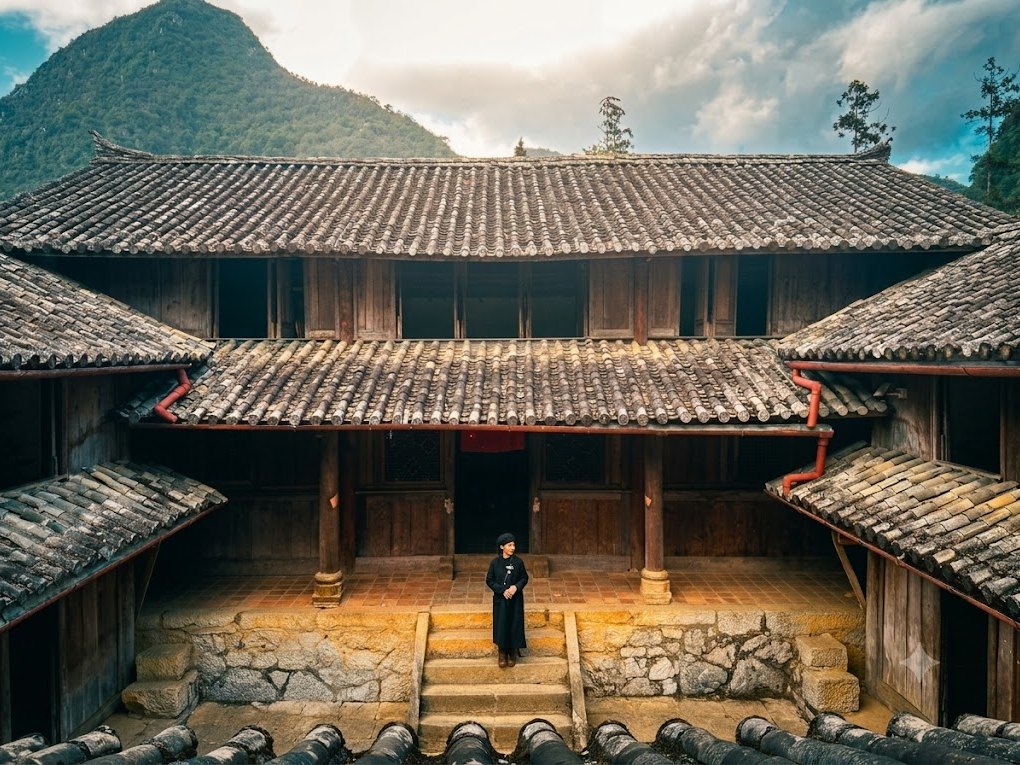
The palace of the Vuong family is a stone and timber mansion from 1928, built by Vuong Chinh Duc, the H’Mong leader known as the “King of the Meo”. It is one of the few Ha Giang Loop photo spots where the subject is architecture, not landscape.
- Best light: late afternoon, when warm light falls into the inner courtyards.
- Tip: shoot symmetrical frames through the gates and courtyards, and wait for other visitors to move – the place empties quickly between groups.
Nearby, Pao’s House in Lung Cam village adds yellow mud walls and old tiled roofs to your set.
4. Lung Cu Flagpole: Is the Climb Worth It for Photos?
Yes, it is one of the Ha Giang Loop photo spots worth the effort. Lung Cu Flagpole marks the northernmost point of Vietnam, and the 286 steps up give you a wide view over terraced fields and the border hills. The flag flying on top measures 54 square metres, one for each of Vietnam’s 54 ethnic groups.
- Best light: early morning, when cloud often sits in the valleys below the tower.
- Tip: the best frame of the tower itself is from the road below, looking up; the best landscape frame is from the top, looking down.

Walk down afterwards to Lo Lo Chai village, home to the Black Lo Lo people, for mud houses, stone walls and a slower pace. More on the tower itself in our Lung Cu Flag Tower guide.
5. Dong Van Old Quarter and the Sunday Market
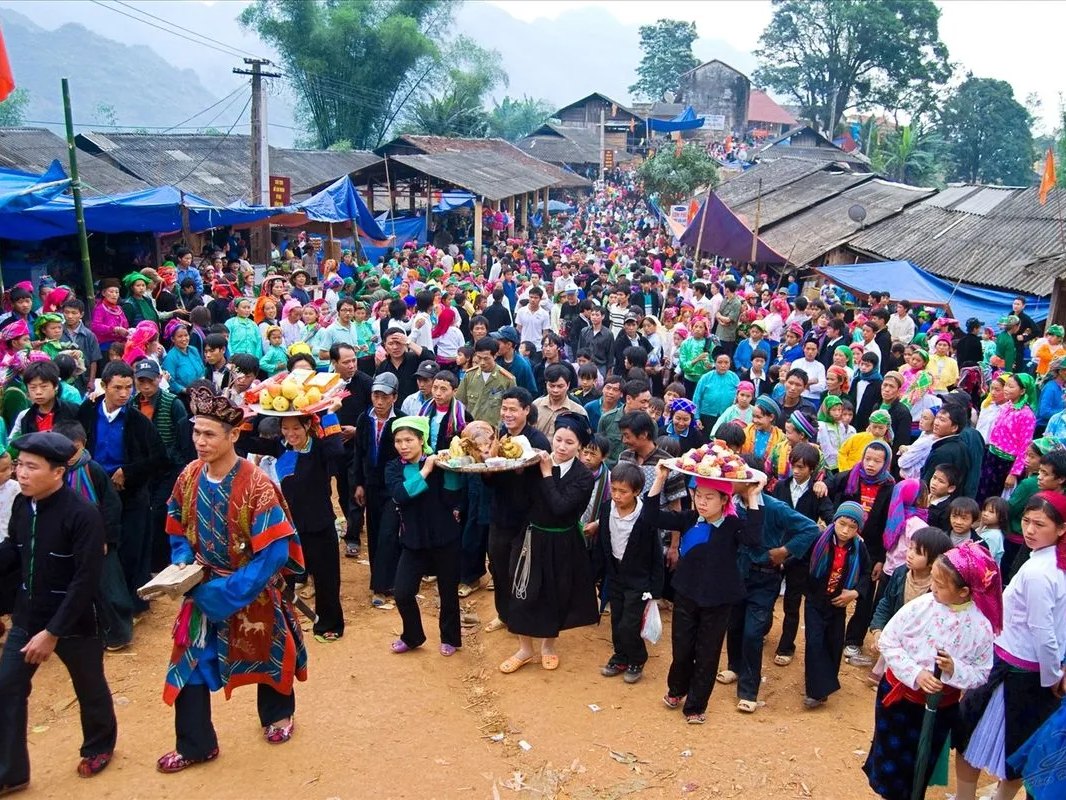
Dong Van town sits in the heart of the Dong Van Karst Plateau, recognised by UNESCO as a Global Geopark. The old quarter has two-storey houses with tiled roofs and lanterns, and it is at its most colourful on market and festival days, when families come in from the villages. Of all the Ha Giang Loop photo spots, it is the best for people photography.
- Best light: blue hour, just after sunset, when the lanterns come on.
- Tip: if your route passes on a Sunday morning, the weekly market is the richest people-photography of the trip. Ask before you take close portraits – a smile and a gesture to your camera is enough.
See our guides to Dong Van Ancient Street and the Dong Van night market.
6. Ma Pi Leng Pass: The Most Famous of the Ha Giang Loop Photo Spots
Ma Pi Leng is the cliff road between Dong Van and Meo Vac, carved into the side of the Nho Que gorge. Of all the Ha Giang Loop photo spots, this is the one people remember: a thin road on a green wall, with the river far below.
- Best light: morning for the river (the gorge falls into shadow in late afternoon), or late afternoon for warm light on the road.
- Where to stop: the official viewpoints along the pass. Traffic here includes trucks and buses, so do not stop on a blind bend for a picture.
- Tip: the narrow walking path on the cliff side gives the classic “person on the edge” shot. Stay on the path, wear proper shoes and never climb the rocks for a better angle.
The Tu San canyon viewpoint and the Nho Que River
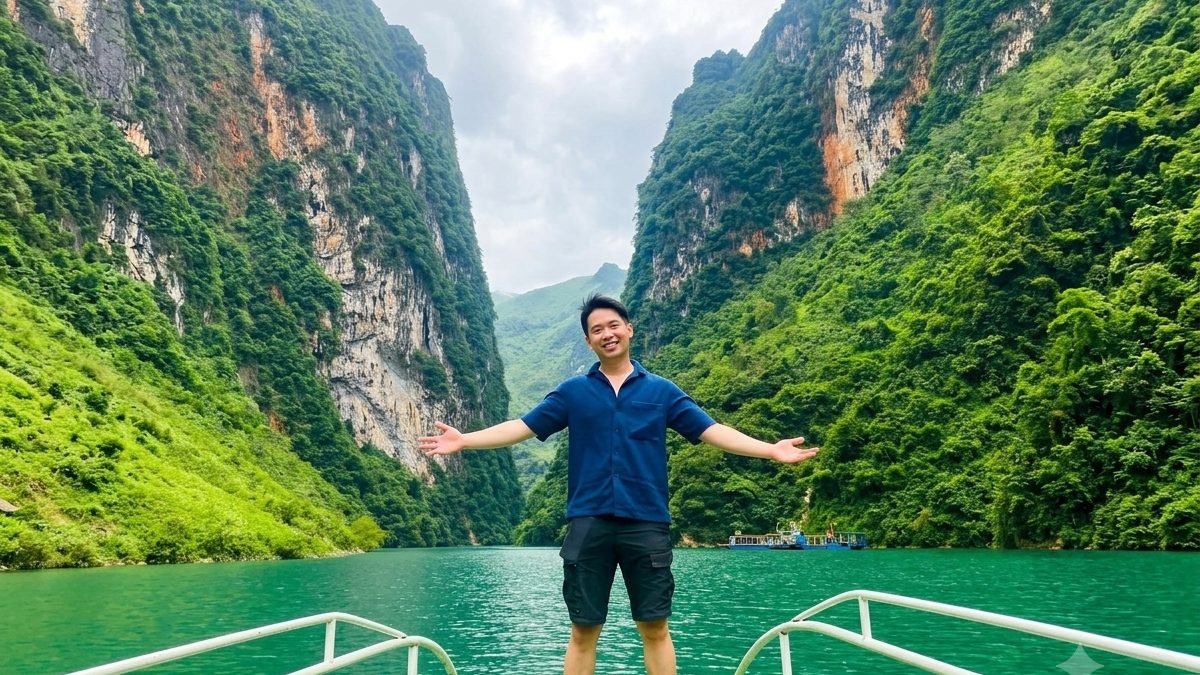
Just below the pass, the Tu San canyon viewpoint looks straight down on the jade-green Nho Que River. The water colour is strongest in the dry months; after heavy rain it can turn brown. On our tours you also take the boat through the Tu San Canyon, which gives you the view from below – a completely different photo.

More in our guides to Ma Pi Leng Pass, Tu San Canyon and the Nho Que River boat trip.
7. The M-Shaped Road Near Meo Vac
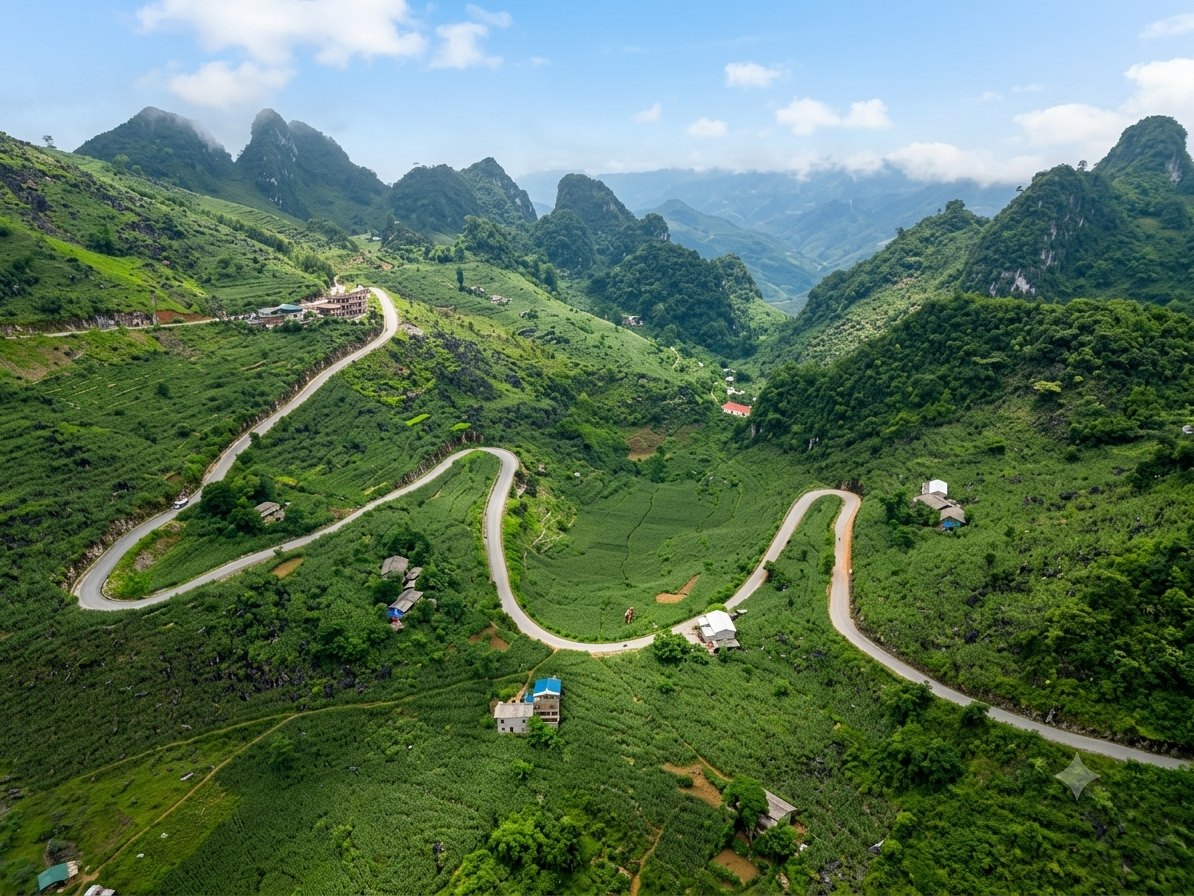
Outside Meo Vac, the road folds back on itself across a green valley in a shape locals call the “M road”. It is one of the less crowded Ha Giang Loop photo spots, and it looks best from higher ground above the bends.
- Best light: morning, before haze builds in the valley.
- Tip: wait for a motorbike to enter the bends – a small rider gives the scale that makes the photo work.
8. Bac Sum Pass on the Way Back
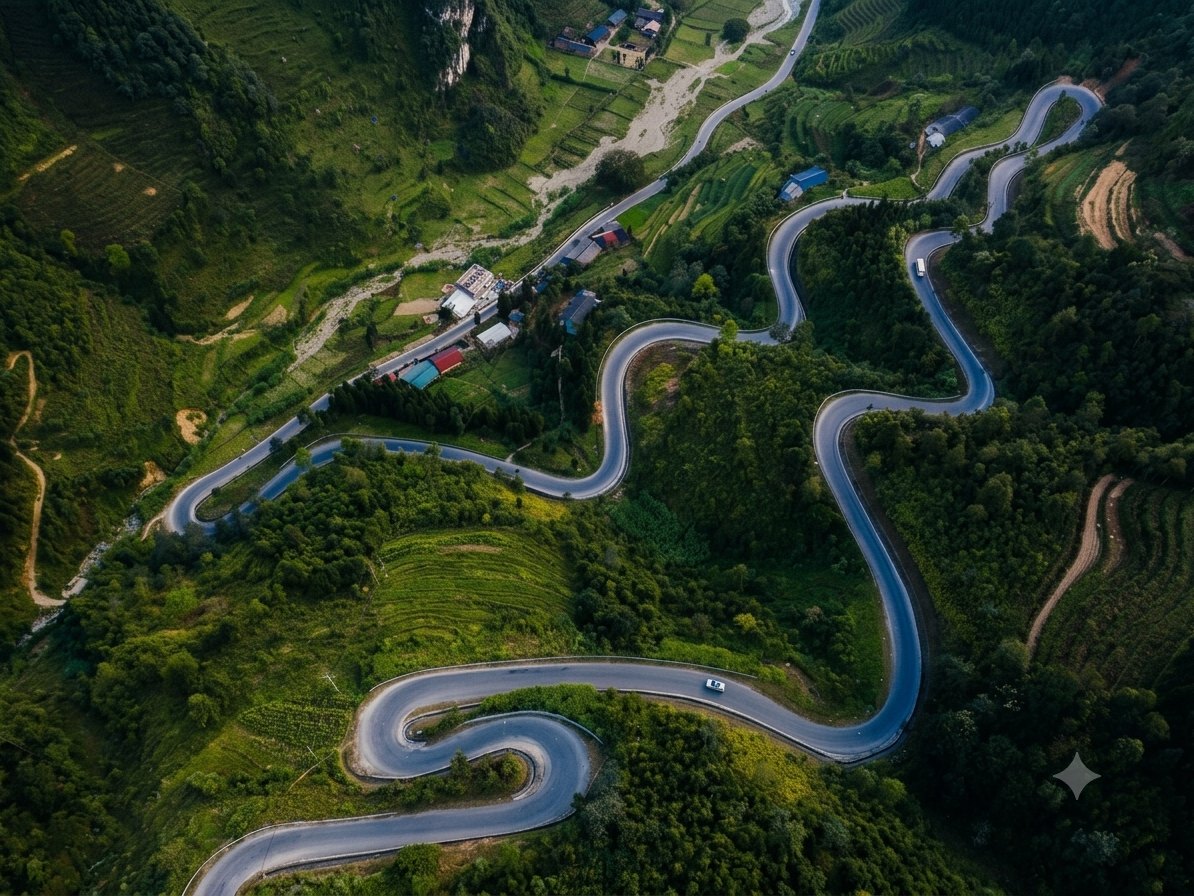
On the last day of the 3-day route, the road back to Ha Giang City climbs Bac Sum Pass, with a last look at the Fairy Bosom Hills. The tight curves seen from above are among the most graphic Ha Giang Loop photo spots, and many riders miss them because they are tired and thinking of the bus.
- Best light: afternoon, when you usually pass anyway.
- Tip: keep one battery or phone charge for the last day – this is where most people run out.
When Is the Best Season for Ha Giang Loop Photo Spots?
Each season changes the same Ha Giang Loop photo spots completely:
- September to early October: golden rice terraces, especially in Hoang Su Phi and along the valleys. See our Ha Giang rice season guide.
- October to November: pink and white buckwheat flowers along the roads near Dong Van and Sa Phin, plus clear skies. See the buckwheat flower guide.
- December to February: cold, sometimes misty or foggy mornings – moody photos, but some views can disappear in cloud.
- Spring: plum and peach blossom around villages, fresh green fields.
- Summer: the greenest landscape of the year, with rain and haze to plan around. Read our rainy season guide.
For month-by-month conditions, check Ha Giang weather by month.
How Do You Photograph Ha Giang Loop Photo Spots Safely?
- Stop only where you can see and be seen. Pull fully off the road at viewpoints, never on a bend. Many close calls happen not while riding but when someone stops in the wrong place for a picture.
- Never ride and shoot. Mount a camera if you want riding footage, and let your Easy Rider or the person behind you film.
- Respect people. Ask before photographing anyone, especially children and elders. Do not hand out sweets or money for photos – it teaches children to skip school and chase tourists.
- Check the drone rules first. Flying a drone in Vietnam needs permission, and the Loop runs along the border. Check the current rules before you pack one.
- Pack for the cold. Batteries drain faster on cold mornings up on the plateau. Carry a power bank – our Ha Giang Loop packing list covers the rest.
For the road itself, read is the Ha Giang Loop safe? before you go.
Frequently Asked Questions
What is the most photographed place on the Ha Giang Loop?
Of all the Ha Giang Loop photo spots, Ma Pi Leng Pass above the Nho Que River is the most photographed, followed closely by the Tham Ma switchbacks and Lung Cu Flagpole.
Can I see all the Ha Giang Loop photo spots in 3 days?
Yes. All eight Ha Giang Loop photo spots in this guide are on the standard 3-day route. A fourth day, for example via Du Gia, adds waterfalls and villages and gives you more time for sunrise and sunset light.
Do I have to pay to take photos at the viewpoints?
The roadside viewpoints at the Ha Giang Loop photo spots are free. Some sites such as the H’Mong King’s Palace and Lung Cu Flagpole have entrance tickets, which are included on our tours. Posing with locals or flower baskets at Tham Ma is a private deal – agree the price first.
Is it better to ride myself or go with an Easy Rider for photos?
With an Easy Rider you can look around, film from the back seat and let someone who knows the safe pull-outs choose where to stop. Riding yourself gives more freedom but you will watch the road, not the view.
What camera do I need?
A modern phone is enough for most of the Ha Giang Loop photo spots. A zoom lens helps at Heaven’s Gate and Ma Pi Leng; a wide lens helps in Dong Van and at the palace.
Ride to the Best Photo Spots With a Local Team
Want to see these views without worrying about the road? Our Ha Giang Loop tours stop at all eight Ha Giang Loop photo spots in this guide, with entrance fees, the Nho Que boat and the border-area permit handled for you. Prefer your own pace? We also offer motorbike rental in Ha Giang City. Message us with your dates and we will suggest the route with the best light for your season.
📱 WhatsApp / Zalo: (+84) 787 652 333 | 📧 info@hagiangalitravel.com | 🌐 hagiangalitravel.com
See more: