Your cart is empty.


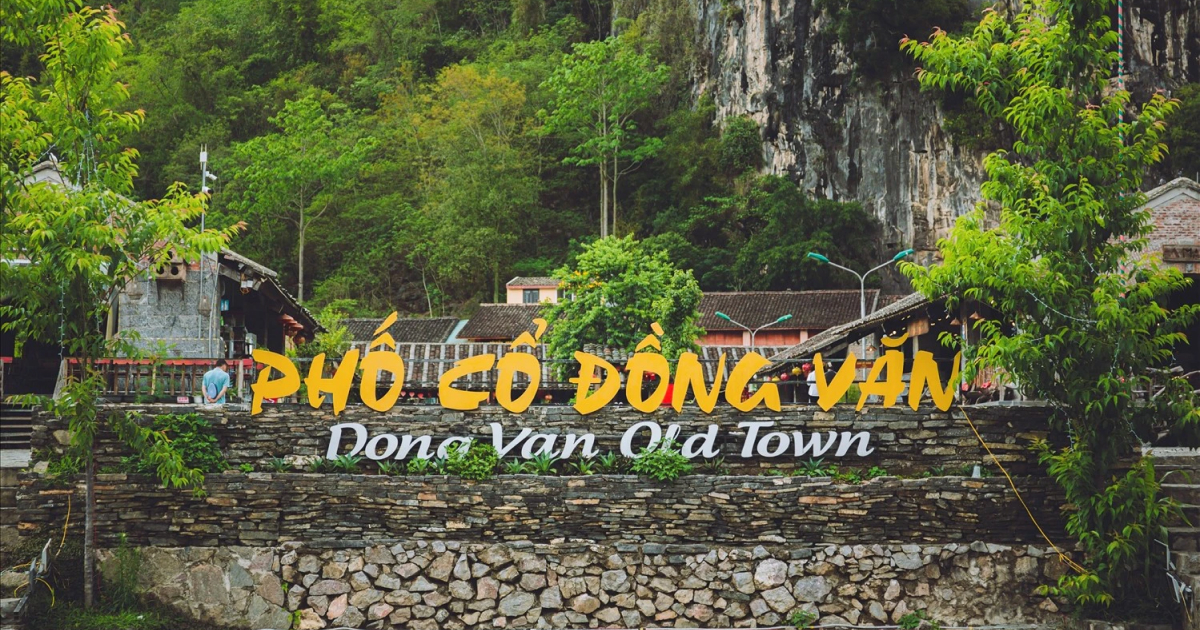
Nestled among majestic limestone mountains, the Dong Van Ancient Street appears like a “gray kingdom” of rocks and winds. This raw yet poetic natural masterpiece captures the hearts of every traveler who stops to admire its beauty. A journey to Dong Van would not be complete without visiting Dong Van Ancient Street, where time-honored culture, traditional architecture, and the rhythm of old life are preserved in the heart of the plateau. Join Ha Giang Ali Hostel to discover the precious gifts that nature and history have bestowed upon this northern land.
The Dong Van Karst Plateau stretches across the four districts of Dong Van, Meo Vac, Quan Ba, and Yen Minh, and is often referred to as a “living geological museum” in the northern borderlands of Ha Giang, Vietnam. Covering an area of nearly 2,500 km² at an average altitude of over 1,000 meters, the plateau is striking with its steep gray limestone mountains, uniquely shaped like “cat’s ears.”
Around 80% of the plateau is exposed limestone a vivid remnant of dramatic geological changes that took place hundreds of millions of years ago. Within these rocks, scientists have discovered precious fossils dating back 400 – 600 million years, serving as witnesses to the Earth’s evolutionary history.
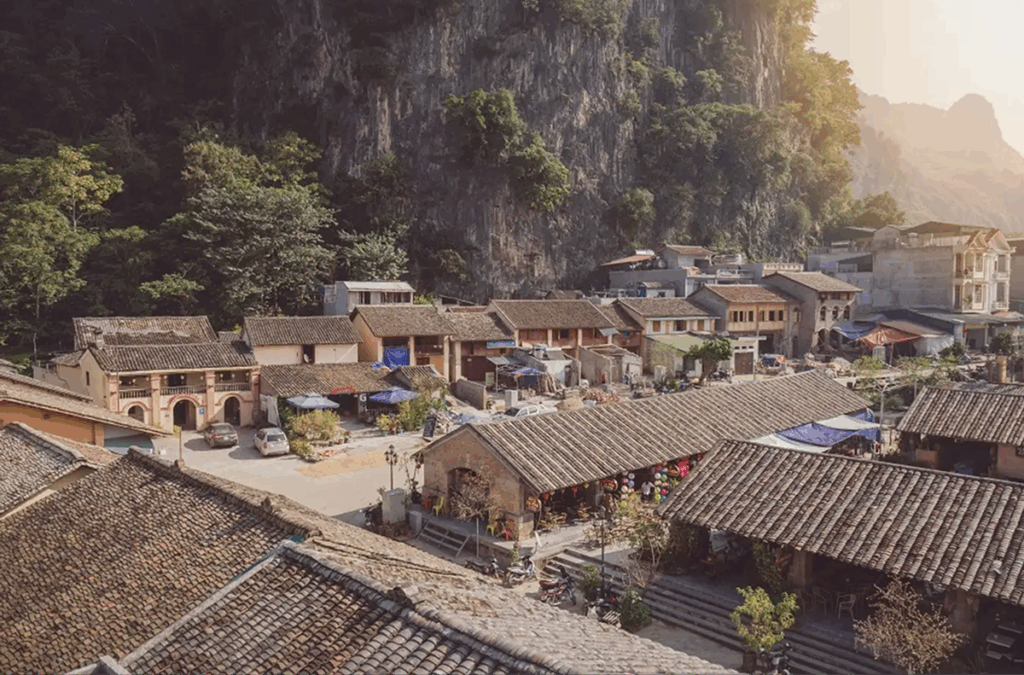
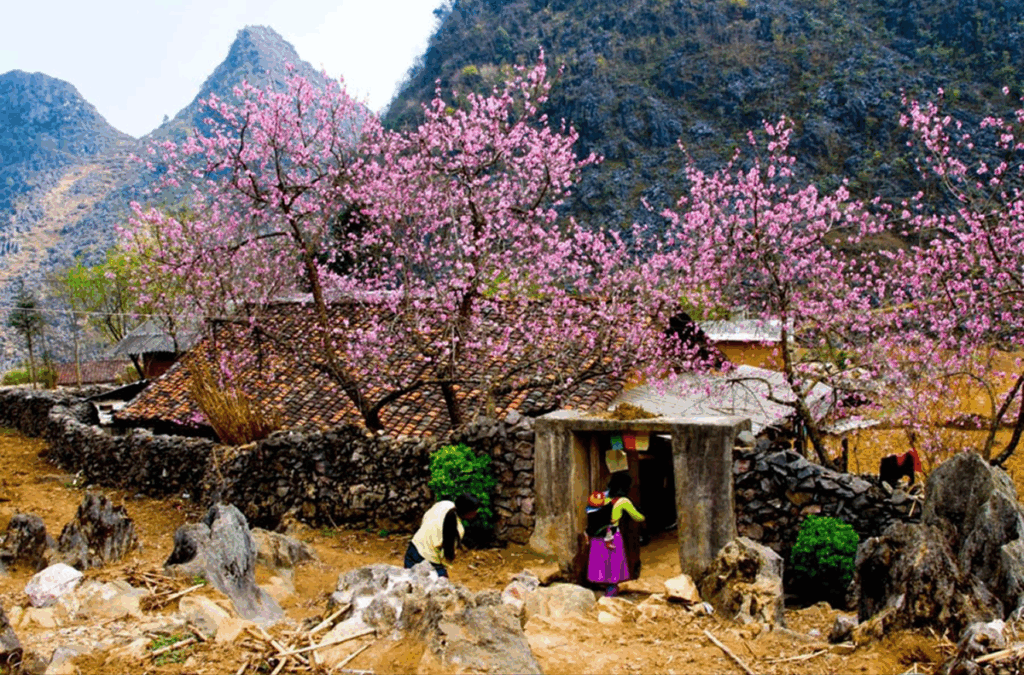
Beyond its majestic and mysterious landscapes, the Dong Van Karst Plateau is also a vibrant cultural hub, home to diverse ethnic minorities who preserve their traditional lifestyles and customs. A highlight for visitors is a stroll through Dong Van Ancient Street, where ancient architecture blends harmoniously with the everyday rhythm of mountain life.
Recognized for its outstanding geological, ecological, and cultural values, the Dong Van Karst Plateau was officially designated as a UNESCO Global Geopark in 2010, cementing its place as one of the most unique travel destinations in the world.
Travelers can reach the Dong Van Karst Plateau Geopark from Hanoi or other major cities through several options, each offering different levels of comfort, cost, and adventure:
Whether you choose a bus, car, or motorbike, the journey to Dong Van Karst Plateau Geopark is as rewarding as the destination itself where geological wonders meet rich cultural heritage at places like Dong Van Ancient Street.
Recognized in 2010 as Vietnam’s first UNESCO Global Geopark, the Dong Van Karst Plateau is one of the largest limestone geoparks in Asia. This remarkable destination preserves a geological heritage that spans more than 400 million years, showcasing dramatic karst landscapes, fossilized marine life, and unique cultural traditions. Together, these natural and cultural treasures make Dong Van not only a geological wonder but also a living heritage site.
The Dong Van Karst Plateau is among the oldest geological formations in Southeast Asia, with rock layers dating back over 400–600 million years. These ancient formations reveal the fascinating story of Earth’s evolution from prehistoric oceans and tectonic shifts to episodes of intense volcanic activity.
Visitors can observe exposed strata, folded rock layers, and sedimentary structures, all of which serve as a visible record of time. Often referred to as a “natural geological museum,” Dong Van offers invaluable insights into the processes that have shaped our planet for half a billion years.
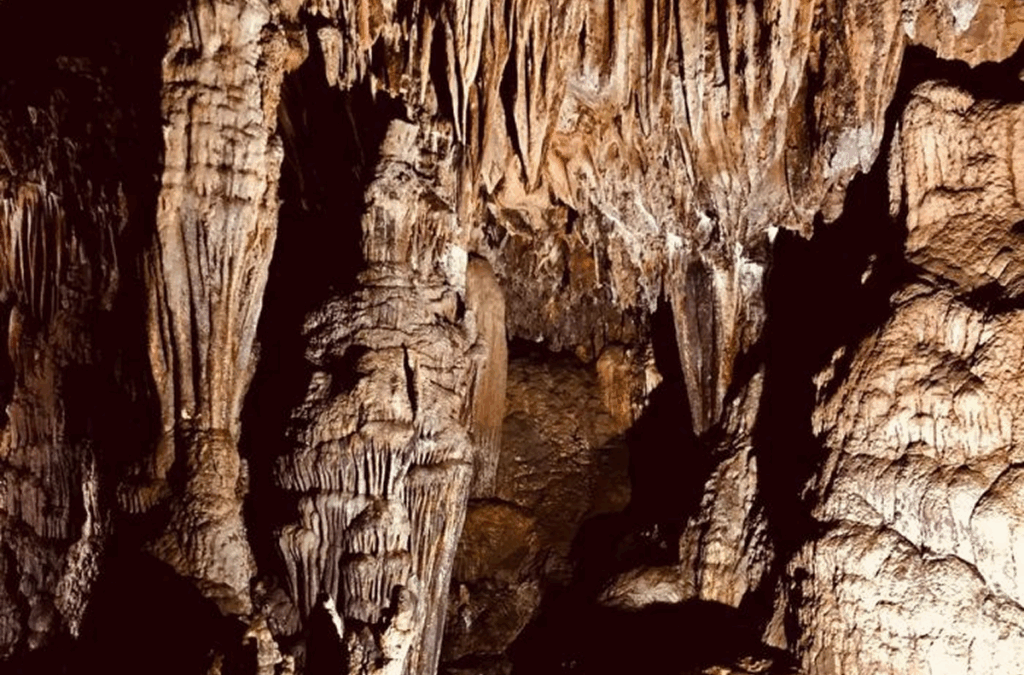
Scattered across the plateau are fossils of trilobites, brachiopods, crinoids, and ancient marine plants. Dating back to the Paleozoic Era, these fossils are powerful evidence that the region was once a thriving seabed. They not only provide vital data for scientists studying ancient ecosystems and climate change but also establish Dong Van Karst Plateau as a globally significant site for paleontological research and conservation.
Dong Van is renowned for its striking karst topography, which includes limestone towers, cones, sinkholes, valleys, and underground rivers. Each sub-region of the geopark demonstrates a different stage of karst development, shaped over millions of years by water flow and chemical weathering. These dramatic landforms highlight both the scientific importance and the breathtaking beauty of the geopark.
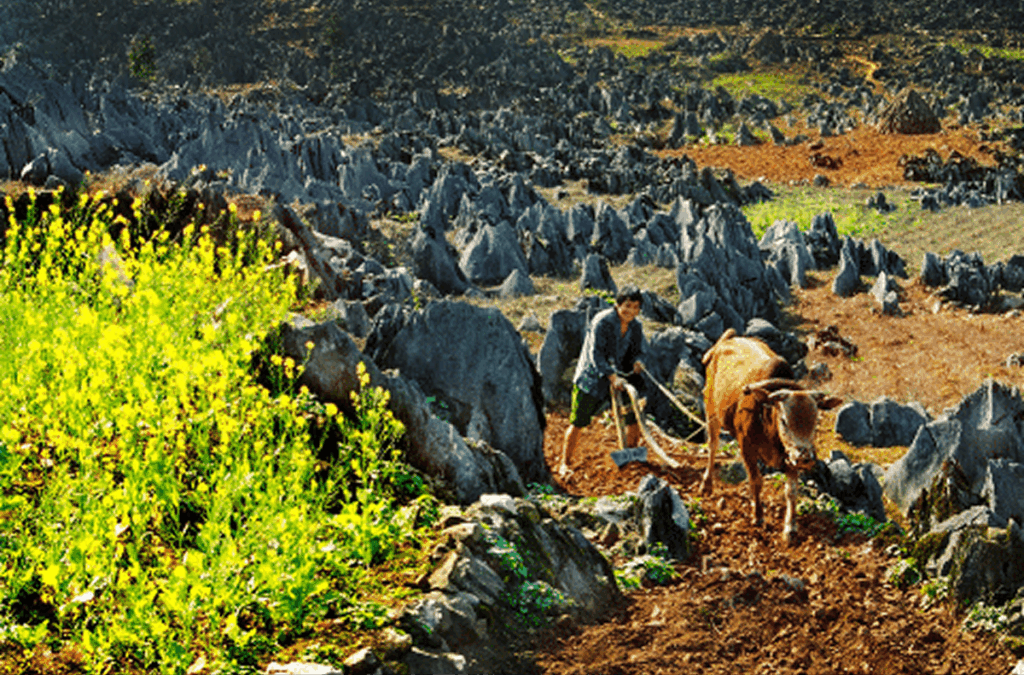
Beyond its geological marvels, the Dong Van Karst Plateau reflects the resilience and harmony of human life with nature. For centuries, ethnic communities have adapted to the rocky terrain cultivating terraced fields on steep cliffs, building stone fences, and preserving their unique traditions in Dong Van Ancient Street and surrounding villages. This deep cultural connection enriches the geopark, making it a rare place where natural and human heritage coexist.
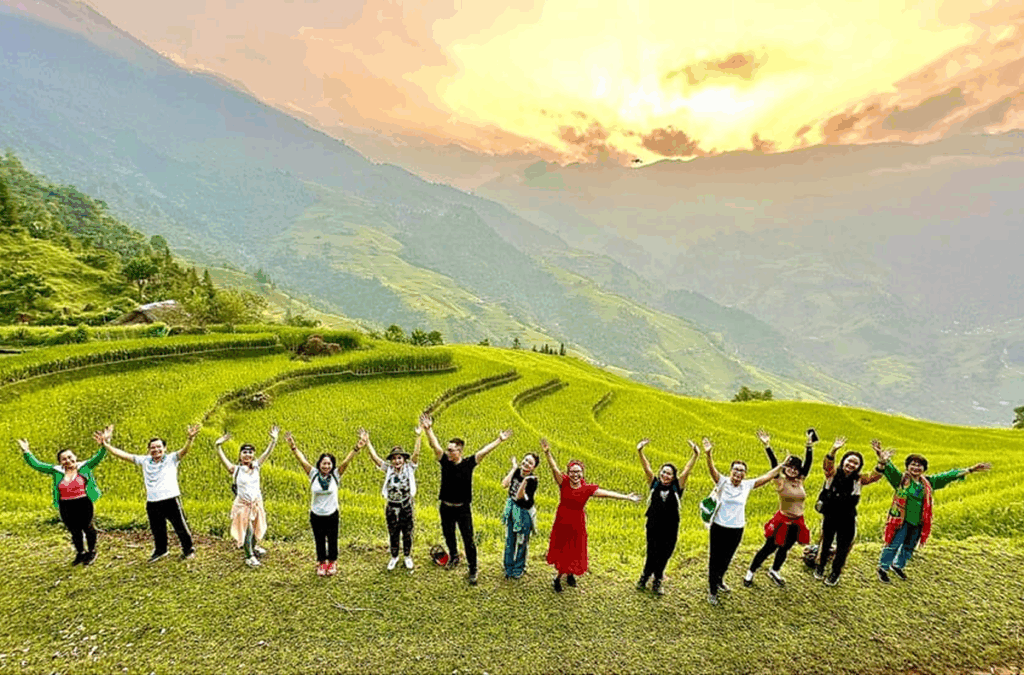
The Dong Van Karst Plateau is not only famous for its majestic limestone mountains but also for its unique cultural experiences. From breathtaking mountain passes to vibrant local markets, ancient villages, and the iconic Dong Van Ancient Street, every moment here promises unforgettable memories.
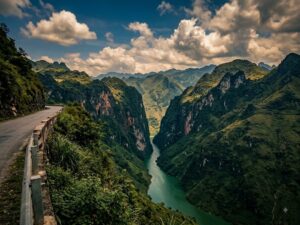
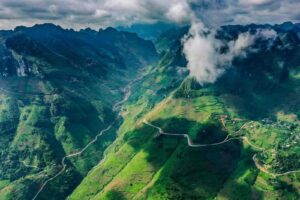
Your journey across the Dong Van Karst Plateau becomes truly memorable as you ride along winding mountain roads. The sharp bends, steep slopes, and endless curves bring both thrill and challenge. Among them, Ma Pi Leng Pass, one of Vietnam’s “Four Great Passes,” is an absolute must-visit. From its peak, travelers can admire the panoramic view of the emerald-green Nho Que River winding between towering cliffs a natural masterpiece of stunning beauty.
No trip to Dong Van is complete without visiting its vibrant highland markets. More than just trading hubs, these markets are cultural spaces where H’Mong, Dao, Lo Lo, and other ethnic groups gather after a week of hard work.
Held every Sunday, Dong Van Market attracts people from surrounding villages, offering local specialties like corn wine, smoked buffalo meat, cardamom, and handwoven brocade clothing. Don’t miss the chance to savor traditional dishes such as “thang co,” “men men,” and five-colored sticky rice flavors unique to the northern highlands.
The cheerful laughter, colorful ethnic costumes, and the aroma of traditional foods create a lively and unforgettable cultural experience for visitors.
Beyond the bustling markets, travelers should take time to explore ancient villages such as Lung Cam, Sung La, Pho Cao, and especially Dong Van Ancient Street. These places preserve traditional culture through clay-wall houses, wooden gates, and distinctive ethnic lifestyles.
Visitors can even stay overnight at local homestays, joining daily activities like cooking, weaving, or farming. It’s the perfect way to immerse yourself in highland life, experience the warmth of local hospitality, and better understand the traditions of Vietnam’s northernmost land.
For nature lovers, cloud hunting on the Dong Van Karst Plateau is an unmissable experience. In winter, when mist covers the mountains, head to Quan Ba Heaven’s Gate or Bac Sum Pass to witness a sea of white clouds stretching to the horizon.
Equally enchanting is the moment of sunrise. As the first rays of sunlight pierce through the mist, the entire plateau awakens in golden light, creating a breathtaking scene that leaves every visitor mesmerized.
Dong Van Ancient Street in Ha Giang holds countless hidden charms that cannot be fully expressed in just a few lines. Only by setting foot here, seeing with your own eyes, and immersing yourself in the atmosphere can you truly appreciate the unique beauty of this historic street and the majestic stone plateau. So, what are you waiting for? Save these travel tips from Ha Giang Ali Hostel, start planning your journey today, and don’t forget to book your tour, team-building trip, or travel event with us for an unforgettable experience. For more details, reach out to us directly via Fanpage: Ha Giang Ali Hostel or Hotline/WhatsApp: +84 787 652 333.
See more:
Dong Van is where our tours spend the first night, so you see the old quarter at dusk rather than in passing.
Dong Van & Ma Pi Leng3 days 2 nightsSee dates & prices →Ha Giang Loop Express2 days 1 nightSee dates & prices →
Free cancellation up to 24 hours before departure — 100% refund, deposit included.