Is the Ha Giang Loop in February worth it? Yes, and it is the liveliest month of the winter. Tet, the Lunar New Year, falls on Saturday 6 February 2027; peach and plum blossoms open around the holiday and peak in the weeks after it; and the spring festivals of the Hmong and Tay people follow straight behind. The trade-offs are real too: a +30% surcharge on the tour service from 4 to 11 February, more drizzle and fog than January, and busy homestays on blossom weekends. Pick the right week and the Ha Giang Loop in February is one of the most photogenic, best-value trips of the year.
We are Ha Giang Ali Travel, a licensed local tour operator and hostel in Ha Giang city (now part of Tuyen Quang province after the 2025 merger). Most of our team spends Tet in these mountains, and our Easy Riders ride through every February, so this guide to the Ha Giang Loop in February is built on what we see on the road: the weather pattern, the festival calendar, the surcharge rules and the dates we would choose ourselves.
Ha Giang Loop in February at a glance
| Weather | Cool to cold and often grey. Mild afternoons in Ha Giang city, cold days and cold nights on the plateau. A degree or two warmer than January. |
| Rain | Light. About 39 mm over roughly 10 days at the city station: fine drizzle and damp fog rather than downpours. |
| Visibility | Fog on many mornings, more so in the second half of the month. Clear, sharp windows of two to four days after each cold surge are the best days of the Ha Giang Loop in February. |
| In bloom | Yellow mustard flowers in the valleys, then pink peach and white plum blossoms from Tet onwards. |
| Price notes | Normal price on 1 to 3 February and from 12 February. +30% on the tour service from 4 to 11 February 2027 (Tet). The full budget picture is in our Ha Giang Loop cost guide. |
| Best for | Travellers who want blossoms, Tet atmosphere and spring festivals, and accept some drizzle and fog in exchange. |
What is the weather like on the Ha Giang Loop in February?
February is the hinge between winter and spring. The long-term averages for the Ha Giang city station, compiled by the Vietnam Institute for Building Science and Technology and published in the climate table for Ha Giang, put February at a daily mean of 17.2°C, with average highs of 21.1°C and lows of 14.9°C, 38.8 mm of rain spread over about 10 rainy days, and only 56 hours of sunshine in the whole month. Three things to read from those numbers before you ride the Ha Giang Loop in February:
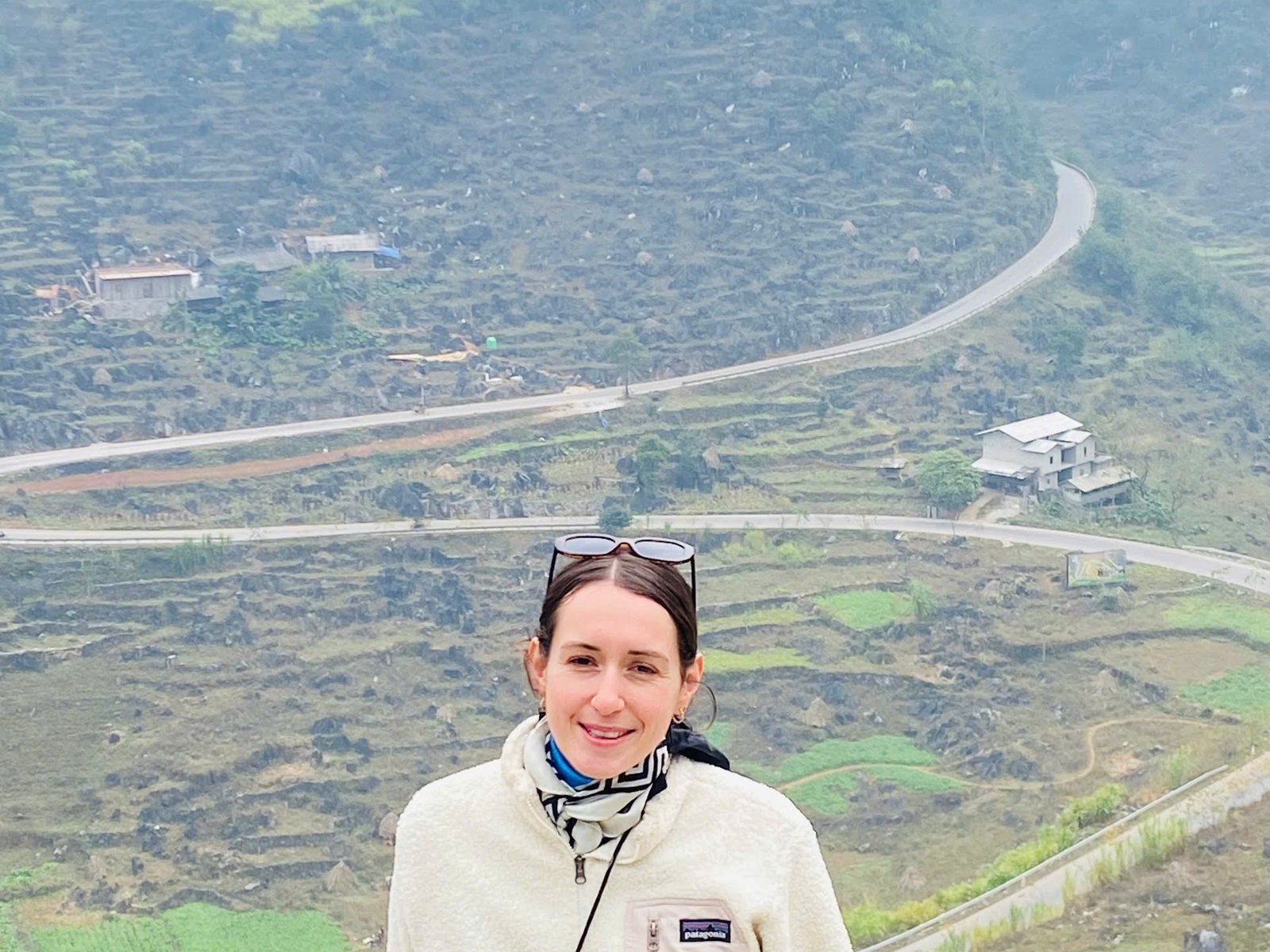
- It is warmer than January, but not warm: the city mean climbs from 15.6°C to 17.2°C, but the Loop runs across the Dong Van karst plateau, where Quan Ba, Yen Minh, Dong Van and Meo Vac sit roughly 1,000 to 1,600 metres up and run several degrees colder. Dong Van is usually the coldest night of the trip.
- It drizzles rather than pours: under 40 mm across ten days means the fine northern drizzle the Vietnamese call mua phun, plus low cloud, not the storms of summer. Roads get damp, not flooded, and landslides are rarely a concern.
- It is grey more often than not: fewer than two hours of sunshine a day on average. The bright days come in windows, usually the two to four days after a cold surge has passed, and those are the best riding days of the month.
Cold surges from the north still arrive two or three times in February. Each one brings a grey, damp day or two on the plateau, then a cold, clear spell with the sharpest views of the month. They are forecast several days ahead by the National Centre for Hydro-Meteorological Forecasting, and we check it before every departure. Days are also getting longer: by the end of February the sun sets a little after 6 pm, so riding days are less squeezed than in December. For the whole year side by side, see our Ha Giang weather by month guide.
Which week of February is best for the Ha Giang Loop?
The lunar calendar splits the Ha Giang Loop in February into four quite different trips. The dates below are for 2027, when Tet Eve is Friday 5 February and Lunar New Year’s Day is Saturday 6 February:
| Dates | What it is like | Price |
| 1 to 3 February | The last days before Tet. Highland markets at their fullest, families shopping for the holiday, the first blossoms opening. | Normal price |
| 4 to 11 February 2027 | Tet week. Quiet roads and villages on the first days, many shops and some homestays closed, then towns reopen step by step from about the fourth day of the new year. | +30% on the tour service |
| 12 to 20 February | Post-Tet spring. Blossoms near their peak, Gau Tao and Long Tong festivals in the villages, Vietnamese travellers on the road at weekends. | Normal price |
| 21 to 28 February | Quieter again. Blossoms fading in the low valleys but still out around the high villages. Drizzle and fog a little more common. | Normal price |
Our pick for the Ha Giang Loop in February is 12 to 20 February: blossoms, festivals and normal prices. If you prefer the buzz of the pre-Tet markets, 1 to 3 February gives you that at the normal price too. Two more dates worth knowing: Sunday 14 February 2027 is the first market day in Dong Van and Meo Vac that is safely clear of the holiday, and it is also Valentine’s Day, which is why the Ha Giang Loop in February is a favourite for couples. If you want to be on the Loop for Tet itself, read our guide to the Ha Giang Loop during Tet first and book early, because the night buses from Hanoi sell out around the holiday.
Will I see peach and plum blossoms on the Ha Giang Loop in February?
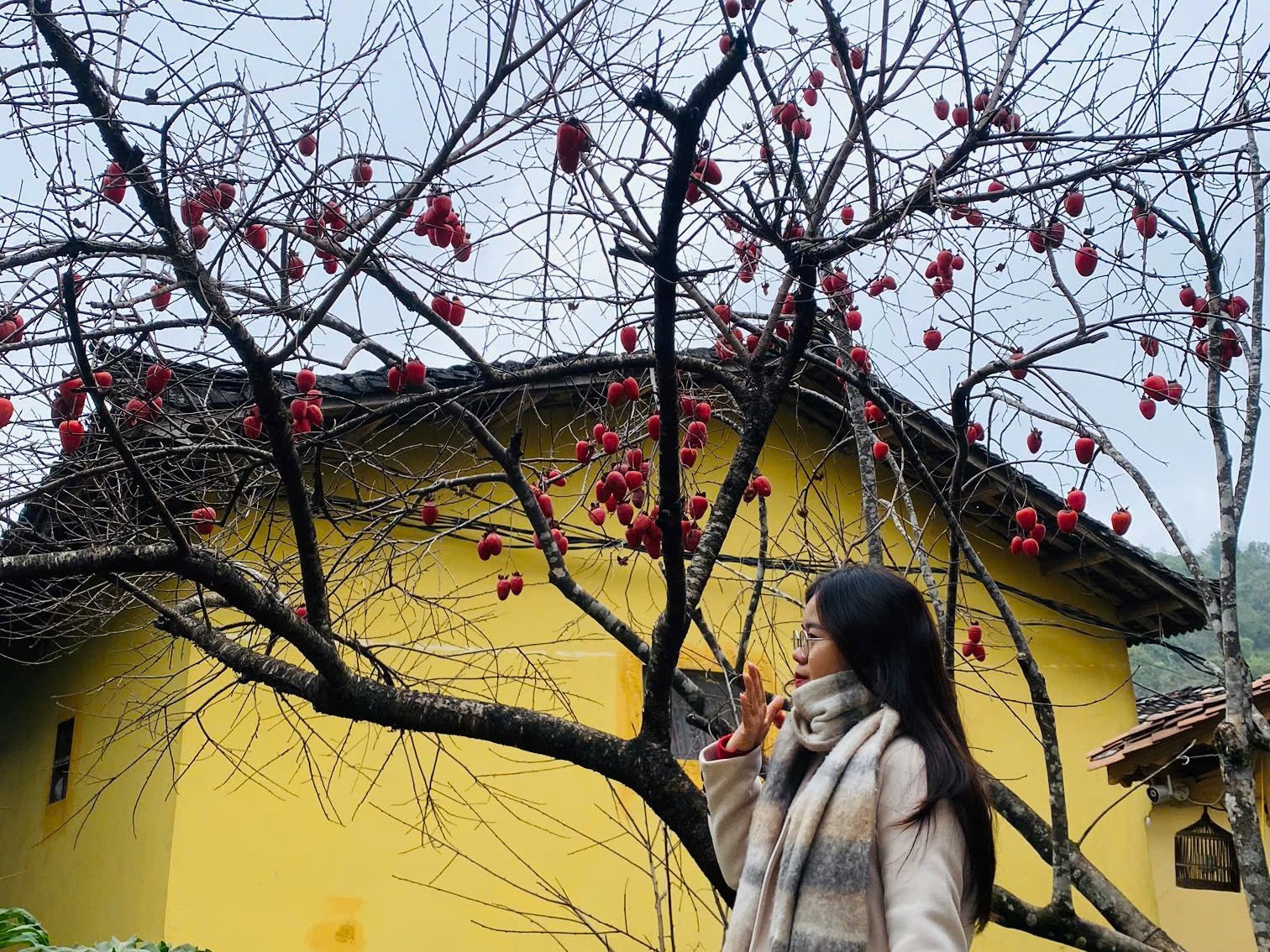
Very likely, and this is the best reason to choose the Ha Giang Loop in February over January. Pink peach blossom and white plum blossom open around Tet and peak in the two or three weeks after it. The lower valleys flower first and the high plateau later, so a cold January pushes the whole season back by a week or two. What you are looking for, and where:
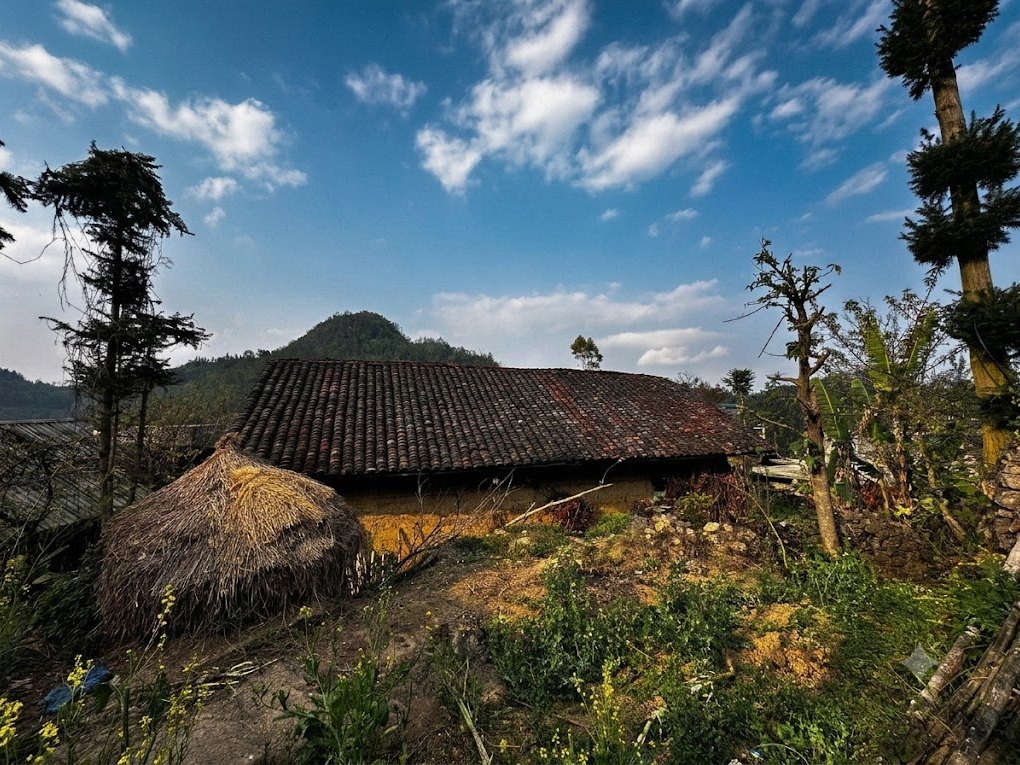
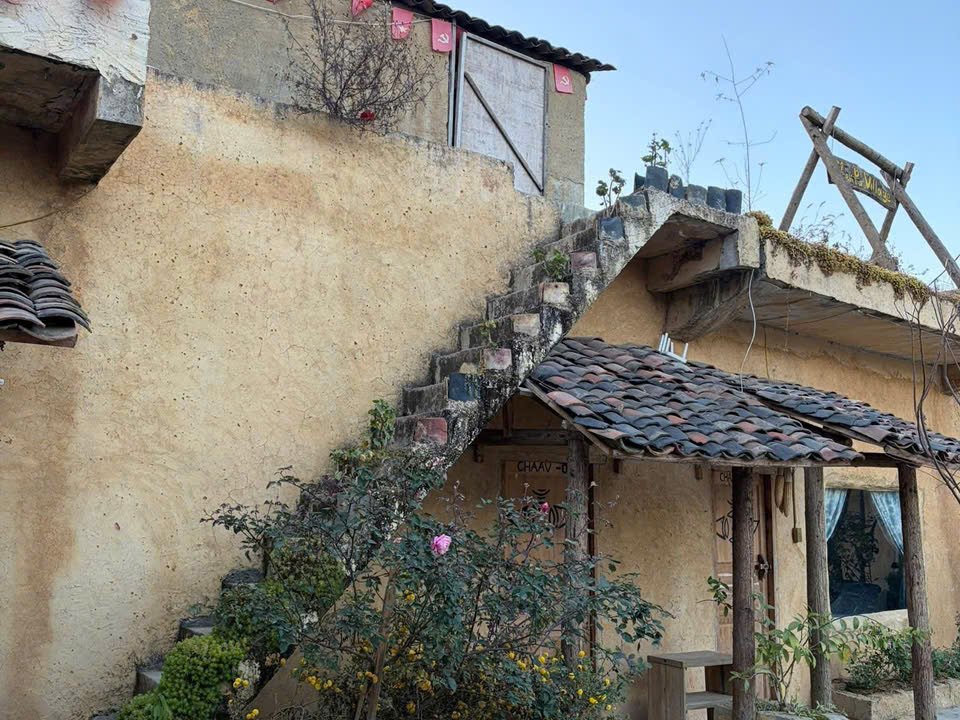
- Peach and plum trees in the stone villages: the Sung La valley and Pho Cao on the road to Dong Van, the hamlets around Dong Van and Pho Bang, and Lo Lo Chai village below the Lung Cu flag tower. A single flowering tree against a rammed-earth wall is the classic February photo.
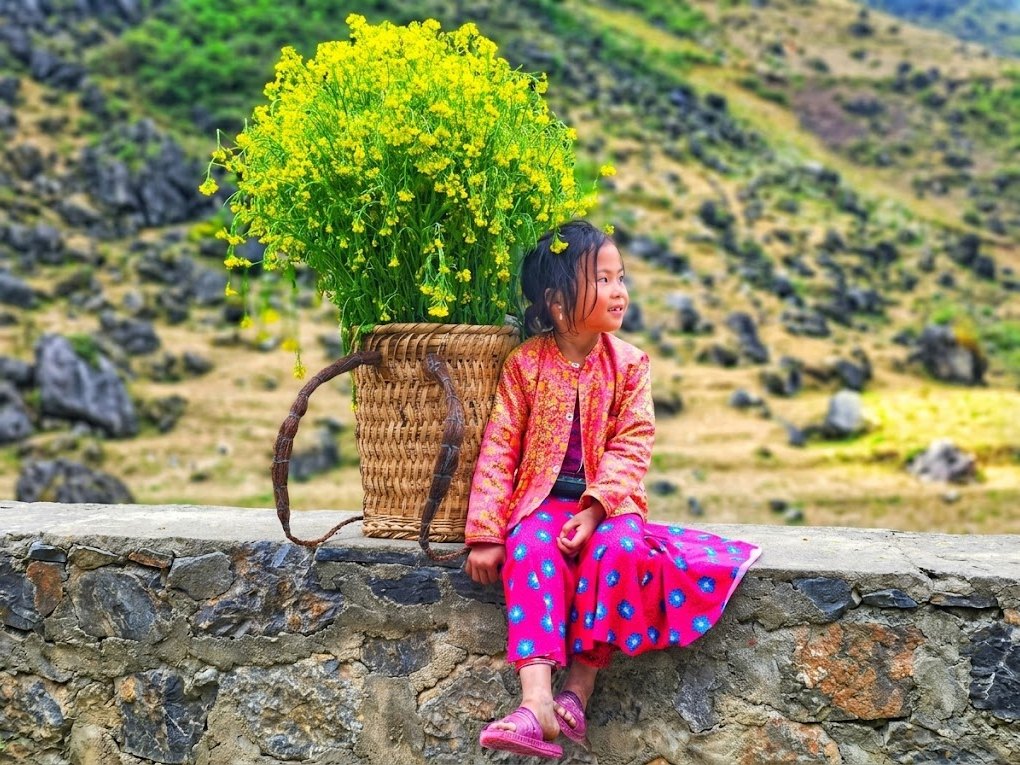
- Mustard flowers: the yellow fields that run through the winter are still out on the Ha Giang Loop in February, especially in the valleys around Quan Ba and Yen Minh and on the Tham Ma pass.
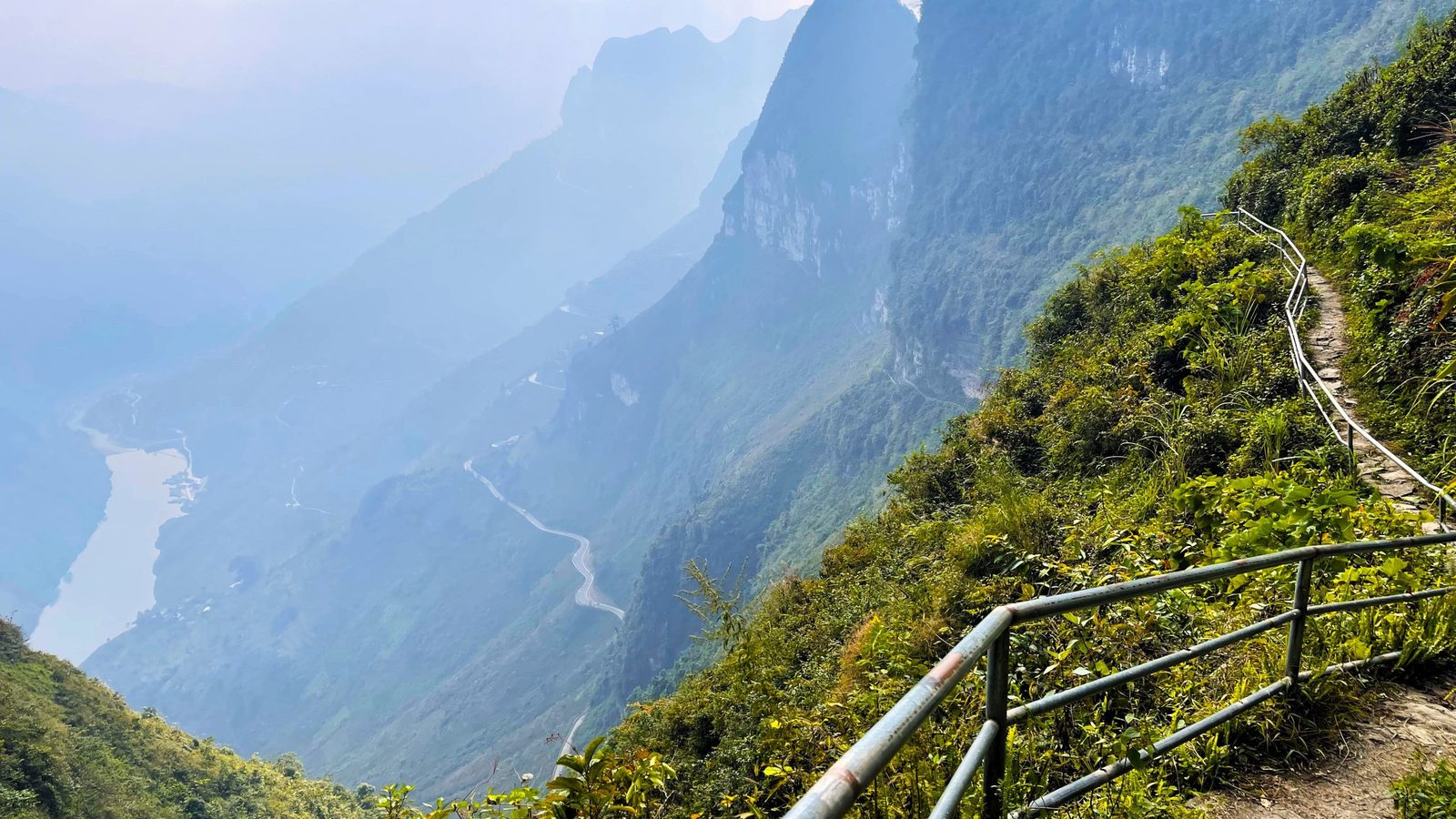
- Bare trees and clean light: the karst is at its most sculptural before the spring leaves come. On a clear day after a cold surge, the view from Ma Pi Leng Pass is as sharp as it ever gets.
Do not book only for one tree. Blossom timing changes with altitude and with each year’s weather, so treat the flowers as a bonus on top of a great ride. If flowers are your main goal, the Ha Giang Loop in March carries the season on in the high villages, and our photo spots guide tells you where to stop for the shot.
What festivals happen on the Ha Giang Loop after Tet?
The first half of the first lunar month, roughly 6 to 20 February 2027, is festival season in the highlands. Two are worth planning around on the Ha Giang Loop in February:
- Gau Tao, the Hmong spring festival: held by Hmong communities in the early days of the lunar year to pray for health, children and a good harvest. A tall bamboo pole with a flag marks the festival ground; around it you get khen flute and dancing, pao ball throwing, folk games and a lot of corn wine. Each commune on the plateau fixes its own date.
- Long Tong, the Tay “going to the fields” festival: the Tay villages of the lower valleys open the farming year with a ceremony in the fields, then con cloth-ball throwing, then and luon singing and games. Our guide to the Tay people of Ha Giang explains who you are watching.
Villages set these dates by the lunar calendar, often only a few weeks ahead, so we cannot print a fixed schedule here. Send us your travel dates and we will tell you whether a festival falls on your route. For the full calendar of ethnic festivals in Ha Giang, including the Khau Vai love market in spring, see our festival guide. And from the second weekend after Tet, the weekly markets along the Ha Giang Loop in February are back in full swing, with new clothes and holiday money on show.
Is the Ha Giang Loop in February safe to ride?
Yes, with winter habits plus one spring habit: respect for wet corners. Summer rain and landslides are the main rainy-season hazards, and February has neither. The risks on the Ha Giang Loop in February are smaller but constant:
- Drizzle makes the tarmac greasy: painted lines, shaded corners and the polished patches on the passes stay slick all day after mua phun. Slow down before the corner, not in it.
- Fog on the passes: some mornings start in thick fog on Ma Pi Leng Pass and the higher sections. Our groups wait for it to lift rather than push through.
- Cold hands: numb fingers make braking and clutch work slower. Good gloves are safety gear, not comfort.
- Holiday traffic: in the week after Tet there are more family cars and motorbikes on the road and more drivers in a festive mood. Ride defensively and arrive before dark.
This is why many first-time riders choose an Easy Rider for the Ha Giang Loop in February: you sit behind a local driver who knows every wet corner, and your hands stay warm. If you are unsure, read our Easy Rider vs self-drive comparison. Our safety policy does not change for the holiday: if we cancel a day for safety (a closed pass, a severe weather warning or a government closure), you choose a free date change or a 100% refund. The full answer is in is the Ha Giang Loop safe?
What should you pack for the Ha Giang Loop in February?
Layers for the cold and a shell for the damp. On top of the usual Ha Giang Loop packing list, our list for the Ha Giang Loop in February is:
- A waterproof, windproof outer shell: drizzle plus wind on a moving bike is what makes you cold, so block both.
- A warm mid-layer: a fleece or light down jacket underneath.
- Thermal base layers: top and leggings, for riding and for the Dong Van night.
- Waterproof gloves and a neck warmer: wet gloves are worse than no gloves.
- Closed shoes that cope with wet: sandals are a mistake in February, and canvas trainers stay wet all day.
- A dry bag or zip bag for your phone and camera: fog gets into everything.
Forgot something? Ha Giang city has shops selling cheap warm jackets, gloves and hats, and you can leave your big luggage at Ali Hostel for free until you are back. Helmets and protective gear are included for riders, and rain ponchos are provided on every tour. For what a night in a plateau homestay is really like in the cold months, read our Ha Giang Loop homestay guide: heavy duvets, a kitchen fire and an early hot shower are the three rules.
How much does the Ha Giang Loop in February cost?
Outside the Tet week, the Ha Giang Loop in February costs the same as any normal month. These are our current prices per person, with the border permit and 8% VAT already included:
- Ha Giang Loop Express, 2 days: Easy Rider 2,790,000 VND (about $107).
- Dong Van & Ma Pi Leng, 3 days: ride by yourself 3,250,000 VND (about $125) or Easy Rider 4,250,000 VND (about $163). Nights in Dong Van Old Quarter and Meo Vac.
- White Cliff & Sky Path, 3 days: Easy Rider 5,250,000 VND (about $202) or private car 6,850,000 VND (about $263).
- Du Gia Waterfall, 4 days: Easy Rider 5,550,000 VND (about $213), with an extra night in the Du Gia valley.
The Tet surcharge is +30% on the tour service only, from 4 to 11 February 2027. It never applies to the border permit or to motorbike rental. On the 3-day Dong Van & Ma Pi Leng tour with an Easy Rider, that works out to a little under 600,000 VND, about $23, extra per person. Book the Ha Giang Loop in February for the week before or the week after Tet and you pay the normal price.
The private car option is the warm, dry way to do the Ha Giang Loop in February: you see every viewpoint and every blossom tree without a day in the drizzle. Our guide to the Ha Giang Loop by car explains who it suits. Booking is simple: a 500,000 VND deposit per guest holds your place and you pay the rest before departure. Bank transfer has no fee; card payments carry a 4% fee. The night before departure you sleep free in a dorm bed at Ali Hostel. The full rules are on our booking and refund policy.
Ha Giang Loop in February vs January vs March
Three late-winter months, three different trips:
- January: the coldest month, but also the driest and clearest, at normal prices all month except 1 January. Pre-Tet markets at the end of the month. Read our Ha Giang Loop in January guide.
- February: Tet, blossoms and festivals, with one surcharge week and a little more drizzle and fog. The most atmospheric month of the winter.
- March: warmer (a city mean of 20.4°C) and greener, with the blossom tail in the high villages, spring planting in the fields and drizzle still around. See the Ha Giang Loop in March.
Choose the Ha Giang Loop in February for blossoms and festivals, January for the most stable dry weather at the lowest price, and March for warmth. Whatever the month, three days is the minimum that makes the trip worth the bus ride; our guide to how many days you need explains why.
FAQ: Ha Giang Loop in February
When is Tet 2027, and does it affect the Ha Giang Loop in February?
Lunar New Year’s Day is Saturday 6 February 2027, with Tet Eve on Friday 5 February. Our tours run straight through, with a +30% surcharge on the tour service from 4 to 11 February. Shops and some homestays close on the first days of the new year, and towns reopen from about the fourth day.
Is the Ha Giang Loop in February too wet?
No. February averages under 40 mm of rain at the city station, mostly as drizzle. The real wet season is May to September, which we cover in our Ha Giang rainy season guide. Expect damp roads and fog on some mornings, not flooded roads.
When do the peach blossoms peak on the Ha Giang Loop in February?
Usually in the two or three weeks after Tet, which in 2027 means mid to late February, with the high villages flowering last and into March. A cold January delays the bloom; a mild one brings it forward.
Are the homestays cold on the Ha Giang Loop in February?
Nights on the plateau are cold, much as in January. Homestays on our routes put heavy winter duvets on every bed, evenings happen around the kitchen fire, and we tell guests to shower early while the bathroom is still warm. Thermal layers and warm socks make the Dong Van night comfortable.
Do I need to book the Ha Giang Loop in February early?
For Tet week and the blossom weekends after it, yes: book a few weeks ahead, because night buses from Hanoi and homestays on the popular routes fill up with domestic travellers. Midweek dates in the second half of the month are easier at shorter notice.
Is the Ha Giang Loop in February busy with tourists?
It is low season for international visitors, so the usual backpacker groups are smaller. The crowds that do appear are Vietnamese families and friends on the first weekends after Tet, mainly around the blossom villages and the main viewpoints. Our guide to Ha Giang Loop crowds explains how to ride around them.
Plan your Ha Giang Loop in February with Ali
Tell us your dates and how you want to ride, and we will tell you honestly which phase of the month you are in, what the weather usually does that week, whether a festival falls on your route and the exact price including any surcharge. Message us on WhatsApp or Zalo at (+84) 787 652 333, email info@hagiangalitravel.com, or browse our tours at hagiangalitravel.com.