Vuong Palace Ha Giang is the stone-walled mansion of Vuong Chinh Duc, the Hmong leader remembered as the “Hmong King”, hidden in a grove of giant fir trees at Sa Phin, about 15 km before Dong Van town on Road 4C. It opens every day from 7:30 to 17:00, entry cost us 30,000 VND per adult at the gate in 2026, and an unhurried visit takes about an hour. If you ride the Ha Giang Loop with us, it is the last stop of Day 1 and the ticket is already in your tour price.
We are Ha Giang Ali Travel, a licensed international tour operator (licence 08-0007/2025/CDLQGVN-GP LHQT) with our own hostel in Ha Giang city, and our guides walk guests through these courtyards most afternoons of the riding season. This guide covers what you actually see at Vuong Palace Ha Giang, the story behind it, when to go and how it fits into your route. The palace is one stop in a much bigger cultural picture; for that, start with our guide to the indigenous cultures of Ha Giang.
You will see the place signposted under several names: Vuong Family Palace, H’Mong King’s Palace, Dinh Vua Meo or Nha Vuong. They are all the same building. Officially it is a National Architectural and Artistic Monument, ranked by Vietnam’s Ministry of Culture in 1993, and it sits inside the Dong Van Karst Plateau UNESCO Global Geopark.
Vuong Palace Ha Giang at a glance
| What you want to know | Answer |
|---|---|
| Where | Sa Phin commune, about 15 km before Dong Van town on Road 4C (now part of Tuyen Quang province) |
| Opening hours | 7:30–17:00, every day of the year |
| Ticket | 30,000 VND per adult (what we paid at the gate in 2026; older guides still quote 20,000). Included on all our Loop tours |
| Time needed | About an hour, including photos in the fir avenue |
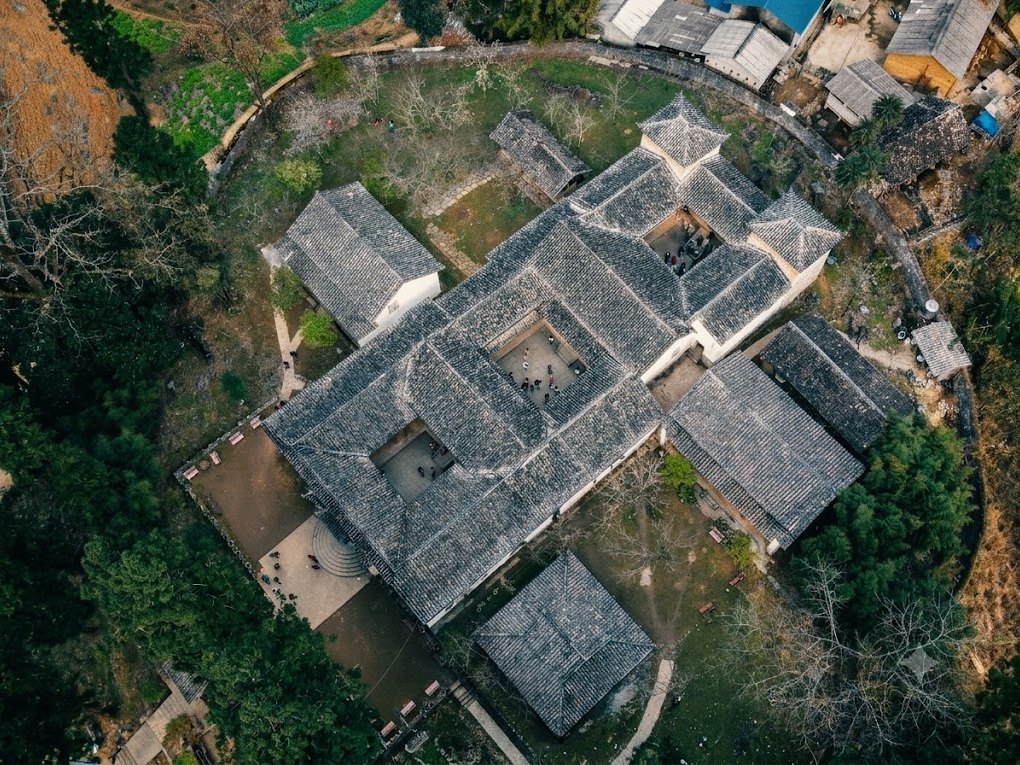
| Size | More than 1,200 m² of buildings on a site of about 3,000 m², in three courtyards |
| Status | National Architectural and Artistic Monument since 1993 |
| Best combined with | Tham Ma Pass before it, Pao’s House and Lao Sa village nearby, Dong Van old quarter after |
Who was the Hmong King of Vuong Palace Ha Giang?
Vuong Chinh Duc was a Hmong leader who, in the first half of the 20th century, held authority over four highland districts that riders still pass through today: Quan Ba, Yen Minh, Dong Van and Meo Vac. Local people called him Vua Meo, the “Hmong King”. He built his residence in the Sa Phin valley, close to the Chinese border, and ran his affairs from it. He died in 1947, and his grave lies in Lau Cha Tung hamlet in the same commune.
His son, Vuong Chi Sinh, is the reason the family is honoured rather than forgotten. He was elected to Vietnam’s first National Assembly in 1946 and re-elected to the second, and he sided with President Ho Chi Minh’s government. He died in 1962. In 2003 his remains were reburied in front of the palace gate, and in 2006 he was posthumously awarded the Great National Unity Order. When you walk in, the tomb just outside the entrance is his.
When was Vuong Palace built?
Honest answer: official sources disagree. The provincial government portal says work started in 1898 and finished in 1907, while a 2020 report in the provincial newspaper says construction began in 1919. What everyone agrees on is that Vuong Palace Ha Giang dates from the early 20th century, was built by craftsmen from Yunnan working with Hmong labourers, and was restored in 2005 with more than 6 billion VND of state funding.
What will you see inside Vuong Palace Ha Giang?
The site is compact, so it rewards slowing down and looking at details. Here is what our guides point out, in the order you meet it.
The fir avenue and the stone gate
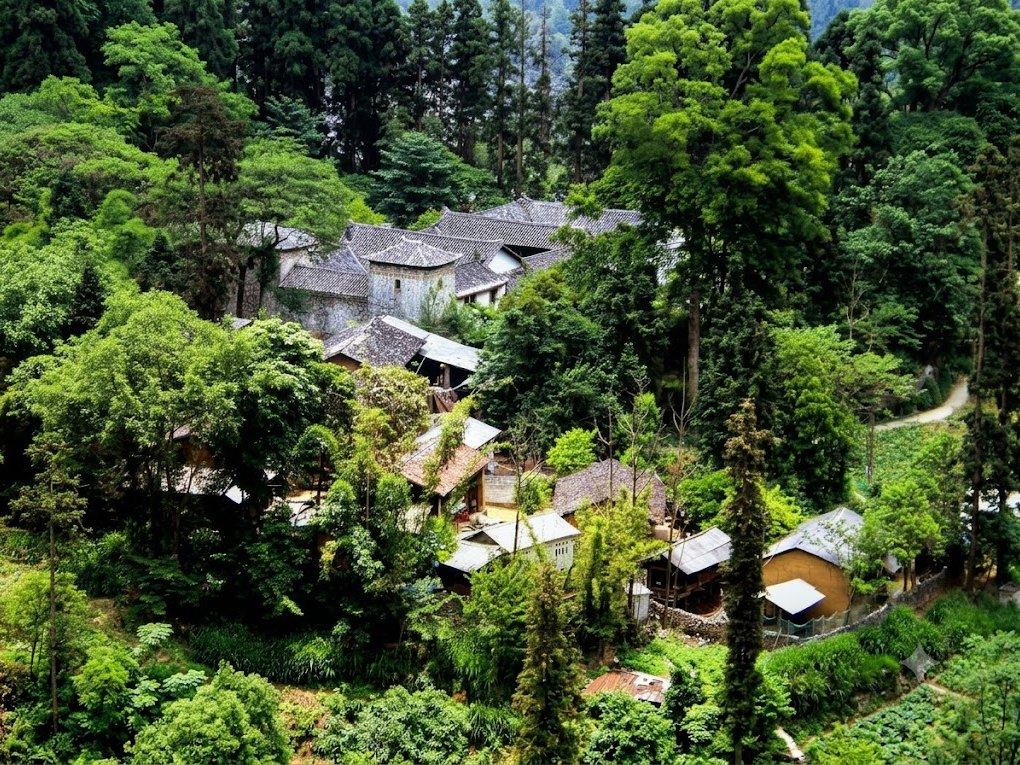
The approach is lined with two rows of century-old sa moc (Chinese fir) trees, more than 10 metres tall, standing like sentries. It is the most photographed spot at Vuong Palace Ha Giang, and the light is softest here in the late afternoon. The stone gate ahead carries two watchtowers, a reminder that this was a fortified house on a contested frontier.
Three courtyards: front, middle and rear
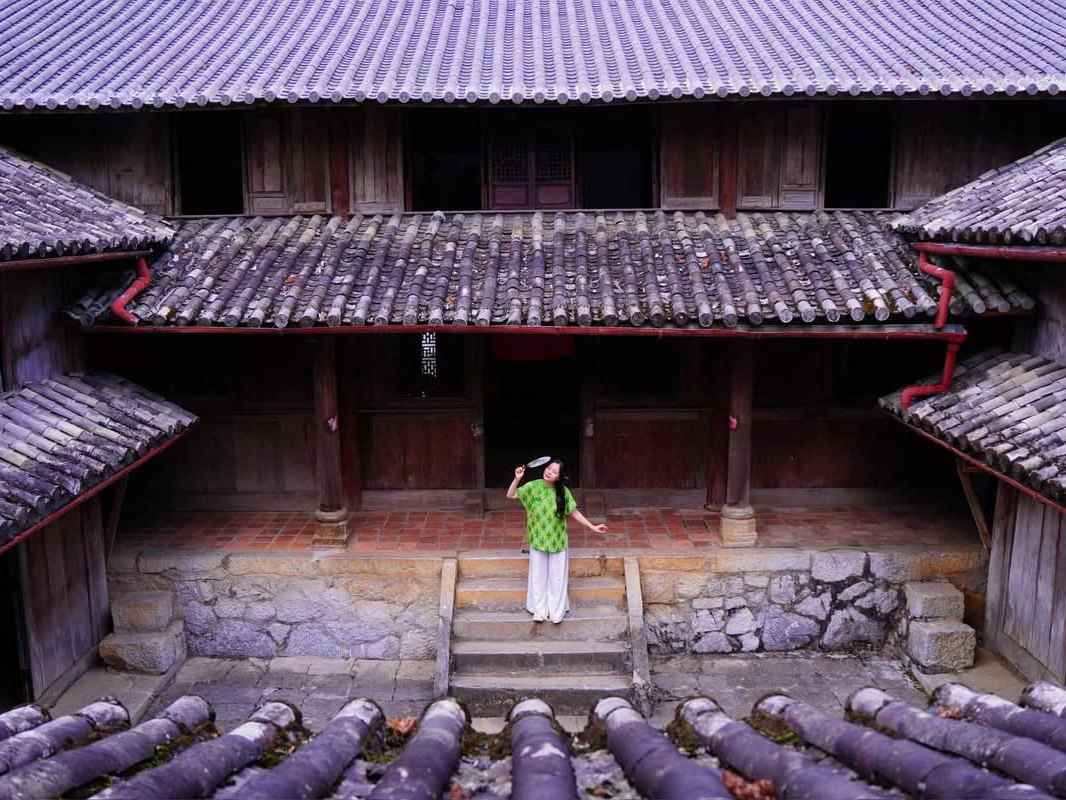
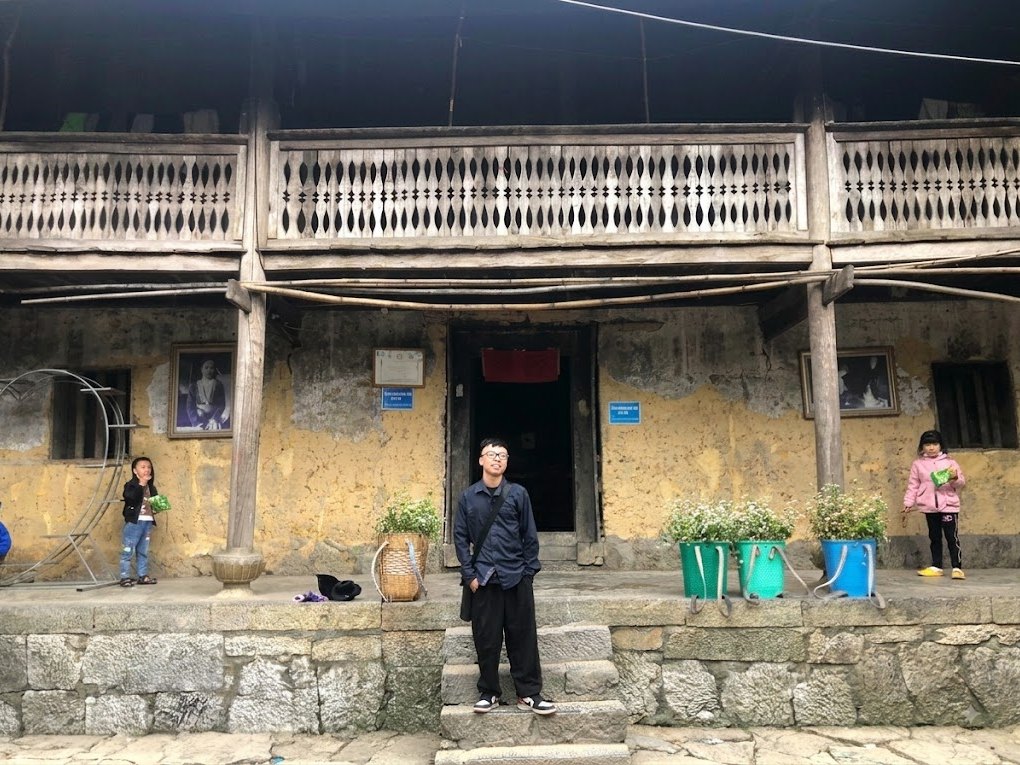
Inside, the house is laid out as three sections, the front, middle and rear palace, each built around an open courtyard. The outer walls are stone, the roofs are yin-yang tiles and the frames are local pine timber. The style mixes classical Chinese planning, French colonial touches and Hmong building tradition, which is why it looks unlike anything else on the plateau.
The details worth hunting for
- Stone pillars carved with poppy flowers, a quiet reminder of the role opium once played in the plateau’s economy.
- A stone bathtub and a Western-style fireplace, rare luxuries this high up.
- The granary, the opium store and the guard posts, which show how the household fed, paid for and defended itself.
- Carved dragons and phoenixes in the blue stone, which UNESCO singles out in its description of the geopark’s heritage.
The carvings mean much more once you know the family story, so read the history section above before you go in, or let your guide tell it on the spot.
How do you get to Vuong Palace Ha Giang?
On a tour with us
Every Ha Giang Loop tour we run stops here on Day 1. On our Essential loops the day goes: 08:00 breakfast at Ali Hostel, 08:30 briefing, 09:00 departure north on Road 4C to Quan Ba Heaven’s Gate, then Lung Tam village to watch Hmong women weave hemp, lunch, the Tham Ma Pass switchbacks and finally Vuong Palace Ha Giang in the afternoon, before the night in Dong Van old quarter. The whole day is about 150–160 km. On our Classic tours you sleep even closer, in a private en-suite room in Lao Sa village, in the same commune as the palace.
The full day-by-day route is in our Ha Giang Loop itinerary.
On your own
Independent travellers usually ride a rented motorbike (from 180,000 VND per 24 hours at our hostel; see motorbike rental in Ha Giang) or hire a car with a driver. Follow Road 4C north through Quan Ba and Yen Minh, climb the Tham Ma Pass and turn off at Sa Phin before Dong Van. Remember that foreigners need a border-area permit for this district; on our tours we file it for you. If you have never ridden mountain roads, read Easy Rider vs self-drive first.
When is the best time to visit Vuong Palace Ha Giang?
- Time of day: the gate opens at 7:30. Early morning is quietest; late afternoon gives the warmest light in the fir avenue, which is when our Day 1 groups usually arrive.
- Season: the palace is open all year. October and November, the buckwheat flower season, are the busiest weeks, and weekends are the most crowded days. A weekday visit makes a real difference; see our notes on Ha Giang Loop crowds.
- Weather: the courtyards are partly open to the sky, so on cold winter days bring a warm layer. The plateau is chilly from December to February.
Is Vuong Palace Ha Giang worth the stop?
For most people, yes, because Vuong Palace Ha Giang is the one place on the Loop that explains who ran this plateau and how. Almost everything else on Day 1 is landscape and village life. The palace adds the politics: a border lord, an opium economy, a son who sided with the new Vietnamese state. Before the 2020s it already drew more than 100,000 visits a year, according to a 2019 report by Vietnam’s national news agency.
It is less exciting if you only came for mountain views and have no interest in history; in that case spend more time on the fir avenue for photos and keep the visit short. One honest note: the palace is still owned by Vuong descendants. In 2019 a family dispute led to talk of closing it, and the culture ministry confirmed that a national monument cannot be closed by an individual. It has stayed open since, and we still check before every group. If you are weighing the whole trip rather than one stop, read is the Ha Giang Loop worth it.
What else is near Vuong Palace Ha Giang?
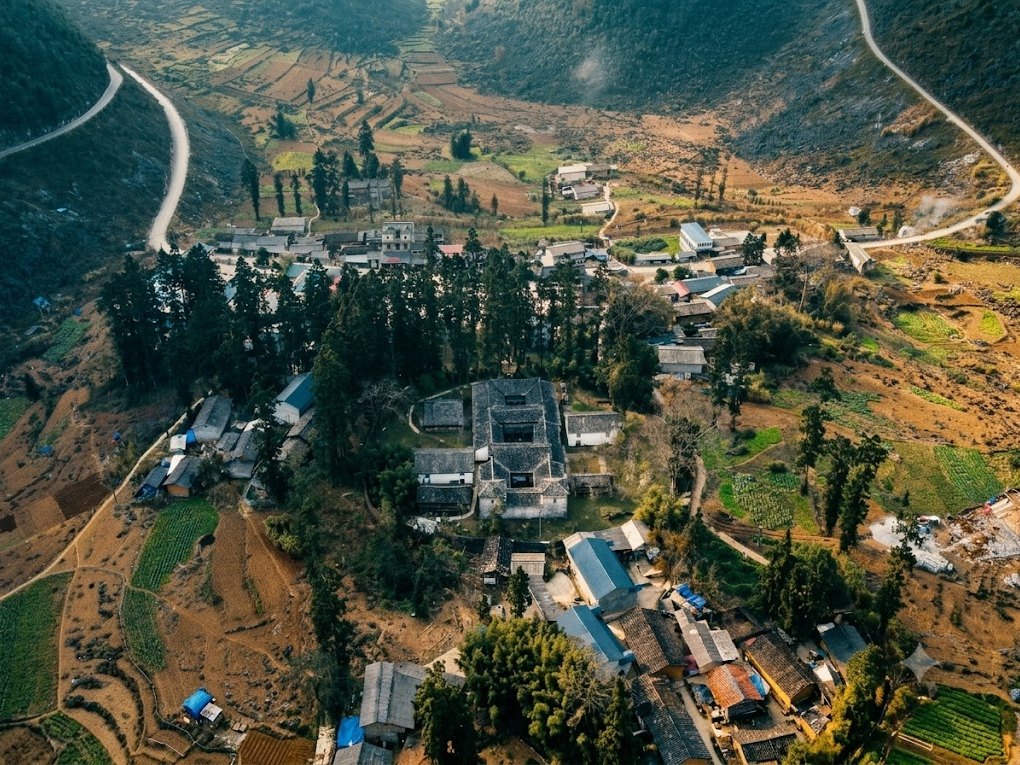
- Pao’s House: the rammed-earth Hmong house made famous by the film Pao’s Story, in the same Sa Phin commune.
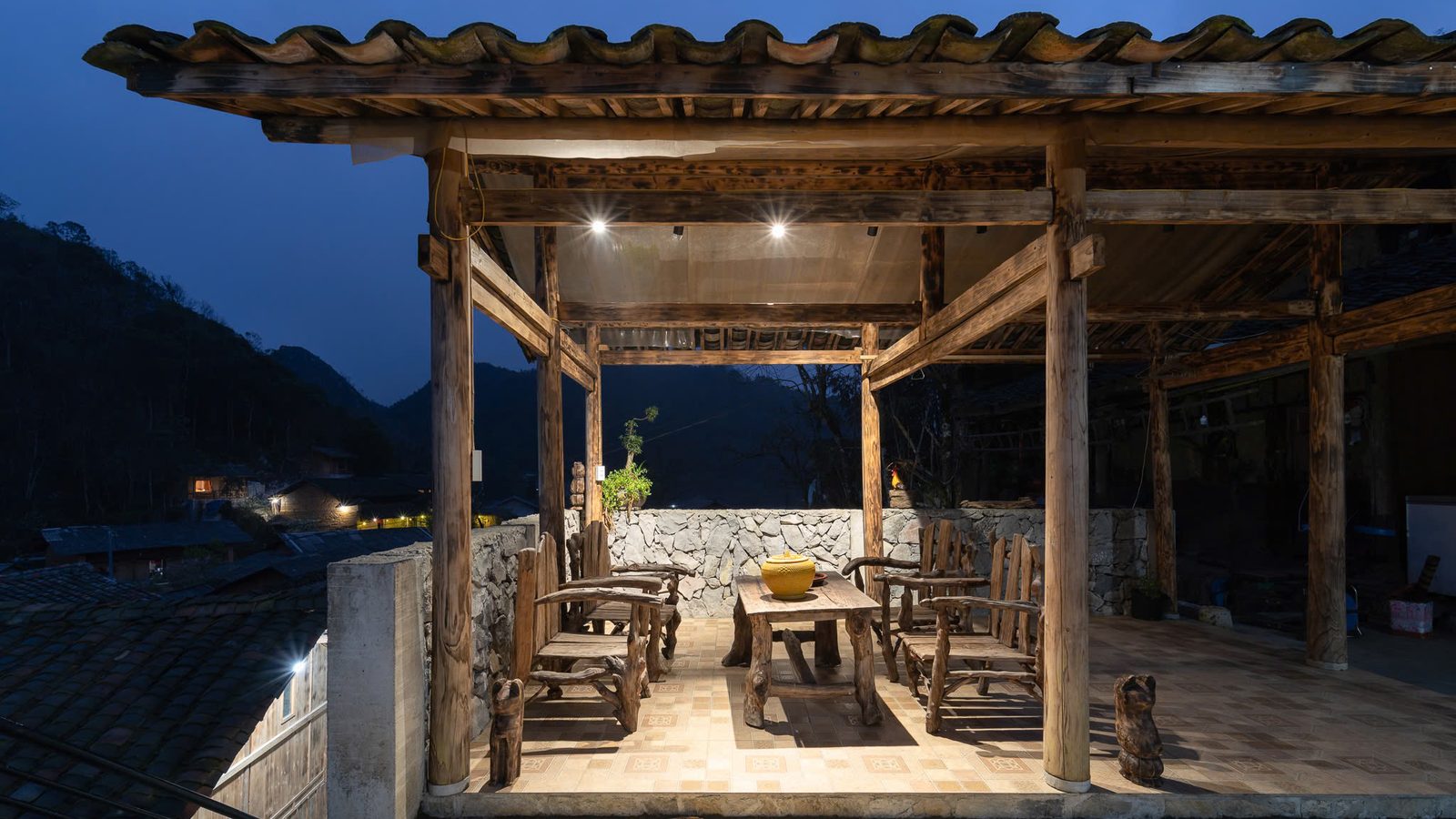
- Lao Sa village: an old stone-house hamlet on the plateau where our Classic tours spend the first night.
- Sa Phin market: a “backward” highland market whose day shifts each week, worth planning around if it falls on your route.
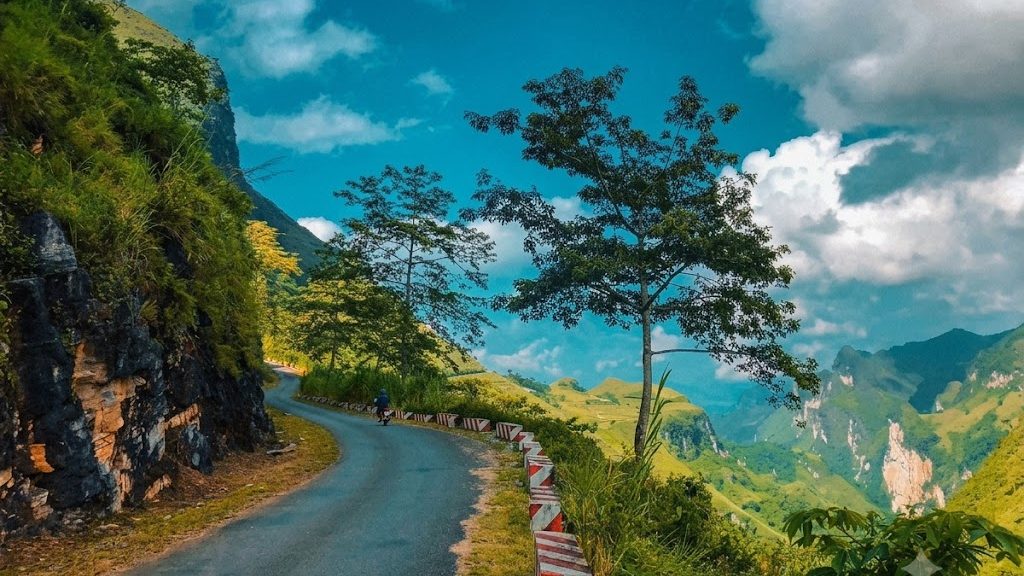
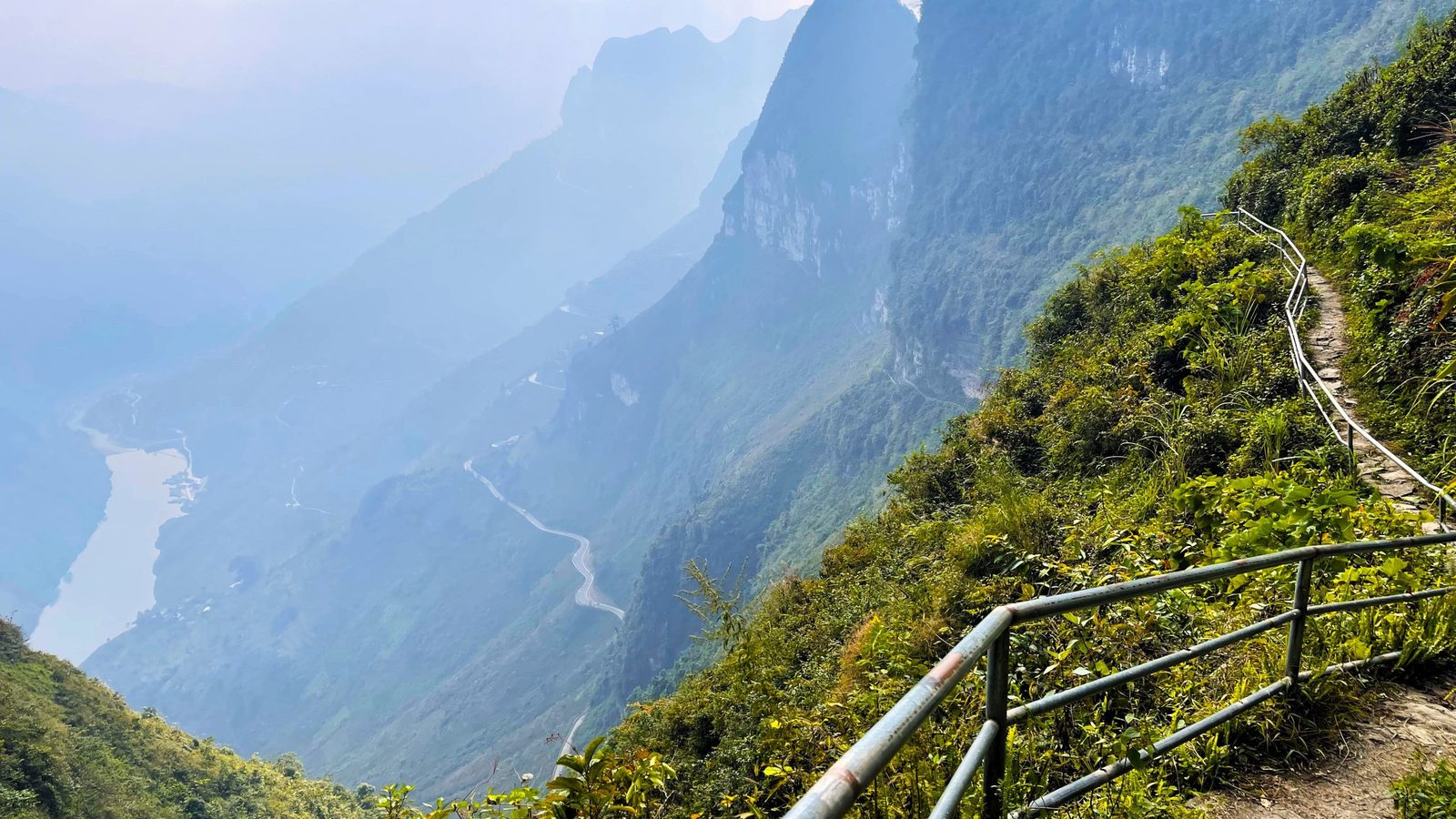
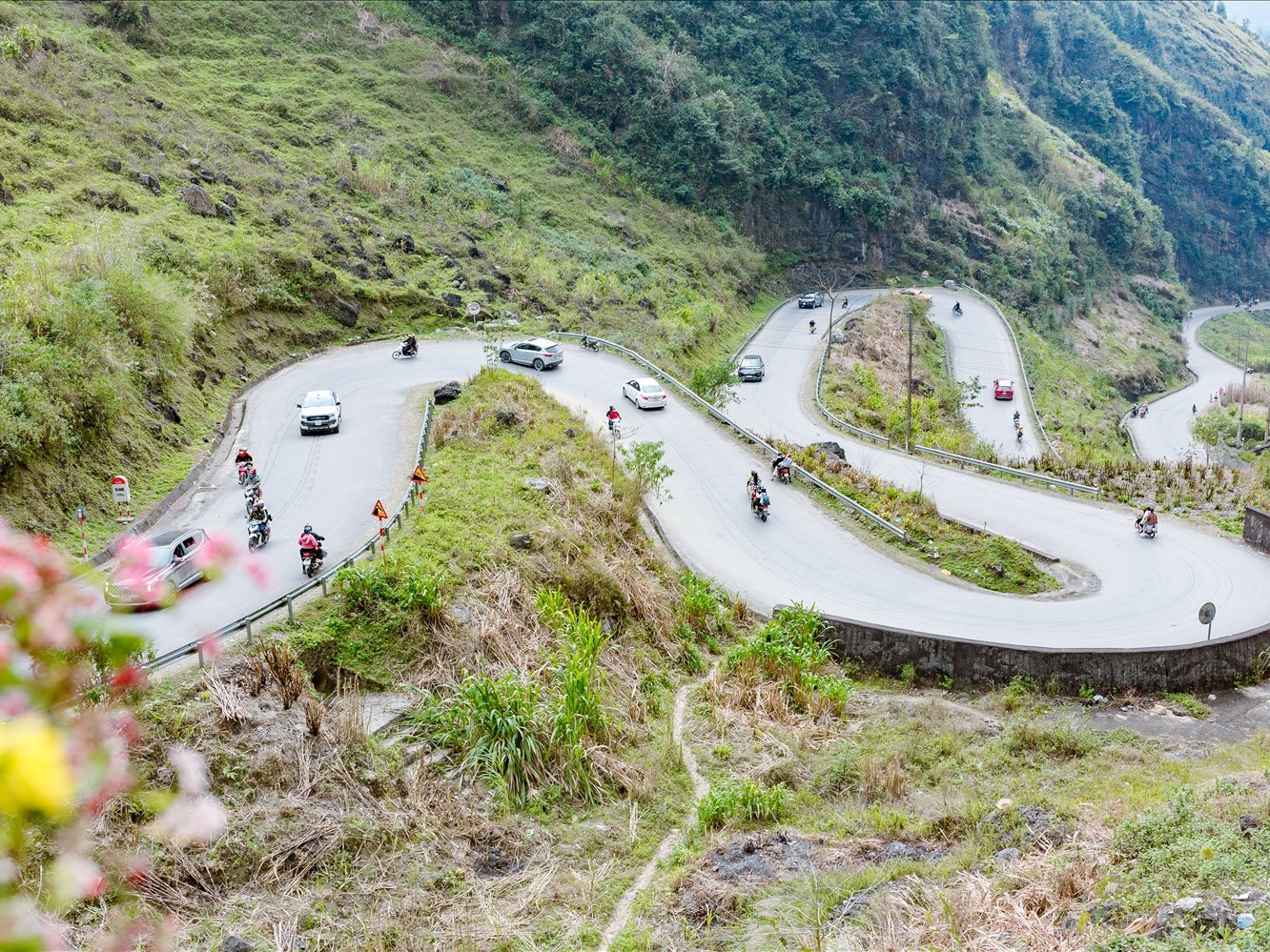
- Tham Ma Pass: the hairpin bends you ride just before the palace, one of the classic road views of the Loop.
- Dong Van old quarter: the stone-and-tile town where Essential tours spend the night, with a Sunday market.
Tips for visiting Vuong Palace Ha Giang
- Carry small cash. The ticket desk takes VND; if you come with us, the guide buys tickets for the group.
- Mind the thresholds. Doorways have raised wooden sills and the courtyards are uneven stone. Older travellers should go slowly; our guide to the Ha Giang Loop for seniors has more on pacing.
- Be respectful at the tomb. Vuong Chi Sinh is buried by the gate, and this is still a family property. Keep voices low and do not climb on walls or carvings.
- Ask before photographing people. Sa Phin is a living village around the palace, and a smile and a gesture before you raise the camera goes a long way.
- Shoot the avenue last. Visit the courtyards first, then take your fir-tree photos on the way out as the light drops. Our Ha Giang Loop photo spots guide covers the rest of the route.
Which tours stop at Vuong Palace Ha Giang?
All of them. Entrance fees for every scheduled stop are included, so you will not pay at the gate. Prices below are per person from our current price list, with a 500,000 VND deposit per guest to book.
| Tour | When you visit the palace | Where you sleep that night | From |
|---|---|---|---|
| Ha Giang Loop Express, 2 days | Day 1 afternoon | Dong Van old quarter | 2,790,000 VND (about $107), Easy Rider |
| Dong Van & Ma Pi Leng, 3 days | Day 1 afternoon | Dong Van old quarter | 2,850,000 VND (about $110); Easy Rider 4,250,000 VND (about $163) |
| Du Gia Waterfall, 4 days | Day 1 afternoon | Dong Van old quarter | 3,650,000 VND (about $140) |
| Grand North Loop, 5 days | Day 1 afternoon | Dong Van old quarter | 10,550,000 VND (about $406), Easy Rider |
| Classic tours: White Cliff & Sky Path and others | Day 1 afternoon | Lao Sa village, private en-suite room | See each tour page |
The lowest prices are for bringing your own bike; Easy Rider means a local rider drives while you sit behind. For the full budget, including the sleeper bus from Hanoi (from 250,000 VND each way, see Hanoi to Ha Giang by bus), read our Ha Giang Loop cost guide.
FAQ: Vuong Palace Ha Giang
How much is the ticket to Vuong Palace Ha Giang?
We paid 30,000 VND per adult at the gate in 2026. Some older guides still quote 20,000 VND. On our tours the ticket is included.
What are the opening hours?
7:30 to 17:00 every day, according to the provincial government portal. Arrive by about 16:00 to see all three courtyards without rushing.
How far is Vuong Palace from Dong Van?
About 15 km along Road 4C, a short ride. Most riders visit it on the way to Dong Van rather than as a return trip.
Is the Hmong King’s Palace the same as Pao’s House?
No. Both are in Sa Phin commune, but Pao’s House is a traditional rammed-earth Hmong home used in a film, while the palace is the fortified stone mansion of the Vuong family. Many people visit both on the same afternoon.
Can I visit Vuong Palace Ha Giang without a tour?
Yes. Buy a ticket at the gate. You will still need the border-area permit for the district, and a motorbike or car to get there.
Visit the palace with a local team
Seeing Vuong Palace Ha Giang with someone who can tell the story turns a quick photo stop into the moment the whole plateau starts to make sense. Tell us your dates and how many of you are travelling, and we will suggest the route that fits. Message us on WhatsApp/Zalo at (+84) 787 652 333, email info@hagiangalitravel.com, or browse all our tours.
See more: Dong Van Karst Plateau Geopark · The Tay people of Ha Giang · Top 20 destinations in Ha Giang