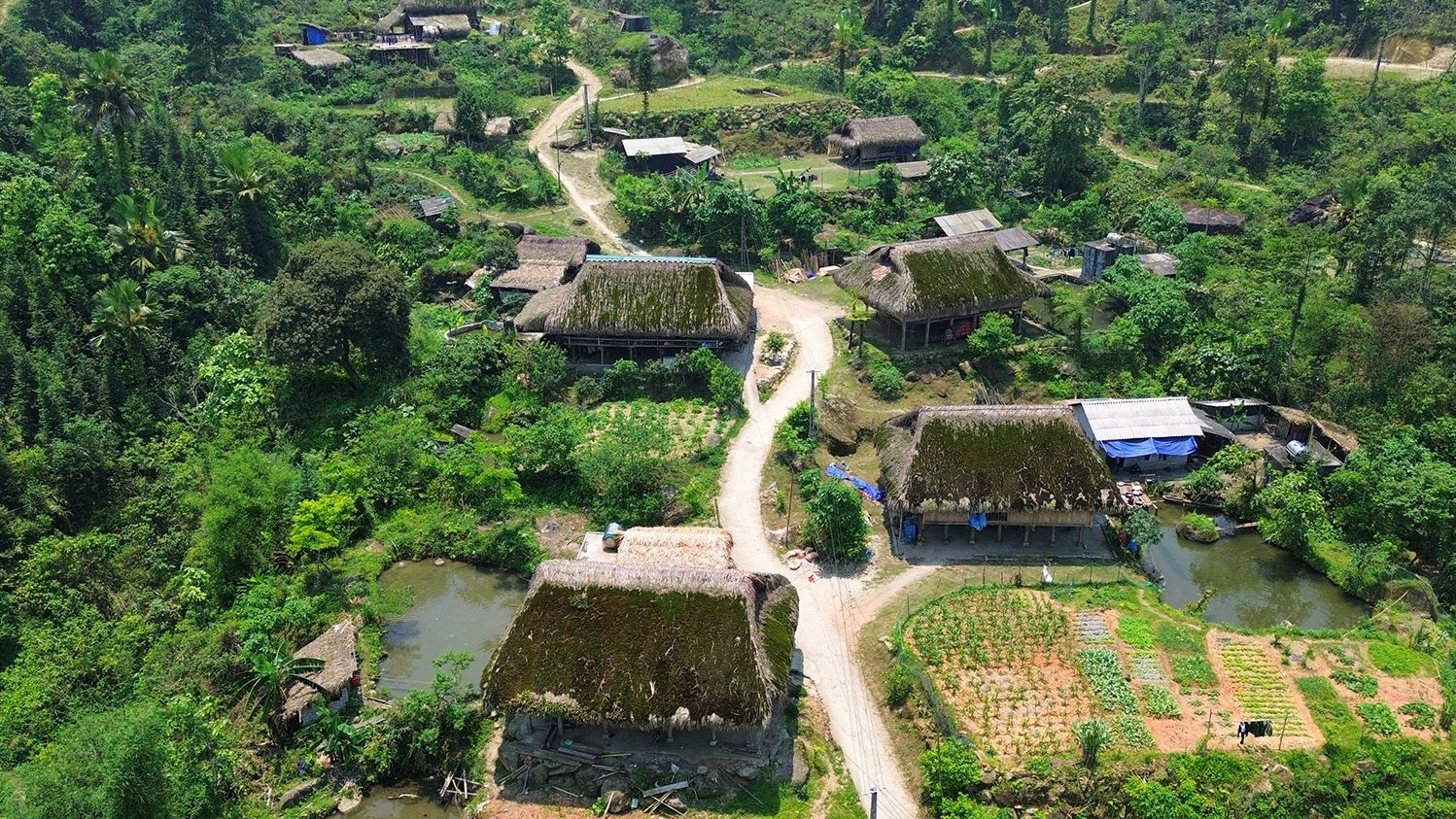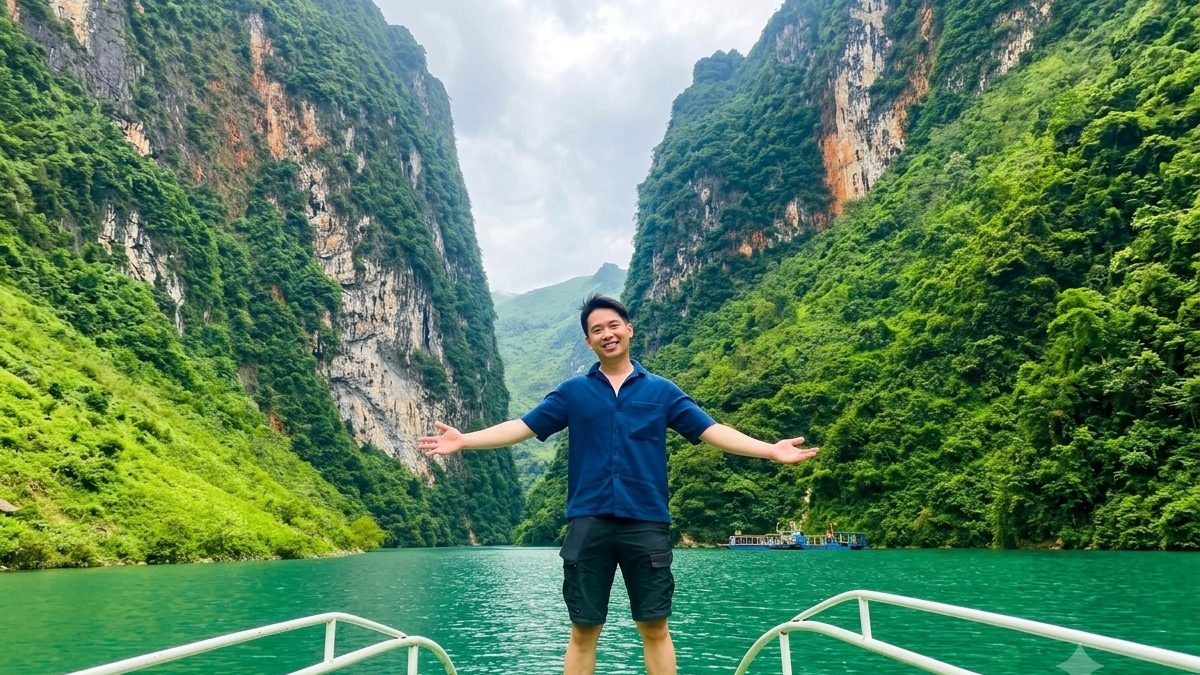
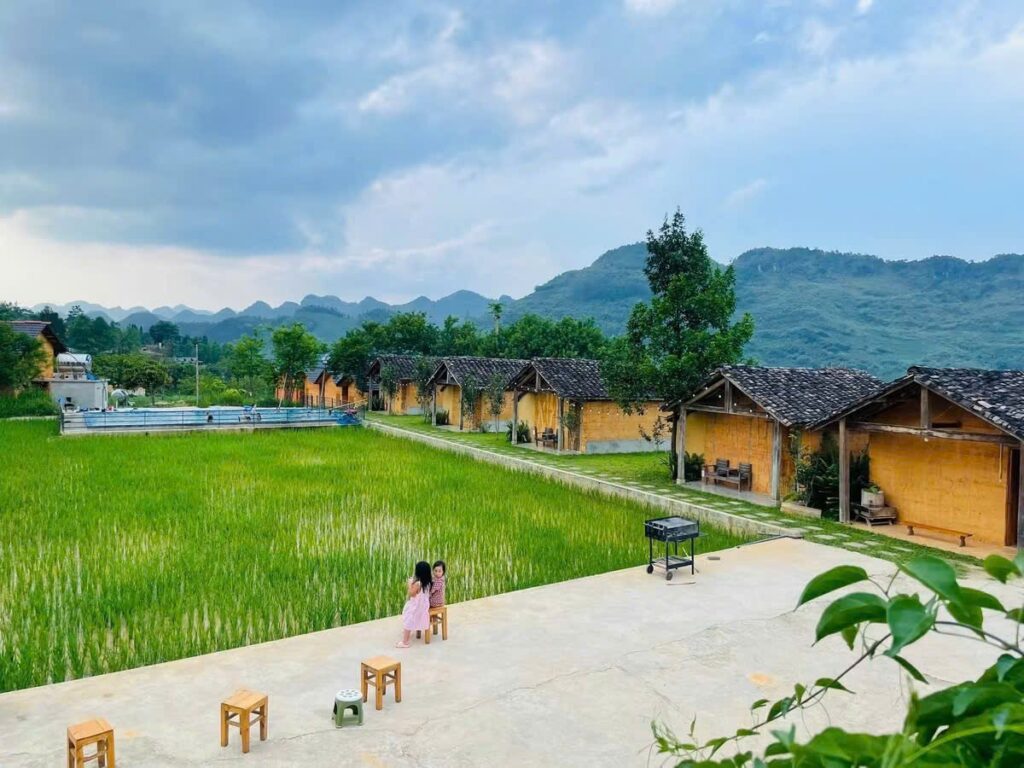
Nam Dam village is a community of the long-tunic Dao people in the Quan Ba valley, a few kilometres off Road 4C just beyond Quan Ba Heaven’s Gate and about 50 km north of Ha Giang city. Of its 70 households, 36 now run homestays in traditional rammed-earth houses, and the village won an ASEAN Community-Based Tourism Award in 2023. It is worth a stop if you want a quiet Dao homestay night with a herbal bath on Day 1 of the Ha Giang Loop; it is not worth squeezing into a two-day dash.
We ride past the turn-off to Nam Dam village on every Loop departure, and we sleep there on our Sapa-to-Ban Gioc car tour. This guide tells you what the village actually is, what a night costs, what you will and won’t see, and how to fit it into your route.
| Where | Nam Dam hamlet, Quan Ba commune (part of Tuyen Quang province since July 2025; formerly Quan Ba district, Ha Giang) |
| Who lives there | Long-tunic Dao (Dao Ao Dai, also called Dao Cham), 70 households, all Dao |
| Distance | Quan Ba Heaven’s Gate is about 46 km from Ha Giang city on Road 4C; the village is a short way beyond it, down in the valley |
| Known for | Rammed-earth homestays, Dao herbal baths and foot soaks, call-and-response singing, 2023 ASEAN Community-Based Tourism Award |
| Stay | 36 homestays in 2026; private bungalows and family rooms, plus community-style sleeping in some houses |
| Best for | Slow travellers, couples, families, anyone who wants Dao culture rather than only mountain scenery |
| Ali tour that sleeps here | Sapa to Ban Gioc: The Northern Arc by Private Car, 6 days (night 1 in a Dao family homestay) |
What is Nam Dam village?
Nam Dam village is the first village in Quan Ba to open its homes to visitors. The community started community-based tourism in 2012, when most of the north was still unknown to foreign travellers. Its homestays were certified to the ASEAN homestay standard in 2017, the village’s tourism product earned a provincial four-star OCOP rating in 2022, and in 2023 Nam Dam received the ASEAN Community-Based Tourism Award. In September 2026 the provincial government listed it among Tuyen Quang’s official tourism sites.
Why does that matter to you? Because it means the village has been hosting guests for more than a decade without turning into a resort. The houses are still rammed-earth, the women still wear the long Dao tunic to work in the fields, and the families still cook what they grow. If you have read our guide to Ha Giang’s indigenous cultures, Nam Dam village is where the Dao chapter becomes real.
The numbers behind the village tell the same story. According to the provincial newspaper Bao Tuyen Quang (14 October 2026), Nam Dam has 70 households and 36 of them run a homestay. Before tourism, 11 households were classed as poor; today, one. The village motto, as the national tourism authority records it, is “keep the culture to do tourism, do tourism to keep the culture”.
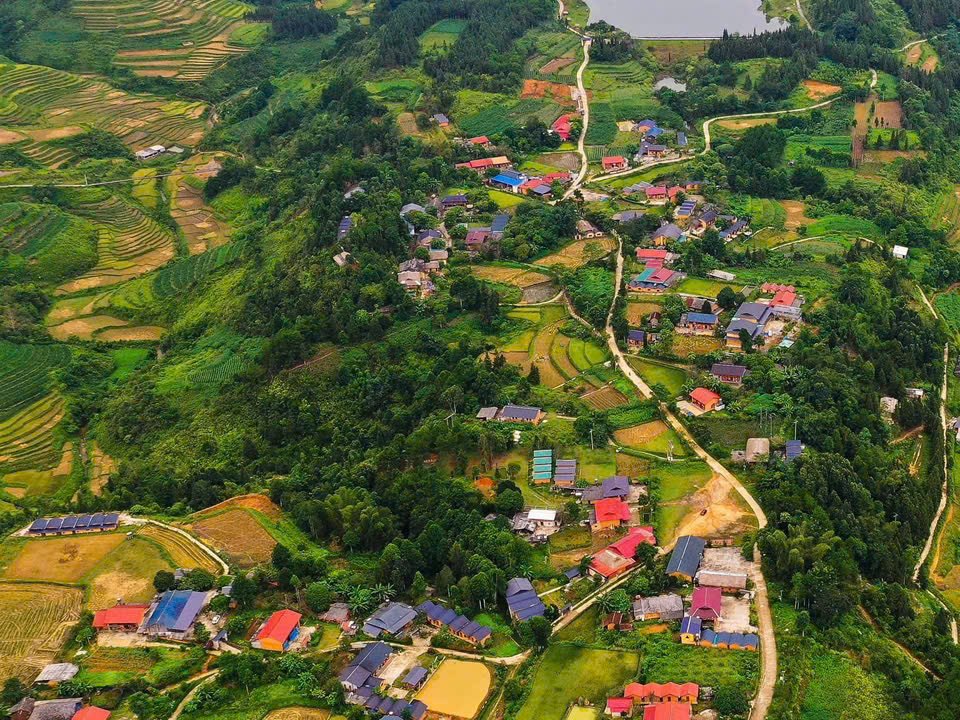
Where is Nam Dam village and how do you get there?
Nam Dam village sits in the heart of Quan Ba commune, the first valley the Ha Giang Loop climbs into. From Ha Giang city you follow Road 4C north, climb the Bac Sum Pass and reach Quan Ba Heaven’s Gate after roughly 46 km. That viewpoint is the Day 1 stop on all of our Loop tours. The village is a short turn off the main road from there, down among the fields below the Twin Mountains.
- By motorbike: allow 1.5 to 2 hours from Ali Hostel including the viewpoint stop. Our motorbike rental runs from 250,000 VND per 24 hours for a Honda Vision to 350,000 VND for a Honda Winner X and 550,000 VND for a Honda XR150.
- With an Easy Rider or private car: the village is on the Day 1 line of every Loop route, so it costs no extra kilometres. On a private departure, tell us at booking and we build the stop, or the night, into Day 1.
- By public minibus: the Ha Giang to Dong Van minibus (150,000 VND a seat) runs along Road 4C through Tam Son town, the commune centre, and you walk or take a xe om from there.
One practical note: Quan Ba is a border district, and foreign visitors need the border-area permit that covers the Loop. On our tours that permit is already inside the price and handled at Ali Hostel before departure. If you ride independently, sort it in Ha Giang city before you leave; our safety and paperwork guide explains how.
What is a night in a Nam Dam village homestay really like?
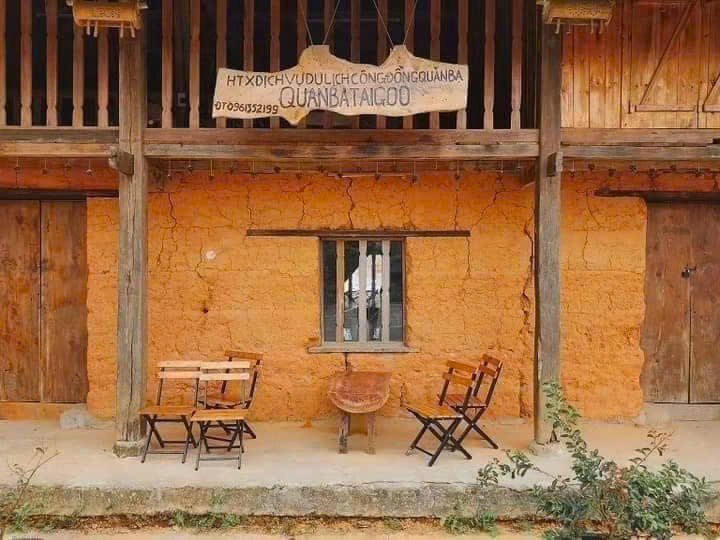
Expect earth, wood and quiet. The traditional Dao house here is built of rammed earth, with thick packed-clay walls that stay cool in July and hold warmth in January, often with a wooden gallery on the upper floor. Newer guest bungalows copy the same earthen walls and tiled roofs, so the village has kept one look even as it has grown.
A good example of how Nam Dam village homestays have changed is Hong Thu Homestay, profiled by Bao Tuyen Quang. The family opened in 2018 with community-style sleeping, a row of mattresses in one big room. Within a year they noticed guests wanted privacy and built three bungalows. By 2026 they run 15 bungalows and host 180 to 200 guests a month. Several other families have followed the same path, so today you can choose between a private bungalow with its own bathroom and the older shared-room style.
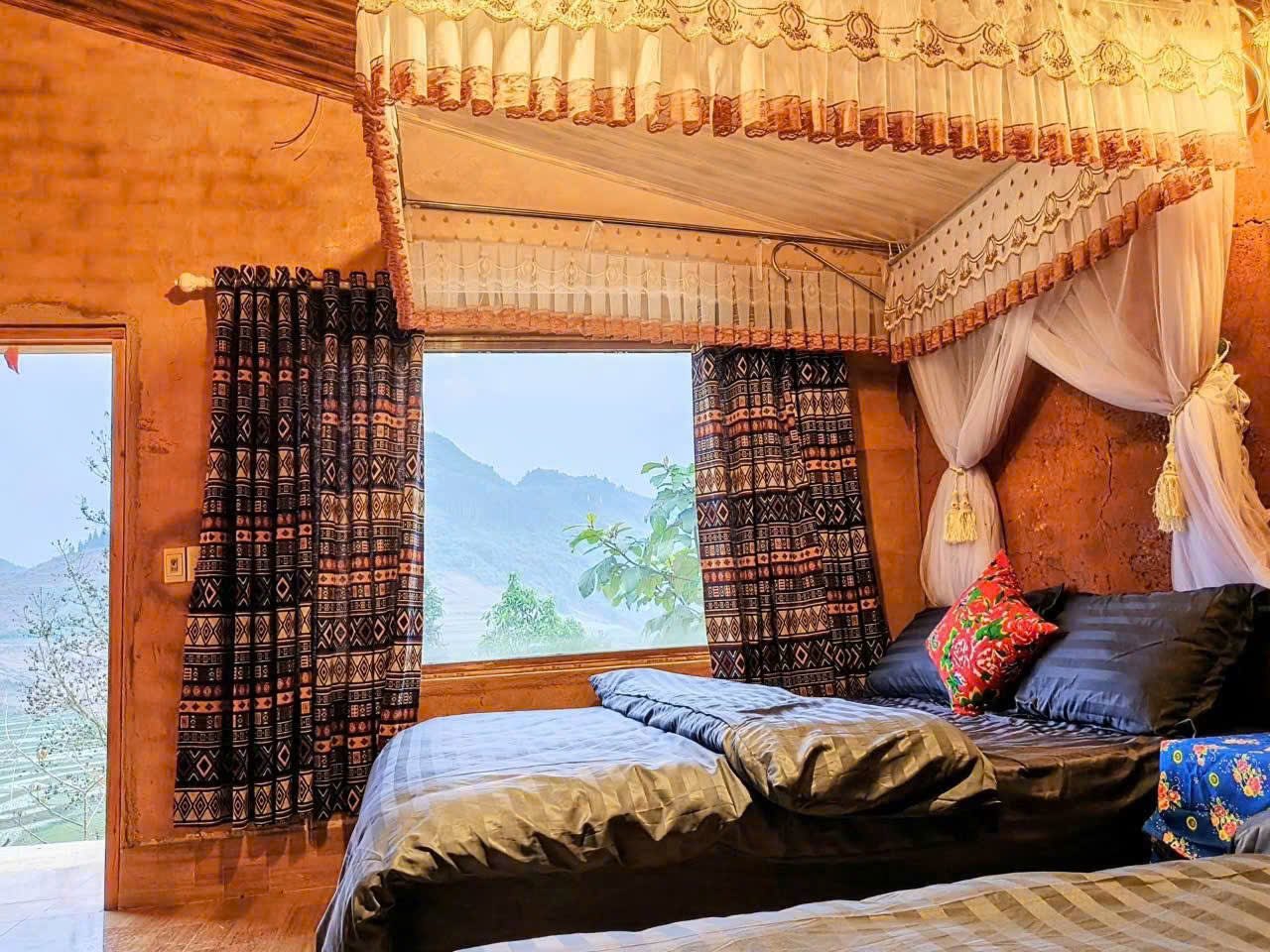
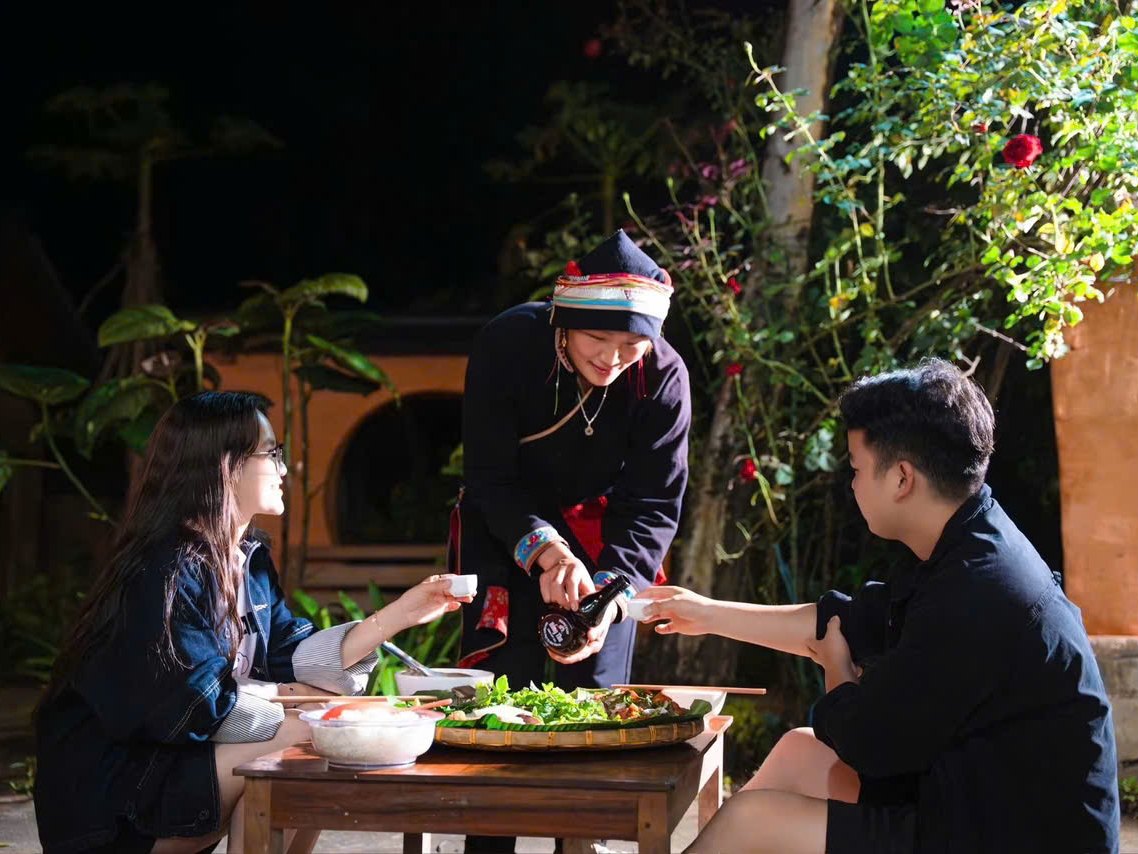
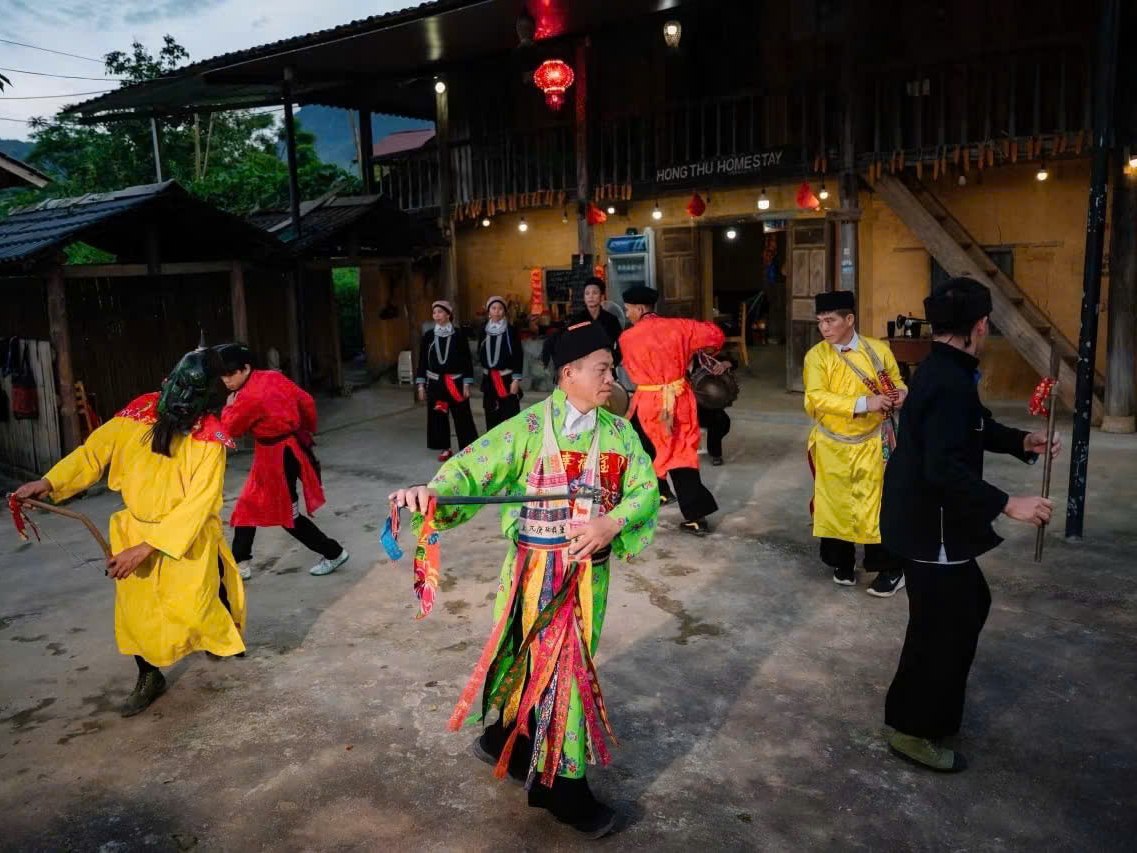
Dinner is cooked in the house. On our Sapa-to-Ban Gioc tour the Day 1 evening is written exactly that way: a Dao family homestay, a private room with a private bathroom, and dinner from the garden and the yard, herbs picked that afternoon and chicken from behind the house. If the family is in the mood, or if a group is staying, the evening runs on with call-and-response singing, a bamboo-pole dance in the courtyard and sometimes a bonfire. We never promise a performance, because it is the families’ evening too, but it happens more often than not when a few guests are in.
If you want to know how this compares with the busier homestays further along the route, read what a Ha Giang Loop homestay night is like. The short version: Nam Dam village is calmer, more family-run and more Dao; Dong Van and Meo Vac are livelier and more backpacker.
What is the Dao herbal bath, and why is Nam Dam village the place to try it?
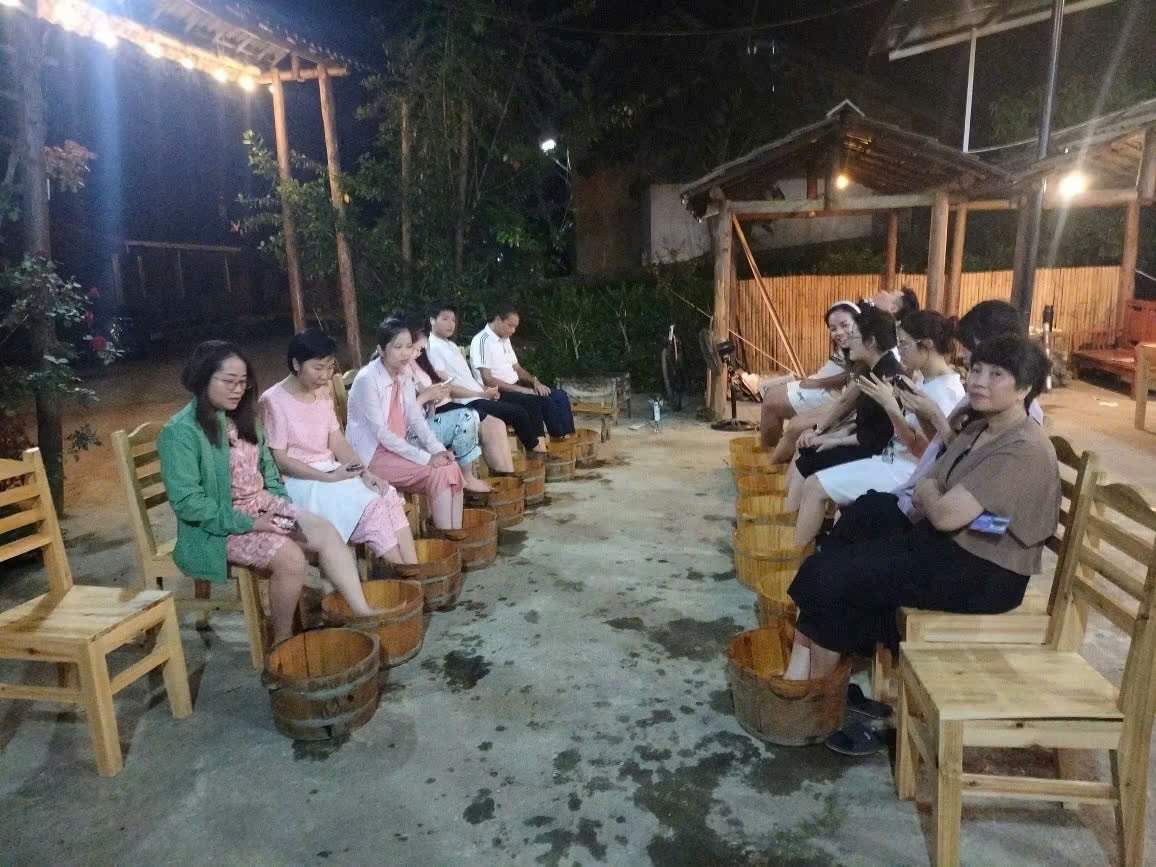
The Dao are the herbalists of the northern mountains. Families in Nam Dam village grow, gather and process medicinal plants, and that knowledge has been folded into the homestays. After a day on the road you can book a hot foot soak in a wooden tub or a full herbal bath: a dark, fragrant infusion of leaves, bark and roots that is boiled for hours before you climb in.
Two honest notes. First, not every house offers it; ask when you book or when you arrive, and give the family time, because the water is prepared from scratch. Second, it is best in the cooler months. A Dao herbal bath after a cold, misty ride in November or January is one of the best things you can do on the Loop. In high summer, the foot soak is the more comfortable choice.
What else can you do in Nam Dam village?
- Walk the village. A loop between the earthen houses, the communal pond and the rice terraces takes an hour at an easy pace, and the families are used to visitors wandering through.
- Learn about Dao customs. Families will explain the coming-of-age ritual, the new-rice ceremony and the harvest-prayer festival. The rituals themselves are real community events, not shows, so treat any invitation as a privilege rather than an entitlement.
- Try embroidery. Dao women embroider the patterns on their own tunics and will sit you down with needle and thread if you ask.
- Join the farming. In planting and harvest weeks some families take guests into the fields.
- Time a festival. The village holds a fish-catching festival at the communal pond around Thanh Minh, the tomb-sweeping day in early April.
Around the village, the Quan Ba valley holds a few more half-day stops: Lung Khuy, the showpiece cave of the plateau (see our guide to caves in Ha Giang), the Quan Ba central market in Tam Son, and the H’mong hemp weavers of Lung Tam village, which is the standard Day 1 village stop on our Loop tours.
Is Nam Dam village worth it? Who should stop and who should skip
We sell Loop tours from two to five days, and we would not put Nam Dam village into all of them. Here is the honest split.
| Your plan | Our advice on Nam Dam village |
|---|---|
| Two-day Express Loop | Skip. Day 1 already runs 150 km to Dong Van; there is no time for a village night in the first valley. |
| Three-day Loop | A lunch-and-walk stop is possible on a private departure, but Lung Tam is the better one-hour stop on this route. |
| Four or five days, or a car tour | Yes. A first night in Nam Dam village makes Day 1 gentle and gives you Dao culture before the H’mong plateau. |
| Couples, families, travellers over 50 | Yes. Quiet, private bungalows, a herbal bath and no late-night bar. |
| Backpackers looking for the party Loop | Skip the night. Stay for the foot soak if you pass, then push on to Dong Van. |
| Walkers who want Dao villages on foot | Consider our four-day village trek instead, which walks through Dao hamlets such as Xa Phin south of the plateau. |
How do you add Nam Dam village to a Ha Giang Loop with Ali Travel?
The simplest way is our Sapa to Ban Gioc: The Northern Arc by Private Car. Day 1 leaves your Sapa hotel at 07:00, drops into Ha Giang city for lunch, climbs to Quan Ba Heaven’s Gate and turns off into Nam Dam village for the night in a Dao family homestay with a private room and private bathroom. The tour is listed at 16,110,000 VND (about $625) per guest, priced for a private departure of three, for six days with a private car and English-speaking driver-guide. Border-area permits for both provinces, entrance fees, travel insurance, drinking water and 8% VAT are all inside the price.
On our standard Loop tours the Day 1 village stop is Lung Tam, not Nam Dam. If you book a private departure, for example the Private Trail or any Classic route, ask us at booking and we route Day 1 through Nam Dam village instead. Our guide to private versus group tours explains what changes when you go private.
Booking works the same for every tour: a 500,000 VND deposit per guest, the rest before departure, no fee for bank transfer and a 4% fee on cards. Riding on your own bike? Rent it from us, get the permit sorted in town, and treat Nam Dam village as the first night of your own Ha Giang Loop itinerary.
FAQ: Nam Dam Village
Which ethnic group lives in Nam Dam village?
The long-tunic Dao, known in Vietnamese as Dao Ao Dai or Dao Cham. All 70 households are Dao, and the women still wear the long dark tunic with embroidered trim every day. This is a different group from the Black Lo Lo of Lo Lo Chai or the H’mong of Lung Tam.
How far is Nam Dam village from Ha Giang city?
About 50 km. Quan Ba Heaven’s Gate, the viewpoint above the valley, is roughly 46 km from the city on Road 4C, and the village lies a few kilometres further on. Allow 1.5 to 2 hours by motorbike with photo stops.
Do I need a permit to visit Nam Dam village?
Yes. Quan Ba is a border district, so foreign visitors need the same border-area permit as the rest of the Ha Giang Loop. On every Ali tour the permit is included in the price and filed by us before departure.
Can I visit Nam Dam village as a day trip?
Yes. Ride up in the morning, stop at Heaven’s Gate, walk the village, have a foot soak and lunch, and be back in Ha Giang city by late afternoon. It pairs well with Lung Tam and Lung Khuy Cave if you leave early.
When is the best time to visit Nam Dam village?
There is no official best season, so here is ours: the valley rice is bright green in June and July and golden around late September and October; the cool, dry months from October to December give the clearest skies and the best excuse for a herbal bath. Winter nights are cold in an earthen house, so pack a warm layer from November to February.
Is Nam Dam village better than Lung Tam for a Day 1 stop?
They do different jobs. Lung Tam is a one-hour craft stop, the H’mong hemp weavers at their looms. Nam Dam village is a place to sleep, eat and bathe. If you have a spare night, take Nam Dam; if you have a spare hour, take Lung Tam; with four days or more, you can have both.
Final word from the Ali team
Most riders photograph the Twin Mountains from Heaven’s Gate and roll on to Dong Van without ever dropping into the valley below. Nam Dam village is the reason to drop in: a Dao family, a house made of earth, a hot herbal bath and a dinner that was in the garden an hour earlier. Stay a night if your days allow it. If they don’t, at least stop for the foot soak.
Book it: see all Ha Giang Loop tours or message us on WhatsApp/Zalo (+84) 787 652 333 or info@hagiangalitravel.com and we will route your Day 1 through Nam Dam village.
See more
- Quan Ba Heaven’s Gate & Twin Mountains: Gateway to Ha Giang
- Lung Tam Village: Ha Giang’s Hemp Weavers, Honestly Explained
- Ha Giang Loop Homestay: What a Night Is Really Like
Sources: Bao Tuyen Quang, “Nam Dam doi thay tu du lich”, 14 October 2026; Vietnam National Authority of Tourism, rural tourism portal on Nam Dam community-based tourism village; Decision 120/2026/QD-UBND of Tuyen Quang province, September 2026; Ali Travel field notes from our Day 1 route, 2026.