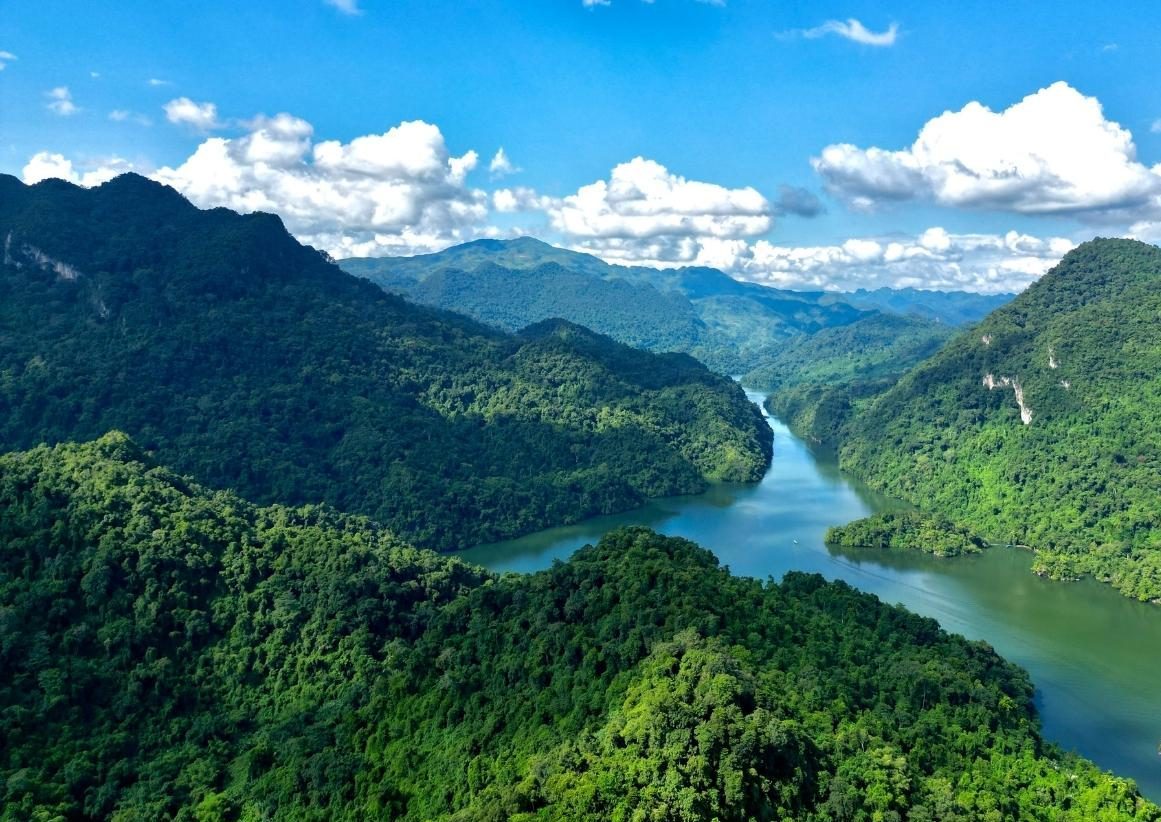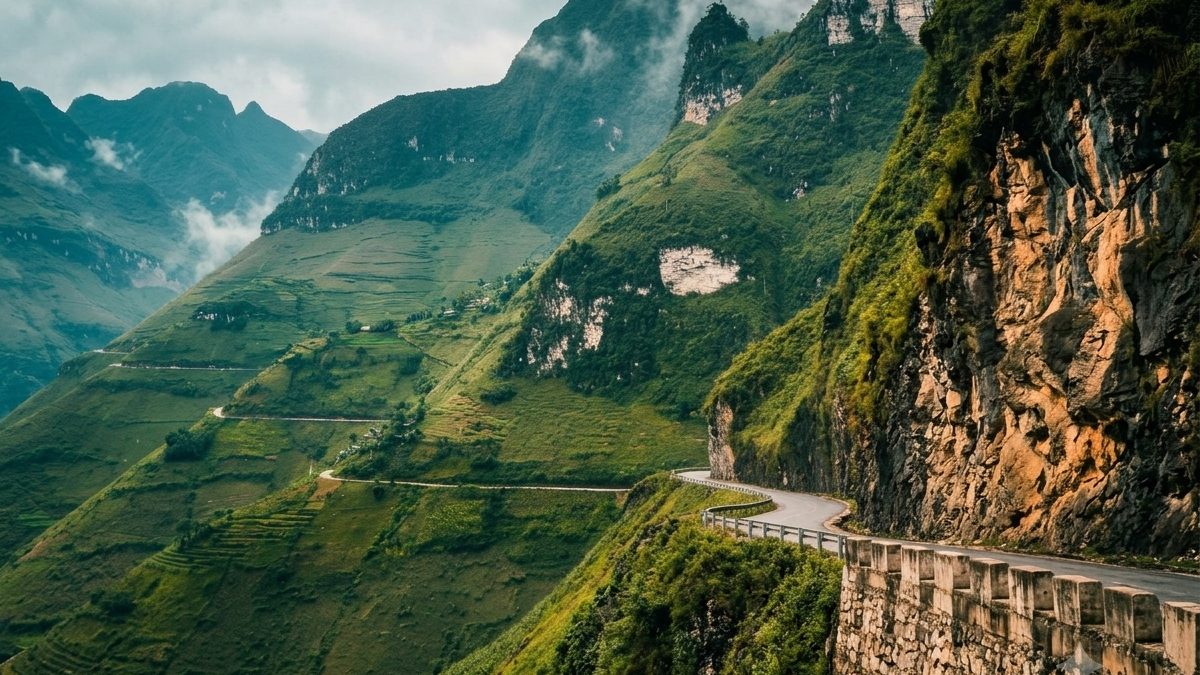
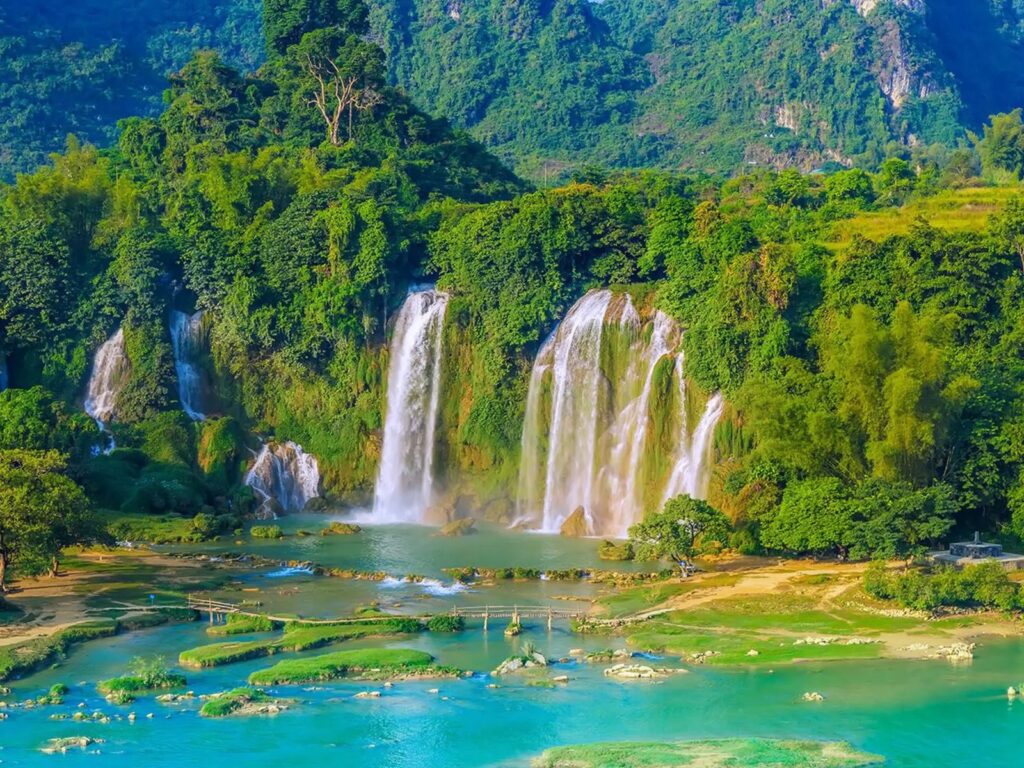
Cao Bang weather has two faces: a hot, wet season from May to September and a dry, cooler season from October to April. For most travellers the best time to visit Cao Bang is late September to November, when Ban Gioc Waterfall still runs strong, the rice along the Quay Son River turns gold and the sky clears. June to August gives you the fullest falls but the most rain; December to February is dry, clear and cold.
We are Ha Giang Ali Travel, a licensed international tour operator (licence 08-0007/2025/CDLQGVN-GP LHQT) based in Ha Giang city. Our Easy Riders and drivers cross the provincial line every week of the year on our Ha Giang to Cao Bang routes, so this guide to Cao Bang weather is built on what we see on the road: which months the bamboo rafts run at Ban Gioc, when the Khau Coc Cha pass is slick, and when the Thang Hen lakes vanish into grass. We have kept the numbers to typical ranges you can plan around, and we link the official forecast so you can check the actual week you travel.
Cao Bang weather at a glance
Cao Bang sits in the far north-east of Vietnam, on the Chinese border, inside the Non Nuoc Cao Bang UNESCO Global Geopark. Most of the places you visit – Ban Gioc, Pac Bo, Angel Eye Mountain, Cao Bang city – lie lower than the Dong Van plateau in Ha Giang, so Cao Bang weather is usually a few degrees warmer than the Ha Giang Loop on the same day. The climate is subtropical monsoon: roughly 1,400–1,500 mm of rain falls on Cao Bang city in a typical year, and most of it arrives between May and September.
| Months | Typical Cao Bang weather | Rain | What you see | Our verdict |
|---|---|---|---|---|
| December – February | 12–20°C by day, 6–12°C at night in the city; colder on the passes and on Phia Oac | Low. Grey drizzle from late January into February | Clear, sharp mornings; Ban Gioc low but deep turquoise; the Thang Hen basin dry | Dry and quiet. Bring real warm layers |
| March – April | 18–28°C, humid | Low, rising through April | Plum and peach blossom, flooded spring paddies, hazy afternoons | Mild and uncrowded |
| May – August | 26–34°C, sticky | High. July and August are the wettest months | Ban Gioc at full power, the lake in front of Angel Eye brim-full, afternoon storms | Spectacular water. Plan around the rain |
| September – October | 22–30°C | Tapering. September can still catch the tail of a typhoon | Golden rice at Ngoc Con, strong falls, skies clearing by October | Our favourite window |
| November | 15–25°C, dry air | Low | Crisp light, golden grass around Thang Hen, buckwheat on the Ha Giang side | Excellent, cooling fast |
These are long-term patterns of Cao Bang weather, not a forecast. Before you ride, check the week ahead on the National Center for Hydro-Meteorological Forecasting, the official Vietnamese weather service, and ask us what the road looked like yesterday.
When is the best time to visit Cao Bang?
Late September to November is the best time to visit Cao Bang for most people. The rain tails off, Ban Gioc is still fed by the summer, the rice around the Quay Son River is harvested in late September and early October, and from mid-October the light turns clear and golden. If you can only pick one month, pick October.
- Best overall: late September to November – strong water, golden valleys, clearing skies and the comfortable Cao Bang weather most riders hope for.
- Best for the waterfall itself: June to early September – Ban Gioc at its widest and loudest, at the price of heat and afternoon storms.
- Best for quiet and clear skies: December to February – few visitors, sharp views, cold mornings and a thinner waterfall.
- Best for blossom and mild days: March and April – spring colours and comfortable Cao Bang weather, with some haze and drizzle.
Whatever you choose, remember that a Cao Bang trip almost always starts in Ha Giang, so read our Ha Giang weather by month guide too and pick a window that works for both halves of the journey.
Cao Bang weather month by month
December to February: dry, clear and cold
Winter is the driest stretch of the year. Daytime Cao Bang weather in the city is a pleasant 12–20°C, but nights drop to single figures and the cold air from the north arrives in waves. During a cold snap the Khau Coc Cha pass and the road through Bao Lac can sit near 5°C in the morning, and Phia Oac (1,931 m), the highest peak in the province, can carry frost and, in the strongest snaps, ice or a dusting of snow. From late January the famous northern drizzle sets in: fine, grey and persistent, with low cloud on the passes.
What dry-season Cao Bang weather gives you in return is the clearest water of the year. Ban Gioc runs lower and some tiers thin out, but the pools turn a deep turquoise, the Lenin Stream at Pac Bo is glass-clear, and the limestone views from Angel Eye Mountain are sharp. This is also when Tet falls: Lunar New Year 2027 is Saturday 6 February, and our tours carry a Tet surcharge from 4 to 11 February 2027. Read Ha Giang Loop during Tet before you book that week.
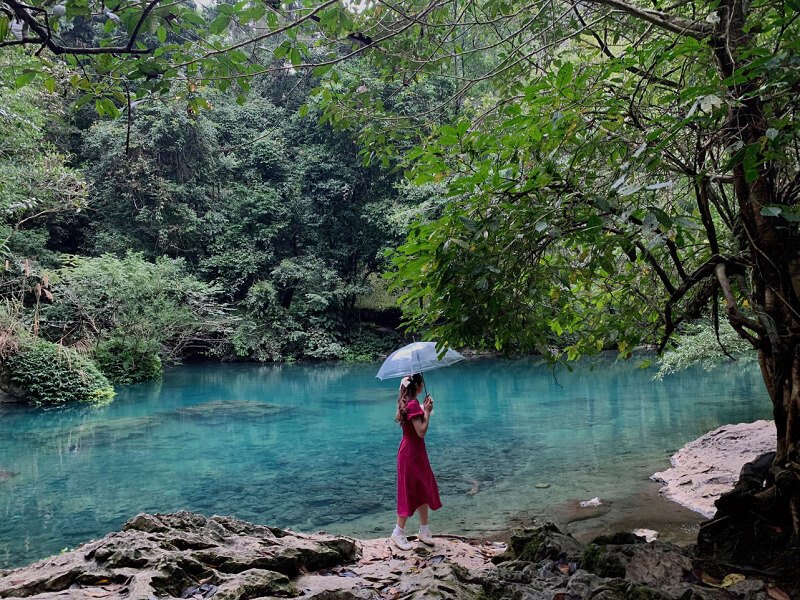
March and April: blossom and spring paddies
Spring Cao Bang weather is mild, 18–28°C, and humid. Plum and peach trees flower in the villages in late February and March, farmers flood the lowland paddies so the valleys shine like mirrors, and the hills turn a fresh green. Rain is still light, but the air is damp and afternoons can be hazy, which softens long views from the passes. It is one of the quieter windows on the Cao Bang road and pairs well with the spring months on the Loop; see Ha Giang Loop in April.
May to August: the green season, and the wet one
From May the heat builds and the rain follows. Summer Cao Bang weather means 26–34°C, high humidity and thunderstorms that usually build in the afternoon, with July and August the wettest months of the year. The landscape responds instantly: every hillside is a deep green, the paddies are tall, the Quay Son River runs high, and Ban Gioc Waterfall is at its widest and loudest. This is the classic postcard view of the falls, and the lake in front of Angel Eye Mountain fills right up to the meadow.
The cost of summer Cao Bang weather is planning around water. After a big storm Ban Gioc can run brown for a day, the bamboo rafts may pause, and the mountain roads on the way in from Ha Giang can carry mud, small rockfalls and the odd landslide. Our Easy Riders start early in summer so the riding is done before the afternoon storm, and our rainy season guide explains how we adapt the day.

September and October: golden rice and strong falls
This is the window we recommend most often. September Cao Bang weather is still warm, 22–30°C, and showers continue in the first half of the month, but the big storms fade and the Quay Son valley turns gold. The single rice crop around Ngoc Con, Phong Nam and Trung Khanh is cut from late September into the first half of October, and the chestnut harvest the district is famous for comes in at the same time. Ban Gioc is still powerful from the summer rain while the skies open up, so you get the waterfall and the harvest in one frame.
One caution for September: it is still typhoon season on the coast, and the tail of a storm can reach the mountains. In September 2024 the remains of Typhoon Yagi caused landslides in Cao Bang and closed roads for days. We watch the forecast closely that month and will move a departure rather than ride into it. By mid-October the risk is low and Cao Bang weather is as good as it gets; our Ha Giang Loop in October guide covers the Ha Giang half of the trip.

November: the clearest skies of the year
November Cao Bang weather is dry, crisp and bright: 15–25°C, very little rain and long views from every pass. The rice is gone and the grass around the Thang Hen lakes starts to turn gold, the water drops and clears, and the mornings are cool enough for a jacket on the bike. On the Ha Giang side the buckwheat fields bloom, so a late-October or November trip gives you the buckwheat flower season and Cao Bang in one loop. Nights cool quickly towards the end of the month.
How Cao Bang weather changes what you see
Cao Bang is a limestone landscape, and limestone reacts to rain in ways that change the sights month to month:
- Ban Gioc Waterfall: widest and loudest from June to early September, strong and clearer in September and October, lower and turquoise from November to April. Our full Ban Gioc Waterfall guide has the detail.
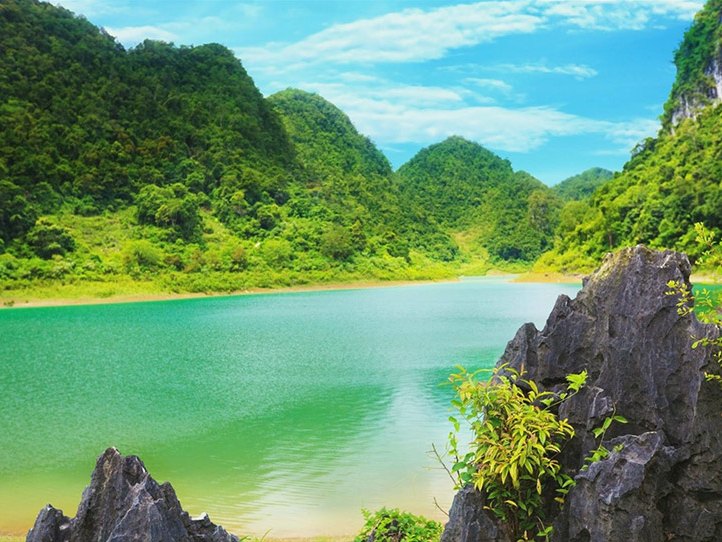
- Angel Eye Mountain and the Thang Hen lakes: in the wet months a lake fills the meadow in front of the round rock window; in the dry months it drains away and buffalo wander across the grass. Both are beautiful, but they are two different photographs.
- Ngoc Con and the Quay Son valley: flooded mirrors in late spring, tall green in summer, gold for about three weeks from late September.
- The Lenin Stream at Pac Bo: emerald and clear in the dry season, sometimes cloudy for a day after a summer downpour.
- Nguom Ngao Cave: the one sight Cao Bang weather cannot spoil. More than two kilometres of lit chambers stay cool and dry whatever the sky is doing.

Is Cao Bang weather different from Ha Giang weather?
Same monsoon, different altitude. Ha Giang’s Dong Van plateau sits well over 1,000 m, so it is colder, foggier and more exposed; Cao Bang’s valleys and towns are lower, so Cao Bang weather on the same day is usually warmer and the cloud lifts sooner. In winter you can leave Dong Van in thick fog and reach Pac Bo in sunshine. In summer the rain falls on both, but Cao Bang feels hotter and more humid in the afternoons. The rainy season, the typhoon risk in September and the golden window in October are shared, which is why our Ha Giang Cao Bang itinerary plans both halves around the same calendar.
Riding Cao Bang roads in the rainy season: what our team does
The road from Meo Vac to Bao Lac, up the Khau Coc Cha pass and on to Pac Bo is the longest transfer of the trip, and it is the stretch where Cao Bang weather matters most. On our 5-day Grand North Loop that is day three; on the Ban Gioc Traverse it is split across days two and three with a night in the Black Lo Lo village of Khuoi Khon in between. In the wet months we:
- Leave early, so the mountain sections are done before the afternoon storms build.
- Check the road and the Cao Bang weather with our homestay hosts the night before. Landslides are cleared quickly, but a closed section can add hours.
- Issue rain gear and keep luggage in waterproof liners on the bike.
- Let the guide decide on the Ban Gioc raft that morning. If the river is high and brown, we skip it; the ticket is optional and paid locally anyway.
- Swap the order of stops: Nguom Ngao Cave or the Pac Bo site first, the open viewpoints when the cloud lifts.
Every guest on our Cao Bang tours is covered by travel insurance with BIC up to 50,000,000 VND, and the border-area permit for both Ha Giang and Cao Bang is filed and paid for you at cost. If you would rather not ride in the wet season at all, the same route runs in a private car over 7 days, with a night in Cao Bang city and its seven-flavour roast duck.
What to pack for Cao Bang weather
Our general Ha Giang Loop packing list covers the basics. For Cao Bang weather, adjust by season:
- December to February: a proper insulated jacket, gloves, a buff for the neck, and a thermal layer for the 6 a.m. starts. Hotels and homestays here are not heated.
- March to April: light layers, a thin rain shell for drizzle, and something to keep the damp off your camera.
- May to September: a real rain jacket and over-trousers, quick-dry clothes, shoes with grip for the wet rocks at Ban Gioc, sun cream and a second pair of socks.
- October to November: the easiest months. A fleece for the mornings, sunglasses for the clear afternoons, swimwear if you fancy the Ban Gioc pools.
Does the season change the price of a Cao Bang tour?
No. Our prices do not follow the Cao Bang weather: they are the same in the golden window as in the rainy season; the only exception is the Tet week surcharge mentioned above. Current prices on our website, including 8% VAT and the border permit: the 5-day Grand North Loop by Easy Rider is 10,550,000 VND (about $406); the 5-day Ban Gioc Traverse is 12,050,000 VND (about $463) by Easy Rider or 15,350,000 VND (about $590) by private car; and the 7-day Ha Giang and Cao Bang trip by private car is 19,710,000 VND (about $759). You hold a place with a deposit of 500,000 VND per guest and pay the rest before departure; details are on our booking and refund policy page.
Getting there and away is also season-proof: the Ha Giang to Cao Bang bus runs year-round at 350,000 VND on a 29-seat coach, and sleeper buses from Cao Bang city back to Hanoi take about seven hours. We sell both at the operator fare on our bus ticket page. If you have longer in the north, Ba Be Lake sits between Cao Bang and Hanoi and is calmest in the dry months.
FAQ: Cao Bang weather
What is the best month to visit Cao Bang?
October has the best Cao Bang weather of the year. The rice is harvested in the first half of the month, Ban Gioc is still strong from the summer, the storms have passed and the skies are mostly clear. Late September and November are close seconds.
When is Ban Gioc Waterfall at its fullest?
From June to early September, at the peak of the rains. Expect heat, humidity and afternoon storms in exchange, and accept that after a big downpour the water can run brown for a day.
Is Cao Bang cold in December and January?
Yes, especially in the mornings and on the passes. The city sees 12–20°C by day and single figures at night, cold snaps push lower, and Phia Oac can carry frost or ice. It is also the driest, clearest time of year, so it is a good season if you pack properly.
Does it rain all day in Cao Bang in summer?
Usually not. Summer Cao Bang weather mostly brings afternoon or evening thunderstorms, so mornings are often fine for riding. Multi-day rain happens when a typhoon or tropical depression reaches the north, most often from July to September.
Can I still visit Cao Bang in the rainy season?
Yes, and many guests do, because the waterfall is at its best. We start early, keep the itinerary flexible, decide on the Ban Gioc raft each morning and move a departure if a serious storm is forecast. A private car is the comfortable alternative to riding in the wet.
Where can I check the Cao Bang weather forecast?
Use the National Center for Hydro-Meteorological Forecasting (nchmf.gov.vn), Vietnam’s official weather service, for the Cao Bang weather forecast a week ahead, and message us the day before you set off; our riders and homestay hosts know what the road looked like that morning.
Plan your Cao Bang trip around the weather with Ali Travel
Tell us your dates and we will tell you honestly what Cao Bang weather is likely to do and which route makes the most of it: the Grand North Loop for riders who want the whole plateau and the falls in five days, the Ban Gioc Traverse for private rooms and a one-way line east, or the 7-day car trip for a slower, drier journey. Browse all our tours or write to us: WhatsApp/Zalo (+84) 787 652 333 · info@hagiangalitravel.com · hagiangalitravel.com.
See more: