Yes, you can do the Ha Giang Loop as a vegetarian, and vegans manage it too — as long as every kitchen knows before you arrive. Most meals on the Loop are shared trays of rice, stir-fried greens, tofu and eggs, so a vegetarian plate is easy to cook. The real traps are invisible: fish sauce, pork lard and bone broth, which go into many dishes by default.
We are a local tour operator and hostel in Ha Giang city, and we feed riders on the Loop every week. This Ha Giang Loop vegetarian guide is what we tell guests who message us before booking: what you will actually be served, which local dishes are naturally meat-free, what to watch out for, and how we arrange vegetarian and vegan meals with each homestay and restaurant.
Can You Do the Ha Giang Loop as a Vegetarian or Vegan?
You can. Our own answer on the Ali Travel FAQ is short: “Vegetarian, vegan or allergies? All fine. Tell us when you book and we arrange it with the homestay hosts and restaurants in advance.” The important words are in advance.
Food in the mountains is not ordered from a menu. A homestay host in Dong Van or Meo Vac shops at the market for the number of guests coming that night, then cooks one big family meal. If the host knows there is a vegetarian at the table, she simply cooks a few extra dishes without meat. If she finds out when you sit down, she may only have rice and one plate of greens left to offer.
Food is also part of the culture here. The Loop runs through villages of the Hmong, Tay, Dao, Lo Lo and other peoples, and sharing a tray with your host is one of the best evenings of the trip — our guide to the indigenous cultures of Ha Giang explains who you will meet along the way. Being a Ha Giang Loop vegetarian does not mean missing that experience; it just means your host cooks a little differently for you.

What Does a Ha Giang Loop Vegetarian Eat on Tour?
On our 3-day Dong Van & Ma Pi Leng tour, the price includes 3 breakfasts, 3 lunches and 2 dinners, plus 1.5 litres of drinking water per person per day. Lunches and dinners are home-cooked Vietnamese food. Here is how a normal day looks for a Ha Giang Loop vegetarian:
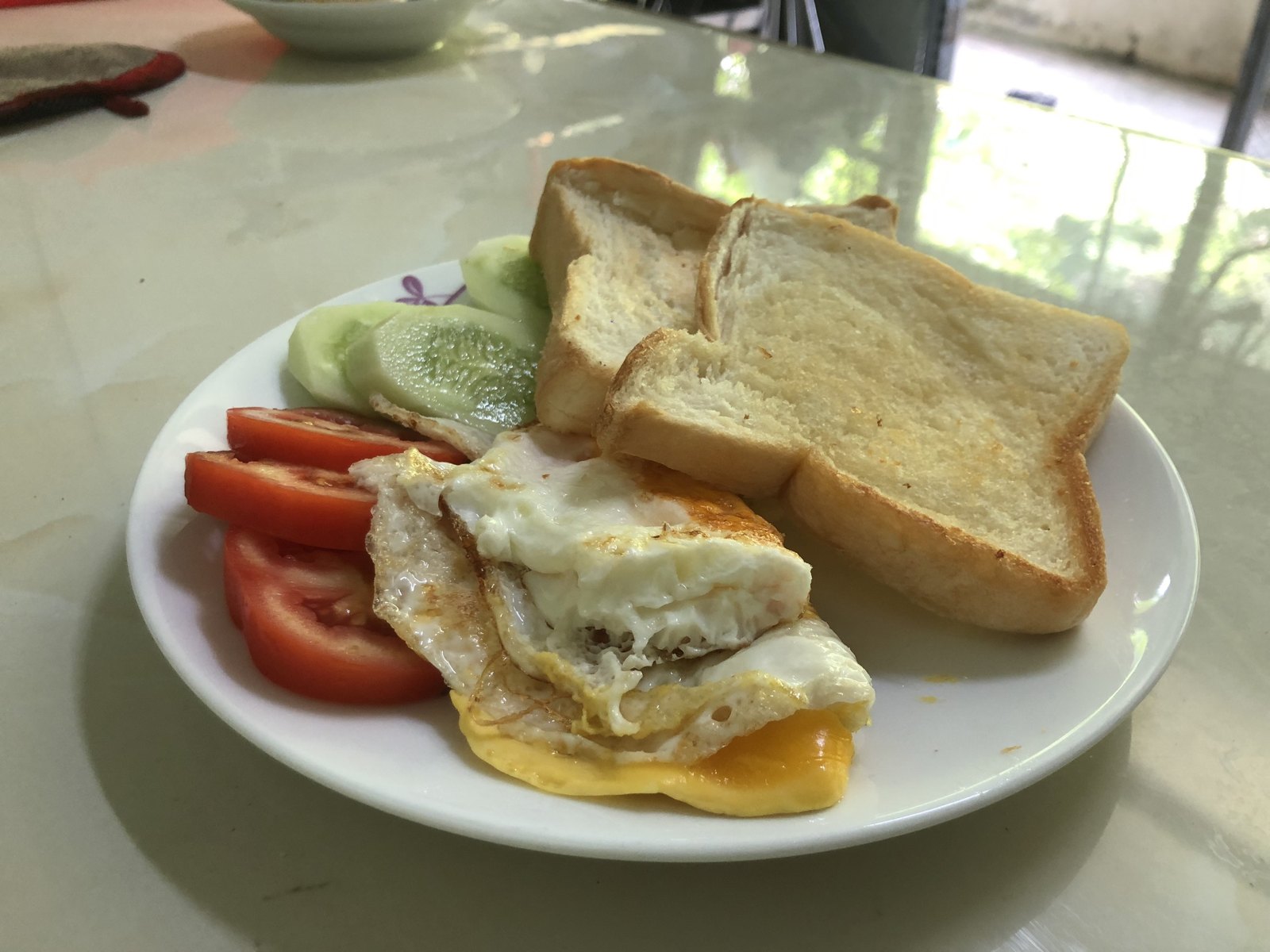
- Breakfast: eggs, bread, fruit, noodle soup or steamed buns, depending on where you slept. Eggs and bread are the easy vegetarian choice; noodle soup usually has a meat broth.
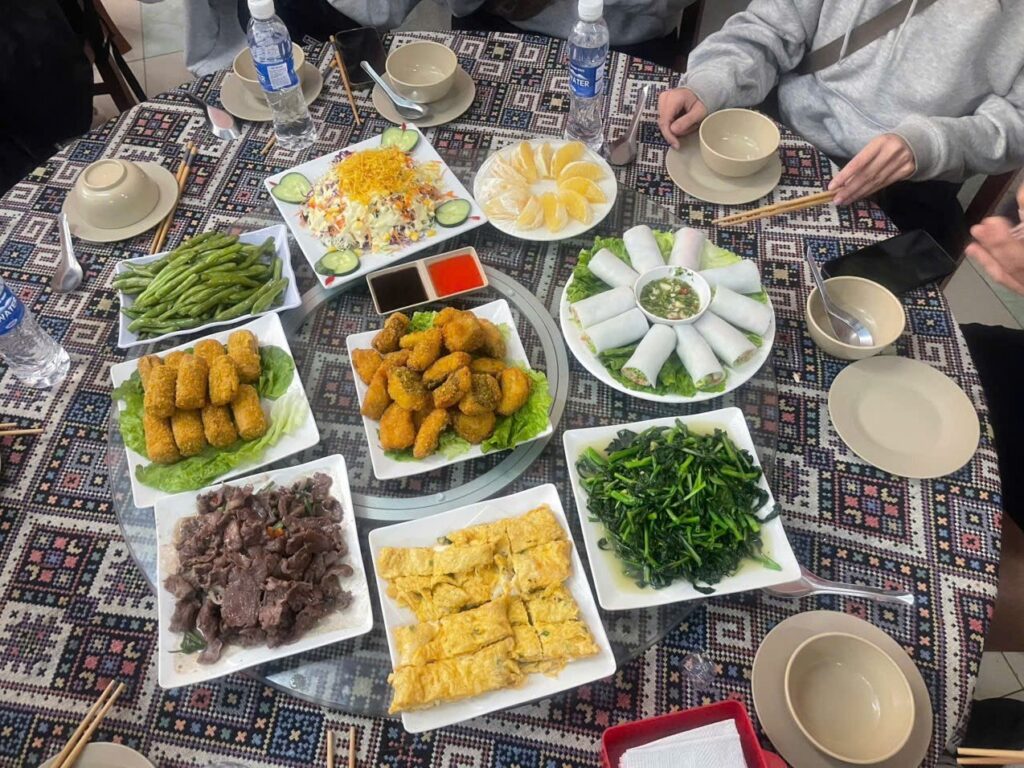
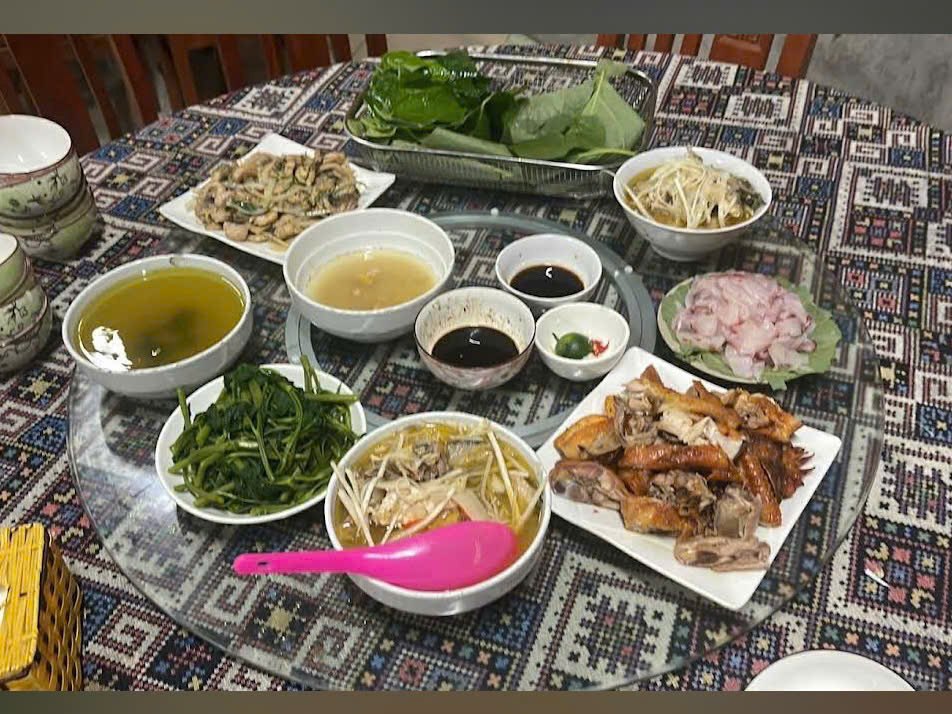
- Lunch: a local restaurant on the route, served as a shared tray — white rice, a vegetable stir-fry, a soup and several main dishes in the middle of the table.
- Dinner: cooked by the homestay family and eaten together, often with corn wine and a few toasts. This is the meal where advance notice matters most.
Because every dish is shared, you do not get one “vegetarian set meal”. You get your own Ha Giang Loop vegetarian plates — tofu, egg, vegetables — placed in front of you, while the meat dishes go to the rest of the group. For the full list of what the tour price covers, see what’s included in a Ha Giang Loop tour.
Which Ha Giang Dishes Are Naturally Vegetarian?
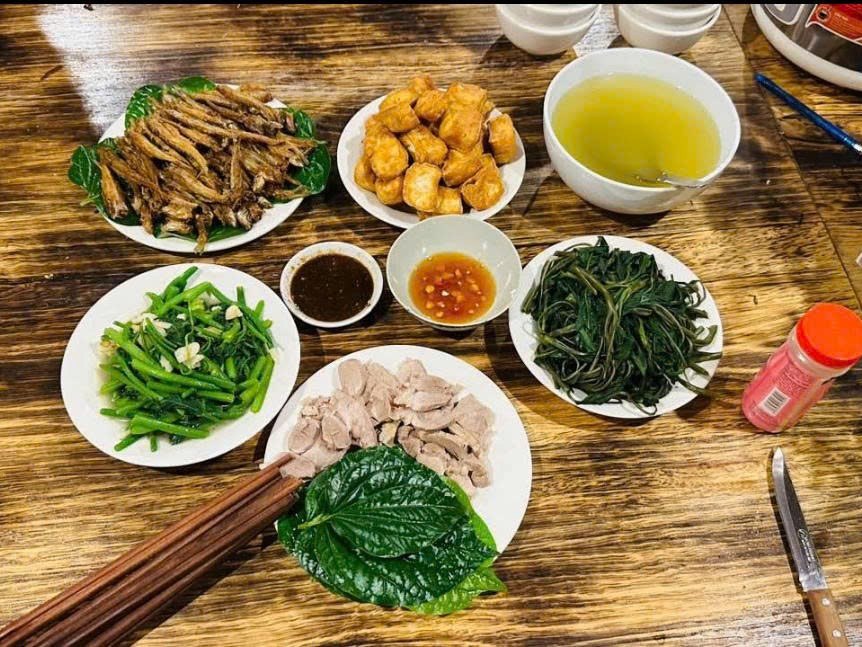
Highland food is built on corn, rice, vegetables from the garden and a little meat for special days. That makes a Ha Giang Loop vegetarian diet much easier than in many cities. Dishes you will see often:
- Rau xào tỏi — greens stir-fried with garlic: mustard greens, morning glory or chayote shoots, depending on the season.
- Đậu phụ sốt cà chua — fried tofu in tomato sauce, the most common vegetarian main on the Loop.
- Trứng rán — omelette, sometimes with spring onion (vegetarian, not vegan).
- Mèn mén — steamed ground corn, the traditional staple of Hmong families on the stone plateau.
- Bánh tam giác mạch — buckwheat cake, sold around Dong Van and Lung Cu, especially during the buckwheat flower season.
- Xôi ngũ sắc — five-colour sticky rice dyed with leaves and flowers.
- Fruit, peanuts and tea — seasonal fruit from the markets, roasted peanuts with drinks, and green tea everywhere. Ha Giang’s wild Shan Tuyet tea is worth trying; read more in our Ha Giang tea guide.
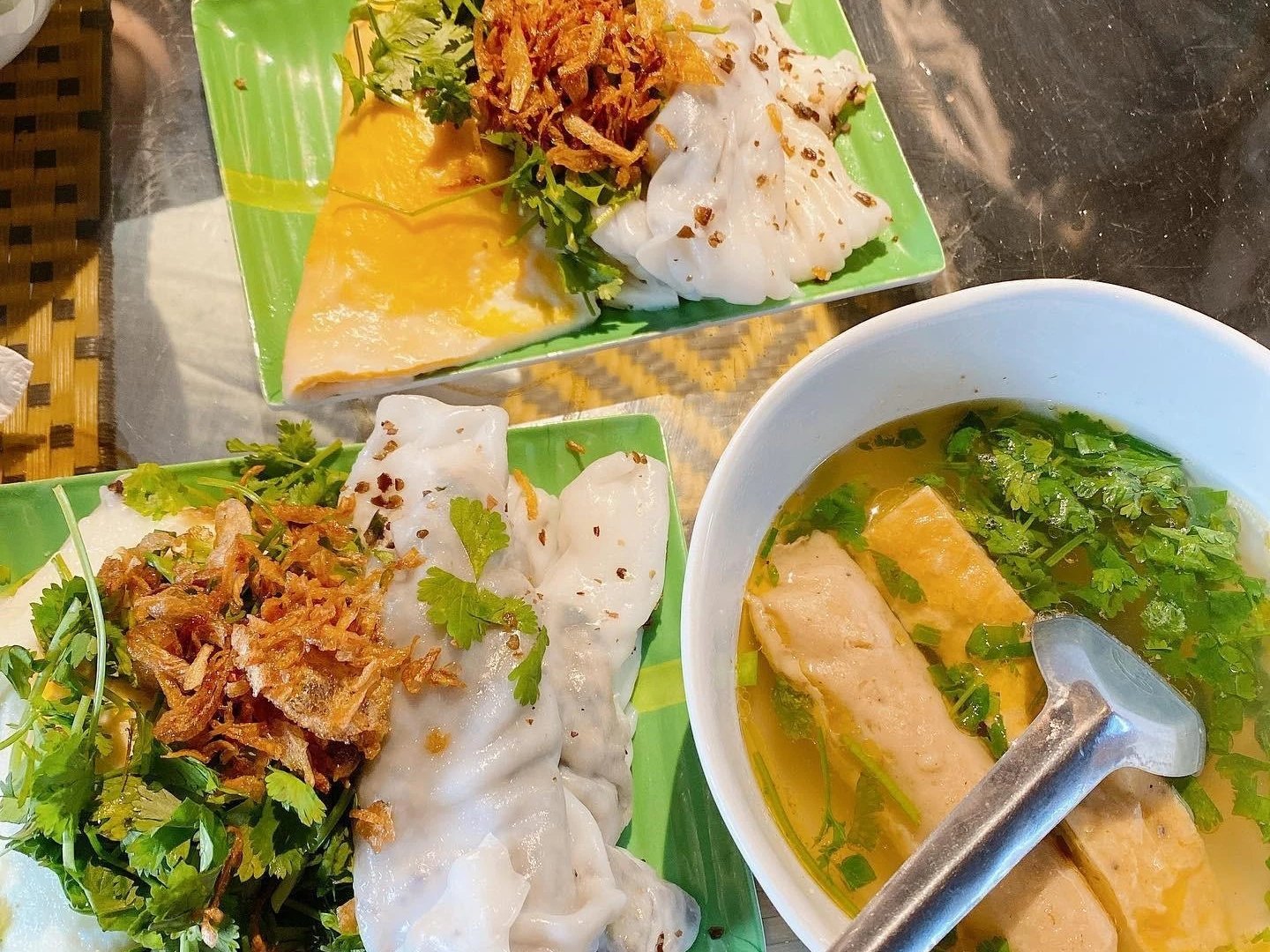
Some famous local dishes are not vegetarian even though they sound harmless. Cháo ấu tẩu (au tau root porridge) is usually cooked with pork, and the hot broth served with Dong Van rice rolls is normally a meat broth. Our full Ha Giang food guide covers ten local dishes and what goes into them.
What Are the Hidden Traps for a Ha Giang Loop Vegetarian?
The dish on the table may look like plain vegetables. What matters is how it was cooked. These are the ingredients that catch almost every Ha Giang Loop vegetarian and vegan — and they are common all over northern Vietnam:
- Fish sauce (nước mắm). In dipping bowls, dressings and many stir-fries. Vegans and strict vegetarians should ask for soy sauce (xì dầu) instead.
- Pork lard (mỡ lợn). Mountain kitchens often fry with lard. Ask for vegetable oil (dầu ăn).
- Bone broth (nước xương). Most soups and noodle broths start with pork or chicken bones, even when the bowl only shows vegetables.
- Eggs and milk. Hosts often think “vegetarian” includes eggs. If you are vegan, say so clearly — it changes breakfast and the omelette at every meal.
- Shared serving spoons. On a shared tray, people use their own chopsticks for every dish. If cross-contact matters to you, ask the host for a separate small plate of your dishes.
One more thing worth knowing: some local hosts like to honour guests with special dishes such as thắng cố (horse-meat stew) or blood pudding. On our tours, we tell every kitchen in advance not to serve these unless a guest asks for them, so a Ha Giang Loop vegetarian will not be surprised at the table.
How Do We Arrange Ha Giang Loop Vegetarian and Vegan Meals?
This is the part a menu cannot do for you, and it is where a local operator helps most. Our process for every Ha Giang Loop vegetarian or vegan guest is the same:
- We ask when you book. Our booking team asks every guest about diet and allergies, and we write it on the group sheet for your departure.
- We brief each kitchen before you ride. Every homestay and restaurant on your route is told how many vegetarian or vegan guests are coming and what they cannot eat — before the departure day, never on the spot.
- Your guide checks at the table. The guide reminds the host when you arrive and translates if you want to ask what is in a dish.
The same process that protects a Ha Giang Loop vegetarian applies to allergies: peanuts, gluten, seafood or anything else. Write it in your booking message and, if it is serious, carry a short note in Vietnamese as well. A deposit of 500,000 VND per guest holds your place, and our booking and refund policy explains the rest.
Useful Vietnamese Phrases for a Ha Giang Loop Vegetarian
Many Vietnamese people eat vegetarian food (đồ chay) on certain days of the lunar month, so the word chay is understood everywhere. In remote Hmong villages, some older hosts speak little Vietnamese — your guide will translate. Save these on your phone:
- Tôi ăn chay. — I am vegetarian.
- Tôi ăn chay, không ăn trứng, không uống sữa. — I am vegetarian, I don’t eat eggs or drink milk (vegan).
- Không thịt, không cá. — No meat, no fish.
- Không nước mắm, không mỡ lợn. — No fish sauce, no lard.
- Món này có nước xương không? — Is this made with bone broth?
- Có món chay không? — Do you have vegetarian dishes?
- Đậu phụ (tofu) · rau (vegetables) · xì dầu (soy sauce).
What Should a Ha Giang Loop Vegetarian Pack?
Riding days are long, and for a Ha Giang Loop vegetarian the gap between lunch and dinner can be five or six hours of mountain roads. A few things make life easier:
- Snacks with protein. Nuts, peanut butter or protein bars from home. Shops in small towns sell mostly biscuits, sweets and instant noodles.
- Fruit from Ha Giang city. Buy it at the market the day before you start; village shops have less choice.
- Cash in Vietnamese dong. Villages on the route have no ATMs, so take enough for snacks, drinks and coffee stops.
- A note in Vietnamese describing your diet or allergy, for moments when the guide is not next to you.
For everything else, use our Ha Giang Loop packing list. If this is your first time on the Loop, our list of common Ha Giang Loop mistakes is also worth five minutes. For background on the region itself, the official Vietnam tourism page on Ha Giang is a good start.
Is the Ha Giang Loop Vegetarian-Friendly Enough to Be Worth It?
Yes. You will not eat the same variety as in Hanoi, but you will eat well: fresh greens picked that morning, tofu, eggs, corn and sticky rice, cooked by families who are happy to make something special for a guest. With meals included in the tour price, a Ha Giang Loop vegetarian does not need to hunt for food at the end of a long riding day — it is waiting on the table.
The only real mistake is staying quiet. Tell your operator before you go, repeat it to your guide on day one, and the Loop is as good for vegetarians and vegans as it is for anyone else. Homestay nights are a highlight for most of our guests — read more about homestays on the Ha Giang Loop.
FAQ: Ha Giang Loop Vegetarian and Vegan Questions
Can vegans do the Ha Giang Loop?
Yes. Tell your operator you are vegan, not just vegetarian, so hosts leave out eggs, milk, fish sauce, lard and bone broth. Tofu, vegetables, rice, corn and fruit are available on every day of the Loop.
Do I pay extra for Ha Giang Loop vegetarian meals on an Ali tour?
Meals listed on your tour are already included in the price. Vegetarian and vegan versions are arranged with each kitchen before departure — you only need to tell us when you book.
What happens if I forget to mention it?
Tell your guide as soon as possible. The guide will call ahead to the next homestay and restaurant, but the first meal after you tell us may be simpler than usual.
Is the food on the Ha Giang Loop spicy?
Not usually. Chilli is served on the side, so you add as much or as little as you like.
Can I join the homestay dinner and drinking games as a vegetarian?
Of course. Corn wine and green tea are both plant-based, and you sit at the same table as everyone else — only your plates are different.
Plan Your Ha Giang Loop Vegetarian Trip with Ali Travel
Vegetarian, vegan or living with an allergy? Send us your diet, your dates and how you want to ride, and we will brief every kitchen on your route before you arrive. WhatsApp/Zalo (+84) 787 652 333 · info@hagiangalitravel.com · hagiangalitravel.com.
See more: