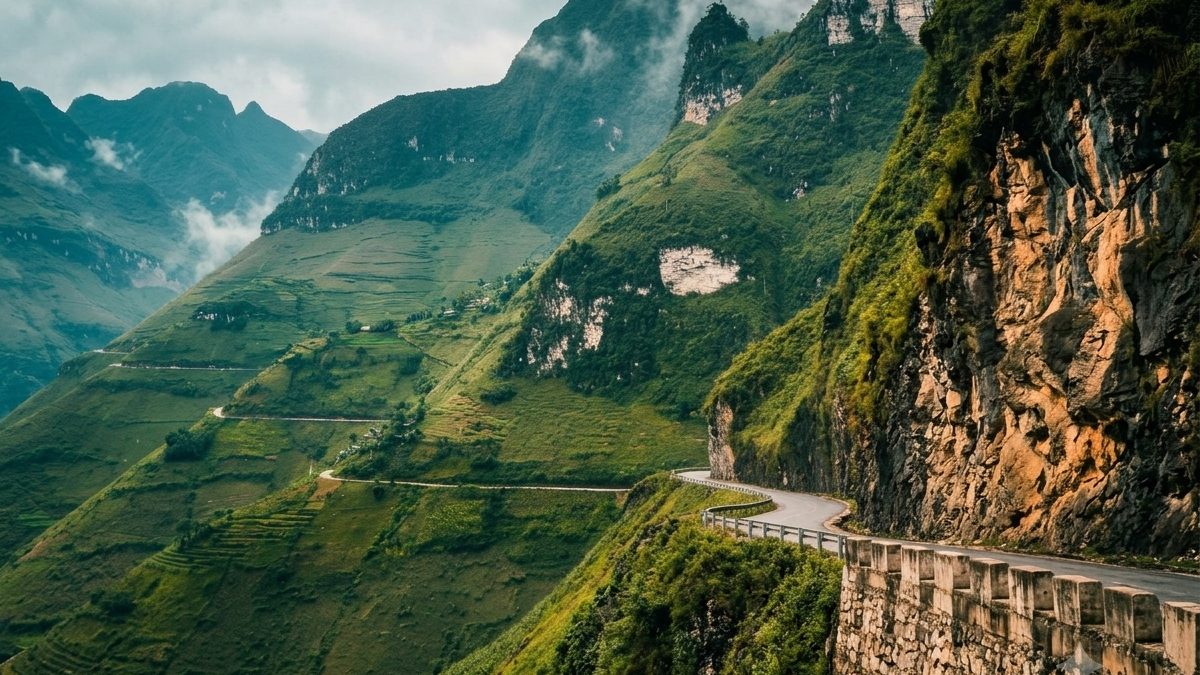

Yes, there are ATMs in Ha Giang, but almost all of them are in Ha Giang city, with a few more in the district towns of Yen Minh, Dong Van and Meo Vac. The villages where you sleep, eat and stop for coffee on the Loop have none, and most homestays, roadside cafés and markets take cash only. So the rule is simple: withdraw the cash for your whole trip in Ha Giang city before you ride, and ask for small notes.
We run Loop tours every day from our hostel in Ha Giang city, and our riders hear “where is the nearest ATM?” in Du Gia and Lung Cu far more often than they should. This guide covers where the ATMs in Ha Giang really are, how much cash a tour guest and a self-rider need, and what you can pay by card or bank transfer instead. For the full trip budget, from the bus to the last homestay, start with our Ha Giang Loop cost breakdown.
Where are the ATMs in Ha Giang?
Think of the ATMs in Ha Giang as one big supply point at the start of the Loop and a few small backups along the way:
| Place | ATMs | What we advise |
|---|---|---|
| Ha Giang city | Plenty, from the main Vietnamese banks | Withdraw here for the whole Loop |
| Yen Minh town | A few | Backup only |
| Dong Van town | A few | Backup only; busy on festival weekends |
| Meo Vac town | A few | Backup only |
| Du Gia, Lung Cu, Lo Lo Chai, Sa Phin, Lung Tam and other villages | None | Arrive with the cash you need |
| Cao Bang city (if you extend the trip) | Plenty | Withdraw before Ban Gioc; there are none at the waterfall |
Our own route notes for the tours we sell list ATMs along the Loop as “scarce”, and the instruction to our guides is the same on every trip: remind guests to take out cash in Ha Giang city. The town centres are the only places with machines for hours in any direction, and you often pass them at lunchtime or after dark. If you are adding Cao Bang to your Loop, the same logic applies there: Cao Bang city has banks, the countryside around Ban Gioc does not.
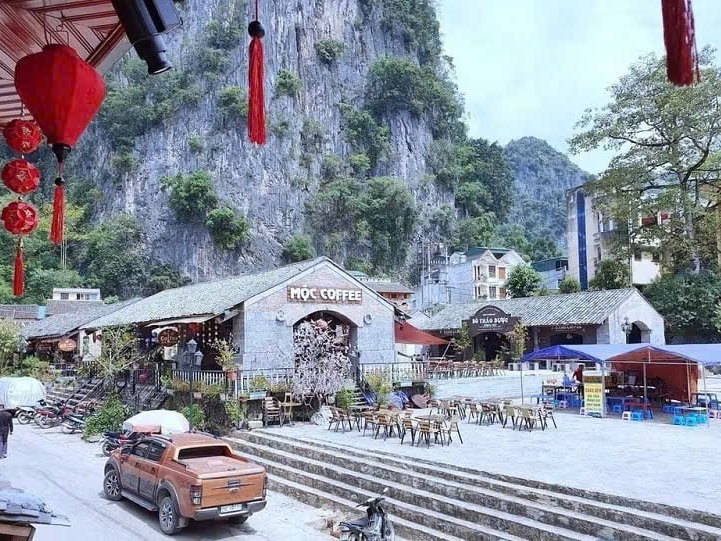
Why can’t you rely on the ATMs in Ha Giang’s small towns?
A town ATM looks like a safety net on the map. In practice it is a weak one, for four reasons:
- There are very few of them. A handful of machines serve a whole mountain district, so one machine out of order can leave a town without cash.
- They run low on busy dates. Seven in ten visitors to the Lung Cu Flag Tower in the third quarter of 2026 were Vietnamese, according to the provincial newspaper Báo Tuyên Quang, and they arrive in waves on weekends and public holidays. That is when the machines in Dong Van and Meo Vac are most likely to run low.
- Not every machine likes foreign cards. One bank’s ATM may refuse your card while the next one works, and in a small town there may be no “next one”.
- The timing is wrong. A tour day is built around the passes and viewpoints, not around bank machines. Stopping to hunt for a working ATM costs daylight you would rather spend at Ma Pi Leng.
What can you pay by card or bank transfer?
The big payments can almost always be made before you ride, which keeps the cash you need from the ATMs in Ha Giang to a small amount.
- Your tour with us. A deposit of 500,000 VND per guest confirms the booking, and the rest is paid before departure, at our Ha Giang office on arrival or by transfer. A card payment carries a 4% fee; a bank transfer has no fee. Bus tickets, rooms and rental bikes are paid in full at booking.
- Hotels and some restaurants in Ha Giang city accept cards. Out on the Loop, assume they do not.
- QR payments. Many village shops display a bank QR code, but paying it needs a Vietnamese banking app. Without one, it is cash.
- US dollars are not used on the Loop. Every price is in Vietnamese dong; the dollar figures on our website are only a conversion at 26,000 VND to the dollar.
If you are booking in the next few days, our guide to Ha Giang Loop booking explains how the deposit and balance work step by step.
How much cash do you need for the Ha Giang Loop?
On a guided tour
On our tours the homestays, main meals, your rider or guide, the border-area permit, entrance tickets at the stops, BIC travel insurance and, on tours of 3 days or more, the Nho Que River boat are all paid for. Our guide to what a Ha Giang Loop tour includes has the full list. You will barely need the ATMs in Ha Giang: your cash is only for the things on the “not included” line:
| Item | Cash to carry |
|---|---|
| Coffee, drinks and snacks on the road | About 200,000 VND a day (our suggestion) |
| Tip for your Easy Rider (optional) | 600,000–900,000 VND for 3 days, if you choose to tip |
| Thank-you for a homestay family (optional) | 50,000–100,000 VND |
| Private room on an Essential tour (optional) | 350,000 VND per room per night |
For a 3-day tour that works out at roughly 1.2–1.5 million VND per person (about $46–58) on top of the tour price, or more if you plan to buy embroidery or a bottle of corn wine to take home. Our Ha Giang Loop tipping guide explains who to tip and when, and our guide to happy water covers the evening drinks.

Riding by yourself
Self-riders pay for almost everything on the road, so they need far more cash from the ATMs in Ha Giang city. These are the costs you will meet, with the prices we pay or charge today:
| Item | Price | How you pay |
|---|---|---|
| Rental bike | 180,000 VND a day (Honda Blade) to 600,000 VND (Yamaha WR 155R) | In Ha Giang city; with us by card or transfer |
| Fuel for the whole Loop | Usually under $15 | Cash at petrol stations |
| Homestay night | 200,000–500,000 VND a night | Cash |
| Lung Cu Flag Tower | 40,000 VND, plus 30,000 VND return if you take the electric cart | Cash |
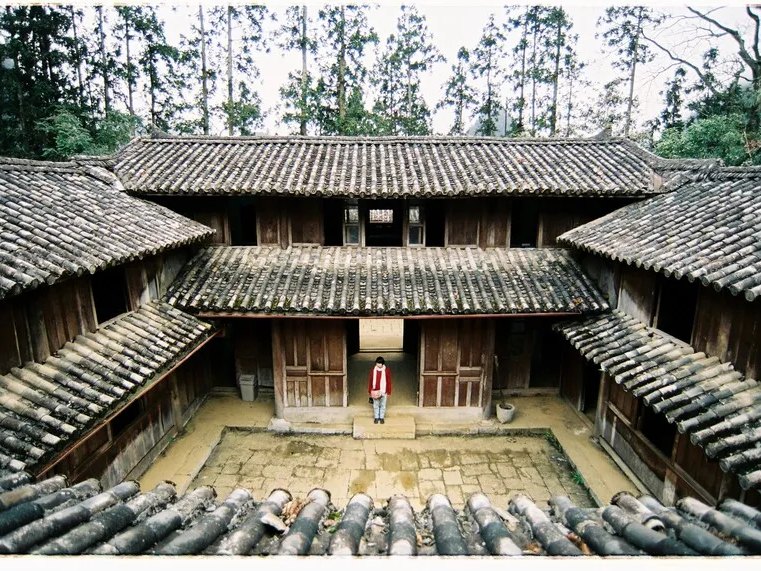
| Vuong Palace | 30,000 VND | Cash |
| Ma Pi Leng Panorama viewpoint | 60,000 VND | Cash |
| Meals at local canteens | Cheap, rice and noodle dishes | Cash |
The homestay range is the one the provincial newspaper published for the 2026 festival season, and prices climb at weekends. As a rule of thumb, carry 2–3 million VND per person in cash for a 3-day self-ride, after the bike is paid. Do not forget the border permit for the area near the Chinese border; our Ha Giang border permit guide explains how to get it before you leave the city.
Which notes should you carry?
- Small notes win. Ask for, or break into, 10,000, 20,000, 50,000 and 100,000 VND notes. A 500,000 VND note is hard to change at a village shop when all you are buying is a coffee.
- Check the blue notes. The 20,000 and 500,000 VND notes are both blue. In the dim light of a homestay kitchen it is easy to hand over the wrong one.
- Split your cash. Keep a day’s money in your pocket and the rest in your bag, inside a zip bag so a downpour does not soak it.
- Break big notes in the city. Right after you visit the ATMs in Ha Giang city, use a supermarket or petrol station there to turn 500,000 VND notes into small change.

A simple cash plan before you leave Ha Giang city
- Tell your bank you are in Vietnam, so your first withdrawal at the ATMs in Ha Giang city is not blocked.
- Withdraw once, in Ha Giang city. ATMs in Ha Giang charge a fee per withdrawal on most foreign cards and cap each one at a few million dong, so one or two larger withdrawals cost less than several small ones along the way.
- Pay the tour balance by transfer if you can. It has no fee and leaves your cash for the road.
- Carry a second card from a different bank, kept apart from the first, in case one of the ATMs in Ha Giang refuses your main card.
- Travel light. Leave your big bag in the city (our Ha Giang Loop luggage guide explains how) and pack the essentials from our Ha Giang Loop packing list.
Running short mid-Loop? Tell your guide early. Most of our routes pass through Yen Minh, Dong Van or Meo Vac town, so a short stop at one of the ATMs in Ha Giang’s district towns can usually be fitted in.
FAQ: ATMs in Ha Giang and cash on the Loop
Are there ATMs on the Ha Giang Loop?
Only a few ATMs in Ha Giang are on the Loop itself. Ha Giang city has plenty, and the town centres of Yen Minh, Dong Van and Meo Vac have a handful each. Villages such as Du Gia, Lung Cu and Lo Lo Chai have none. Withdraw what you need for the whole trip in Ha Giang city.
Can I use a credit card on the Ha Giang Loop?
Rarely. Hotels and some restaurants in Ha Giang city accept cards, but homestays, cafés and markets on the Loop are cash only. Pay the big items, such as your tour, bus and bike, by card or transfer before you ride, and take only pocket money from the ATMs in Ha Giang.
How much cash should I bring for a 3-day Ha Giang Loop tour?
On a guided tour with meals and homestays included, about 1.2–1.5 million VND per person covers drinks, snacks and an optional tip for your rider. Self-riders should carry 2–3 million VND per person for homestays, fuel, meals and entrance tickets.
Can I pay with US dollars in Ha Giang?
Not on the Loop. Homestays, shops and petrol stations price everything in Vietnamese dong. Withdraw dong from the ATMs in Ha Giang city before you ride.
Do ATMs in Ha Giang charge fees for foreign cards?
Most do. The machine usually shows its fee on screen before you confirm, and your home bank may add its own. One larger withdrawal in Ha Giang city costs less than several small ones in the district towns.
Ride without worrying about cash
Our tours include the homestays, meals, permit and entrance tickets, so all you carry is pocket money and there is no need to hunt for ATMs in Ha Giang’s villages. See the Dong Van & Ma Pi Leng 3-day tour, from 2,850,000 VND, or message us on WhatsApp/Zalo at (+84) 787 652 333 or email info@hagiangalitravel.com and we will tell you exactly what to bring. Every tour is at hagiangalitravel.com.
See more