The Ha Giang buckwheat flowers bloom from October to December 2026, peaking in early November across the Dong Van Karst Plateau. This year the bloom is anchored by the 12th Buckwheat Flower Festival, themed “Echoes of the Stone Plateau” (Âm vang miền đá). If you are timing a trip around the pink-and-white fields, here is exactly when to come, where the best Ha Giang buckwheat fields are along the Loop, and how to plan your ride around the season.
We are a local team based in Ha Giang town, and we watch the plateau change colour every autumn. The flowers you see in photos are not decoration — they grow from the same seeds highland families plant for food. Understanding that story is what turns a quick photo stop into a real Ha Giang buckwheat experience.
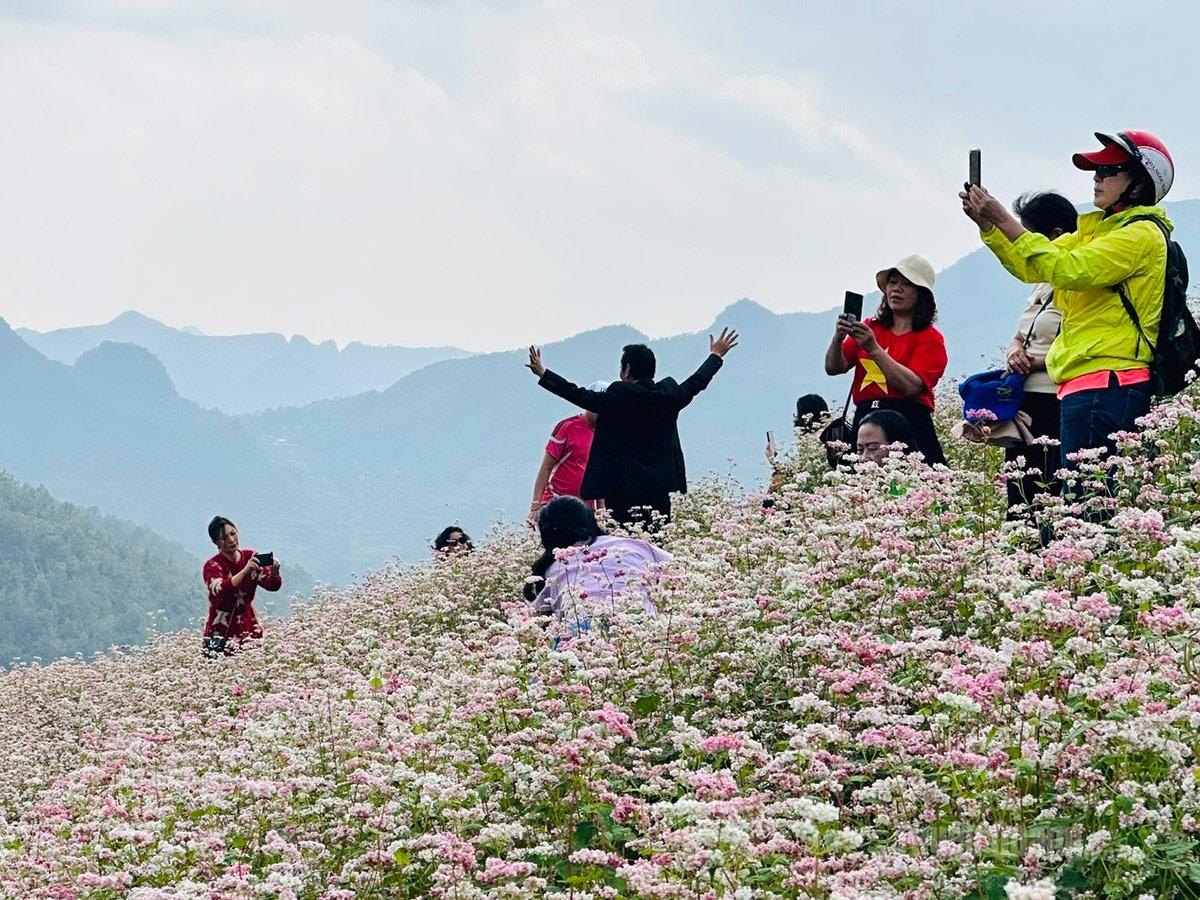
What is the Ha Giang buckwheat flower?
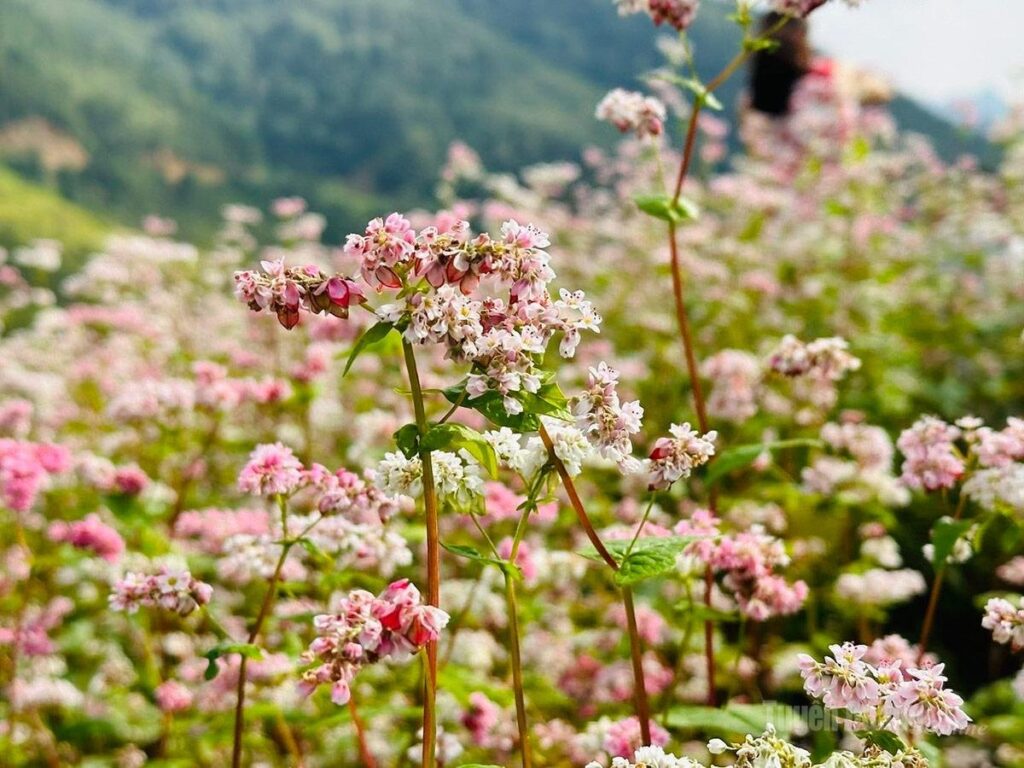
Buckwheat — tam giác mạch in Vietnamese — is named for the three-sided (“tam giác”) shape of its seed. Long before it drew travellers, it was a food crop: highland families sow it after the maize harvest, grind the seed into flour for cakes and porridge, and even ferment it into a mild mountain liquor. The plant thrives where little else will, taking root in thin soil wedged between the rocks of the Dong Van Karst Plateau.
The colour is what makes the Ha Giang buckwheat season so photogenic. Early blooms open a soft white, then shift to pale pink, and finally to a deep pink-purple as the cold sets in. On a single slope you will see all three shades at once — bright where the sun hits, still white in the shade — so every field looks a little different from one day to the next.
When do the Ha Giang buckwheat flowers bloom in 2026?
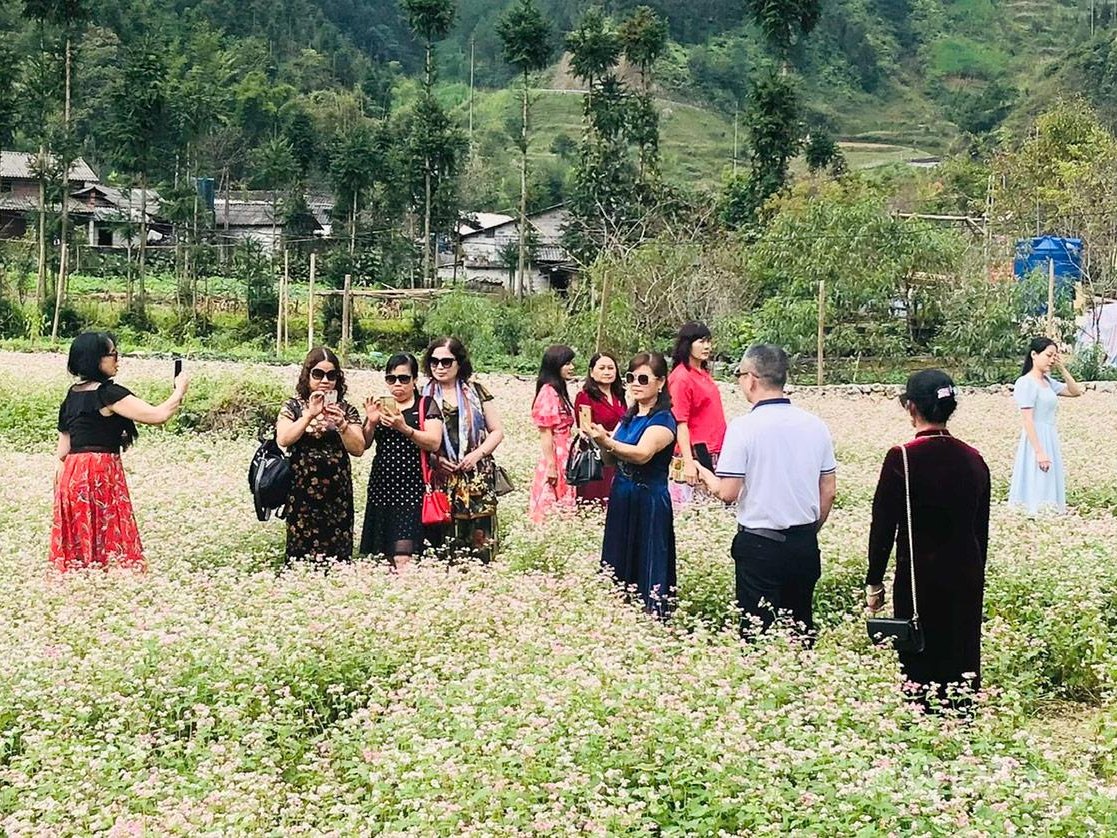
For 2026 the fields are sown in phases so the colour lasts from October through the end of December, with the finest displays concentrated in early November. The rough timeline looks like this:
- Mid–late October: first fields open, mostly white to pale pink — quieter, cooler, fewer crowds.
- Early November (peak): the widest bloom and the richest pink across the plateau. This is the classic Ha Giang buckwheat window.
- Late November – December: colours deepen to pink-purple as temperatures drop; some fields fade while later-sown plots keep flowering.
Because the bloom follows the weather, dates shift a little each year — a warm autumn slows the colour, an early cold snap speeds it up. If you want the safest bet for full fields, aim for the first two weeks of November. For planning the wider trip, our Ha Giang weather by month guide and our Ha Giang Loop in November guide both break down what to expect.
Ha Giang Buckwheat Flower Festival 2026: what to expect
The 2026 season carries a bigger date: the 12th Buckwheat Flower Festival, themed “Echoes of the Stone Plateau” (Âm vang miền đá). The festival opened on the evening of 25 October 2026 at Youth Square in Dong Van, and its events run until the end of December, with fields sown in stages so the displays line up with the early-November peak. Alongside the flowers you can expect cultural performances, art and music, highland food, traditional craft demonstrations, and stalls selling local products.
One thing to know if you are reading older articles: after Vietnam’s 2025 provincial reshuffle, Ha Giang is now part of Tuyen Quang province, which is why you will see the event billed as a Tuyen Quang festival. The roads, the plateau, and the ride are exactly the same — only the paperwork changed. We explain the full picture in Is the Ha Giang Loop now Tuyen Quang province?
The festival is the headline, but the real draw is the everyday plateau around it — the villages, the stone-walled homes, and the markets that keep running all season. You can read the local announcement of the 2026 bloom on Báo Tuyên Quang.
Where to see Ha Giang buckwheat flowers along the Loop
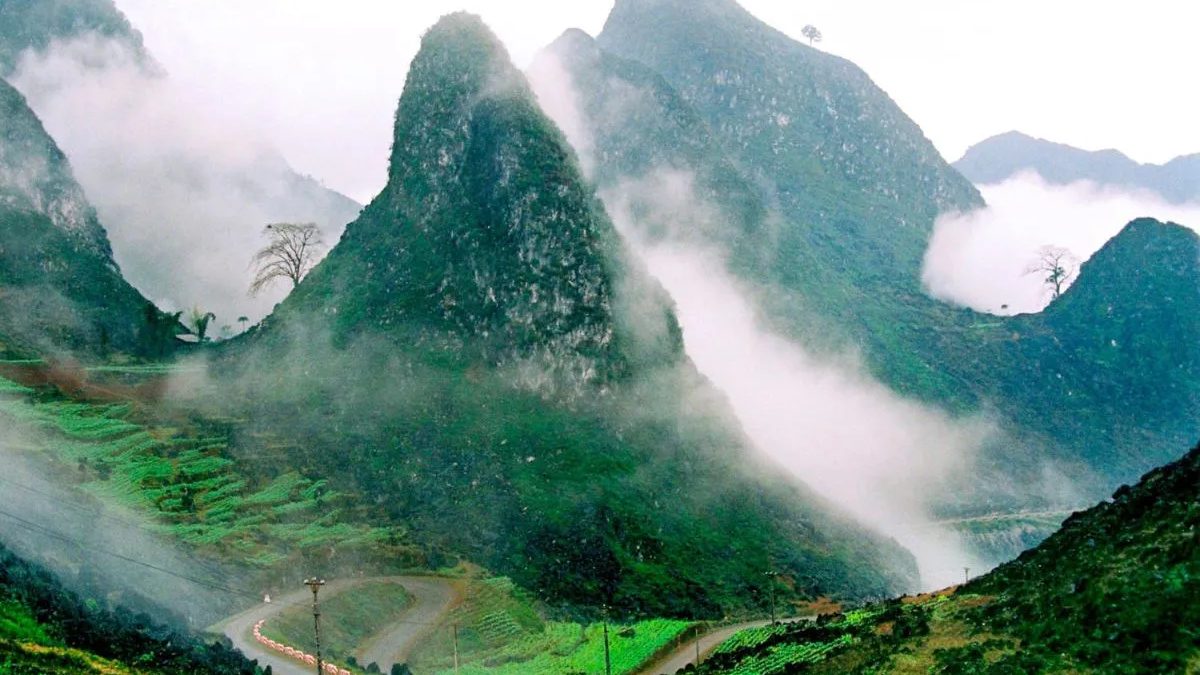
The best news for riders is that you do not need to hunt for a single “flower field.” During the Ha Giang buckwheat season the blooms line the Loop itself, changing character from valley to valley. Working north and east, these are the stretches worth slowing for:
- Quan Ba: flowers set against Heaven’s Gate and the Twin Mountains as you climb onto the plateau.
- Yen Minh: pockets of colour among pine forest and valley villages.
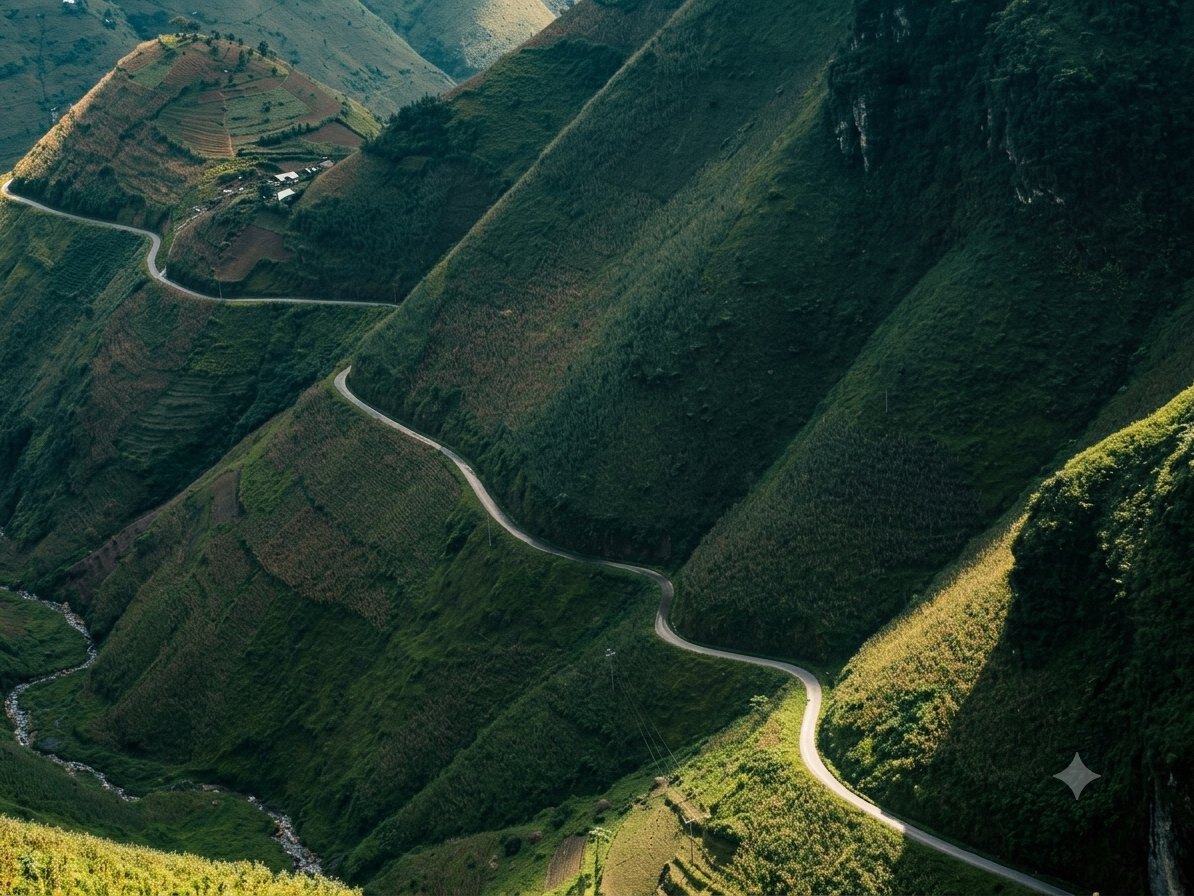
- Tham Ma Slope: buckwheat softening the famous hairpin bends — one of the plateau’s most photographed corners.
- Sung La & Pao’s House: flowers around old rammed-earth homes and stone fences in a classic H’mong valley.
- Sa Phin: fields near the Vuong family palace (the “Vua Mèo,” H’mong king Vuong Chinh Duc).
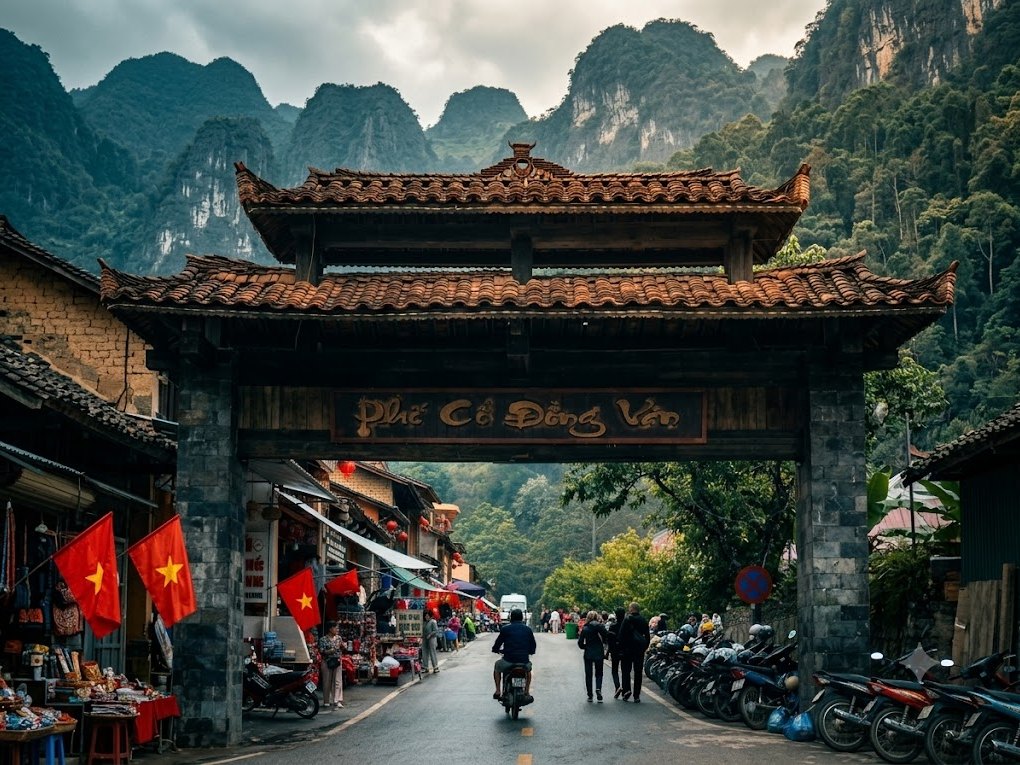
- Dong Van: the old quarter and surrounding hills, the beating heart of the plateau.
- Lung Cu: villages below the flag tower, including the Black Lo Lo hamlet of Lo Lo Chai.
- Meo Vac & Nho Que River: flowers give way to the Tu San Gorge, the emerald river, and Pa Vi village.
For the full lay of the land, see our Dong Van Karst Plateau guide — the plateau is a UNESCO Global Geopark, and the buckwheat only makes it more striking.
How to plan your ride around the Ha Giang buckwheat season
The flowers are best enjoyed as part of the Loop rather than as a single destination. A few practical notes from riding it ourselves:
- Give it 3–4 days. That is enough to reach Dong Van, Lung Cu and Meo Vac at a relaxed pace. See our Ha Giang Loop itinerary to map it out.
- Book ahead for the November peak. The Ha Giang buckwheat festival is the busiest window of the autumn — homestays in Dong Van and Meo Vac fill early.
- Sort your border permit. The northern communes (Dong Van, Meo Vac, Lung Cu) sit in a border zone. Foreign travellers need a border permit, roughly US$10 per person, and it is easy to arrange — details in our Ha Giang border permit guide.
- Pack for the cold. Early November mornings are chilly and it only gets colder into December. Bring layers, a windproof jacket and gloves for the passes.
- Respect the fields. These plots belong to local families. Stay on the edges, do not trample the plants, and if someone asks a small fee to step in for photos, it is a fair way to support them.
Frequently asked questions about the Ha Giang buckwheat season
When is the best time to see buckwheat flowers in Ha Giang?
Early November is the peak, when the fields across the Dong Van Karst Plateau turn their deepest pink. The wider season runs from mid-October to late December 2026, so you can still catch colour on either side of the peak.
How much does it cost to see the Ha Giang buckwheat fields?
Most roadside fields are free to admire. At some, the local family that farms the plot asks a small fee to step inside for photos — a modest, fair way to support them. There is no single “entrance ticket” to the bloom.
Do I need a permit to visit the flower areas?
The main flower areas around Dong Van, Lung Cu and Meo Vac lie in a border zone, so foreign visitors need a border permit (about US$10 per person, usually paid by the traveller). Guesthouses and tour operators can arrange it in minutes.
Can I ride the Ha Giang Loop during the flower season?
Yes — autumn is one of the best times to ride. The weather is dry and cool, and the Ha Giang buckwheat flowers line the route. Just book accommodation early for the November peak and pack warm layers.
Plan your Ha Giang buckwheat trip with Ali
The Ha Giang buckwheat season is short, but it turns an already spectacular ride into something unforgettable — pink slopes, stone villages, and highland markets all at their liveliest. As a local team, we can time your Loop for the peak bloom, sort your border permit, and match you with the right ride, whether you want to drive yourself or sit back with an experienced easy rider.
Ready to chase the bloom? Browse our Ha Giang Loop tours or arrange a motorbike rental, then message us and we will build your flower-season trip around the early-November peak.
See more:
- Why you must experience the buckwheat flower season in Ha Giang
- Ha Giang Loop in November: weather, festivals & tips
- Dong Van Karst Plateau: a UNESCO Global Geopark
Contact: info@hagiangalitravel.com · WhatsApp/Zalo (+84) 787 652 333 · hagiangalitravel.com