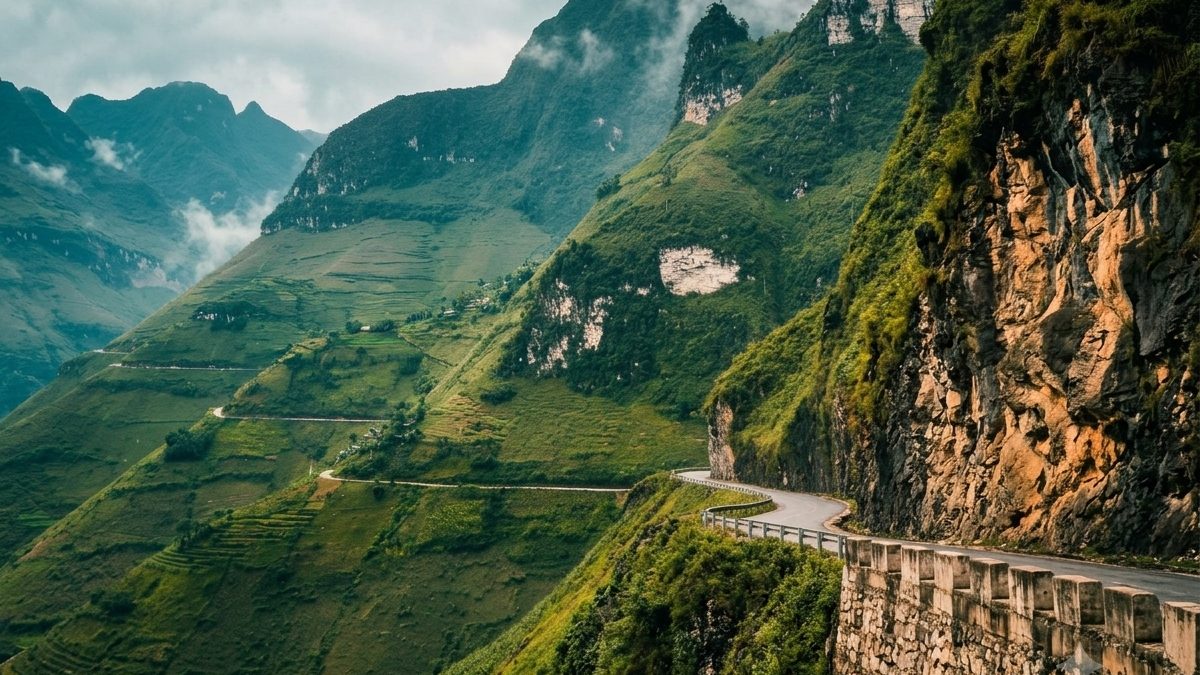
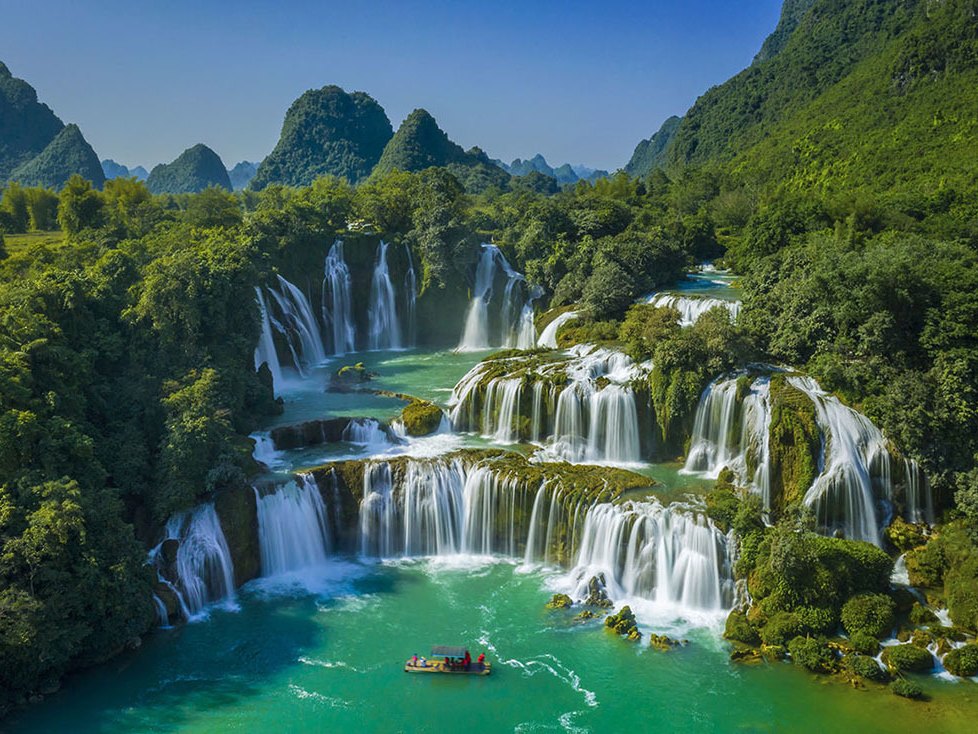
Ban Gioc Waterfall is worth the trip if you time it right: come between June and October, when the Quay Son River runs full and the falls spread into dozens of white curtains across the Vietnam–China border. It sits in the far north-east of Cao Bang province, a full day’s travel beyond the Ha Giang Loop, so most travellers see it as part of a five-to-seven-day route rather than as a day trip. This guide covers when to go, how to get there, what to do at the falls and where to sleep nearby.
We are a Ha Giang-based team that takes riders and car groups east to Ban Gioc every week of the season, so everything below comes from the road, not from a brochure.
What is Ban Gioc Waterfall and why is it famous?
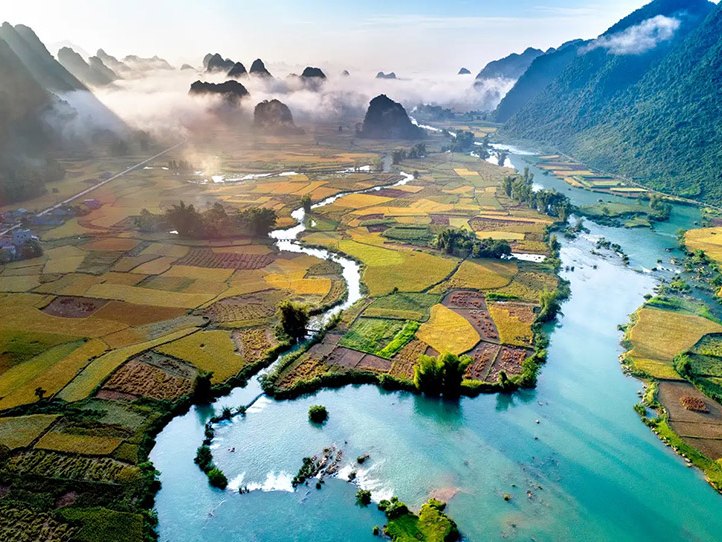
Ban Gioc Waterfall is a wide, multi-tiered waterfall on the Quay Son River, right on the border between Vietnam and China. It is roughly 30 metres tall but around 300 metres wide, which is what makes it look so different from the tall, narrow waterfalls most people imagine. The water drops over limestone steps in several stages, pools in a turquoise basin, and then flows on through rice fields and karst hills.
It is often described as the largest waterfall in Southeast Asia and one of the biggest on any national border in the world. The Chinese side (Detian) shares the same river, and you can see it from the Vietnamese bank. The whole area belongs to the Non Nuoc Cao Bang UNESCO Global Geopark, which also protects the caves, passes and valleys around it.
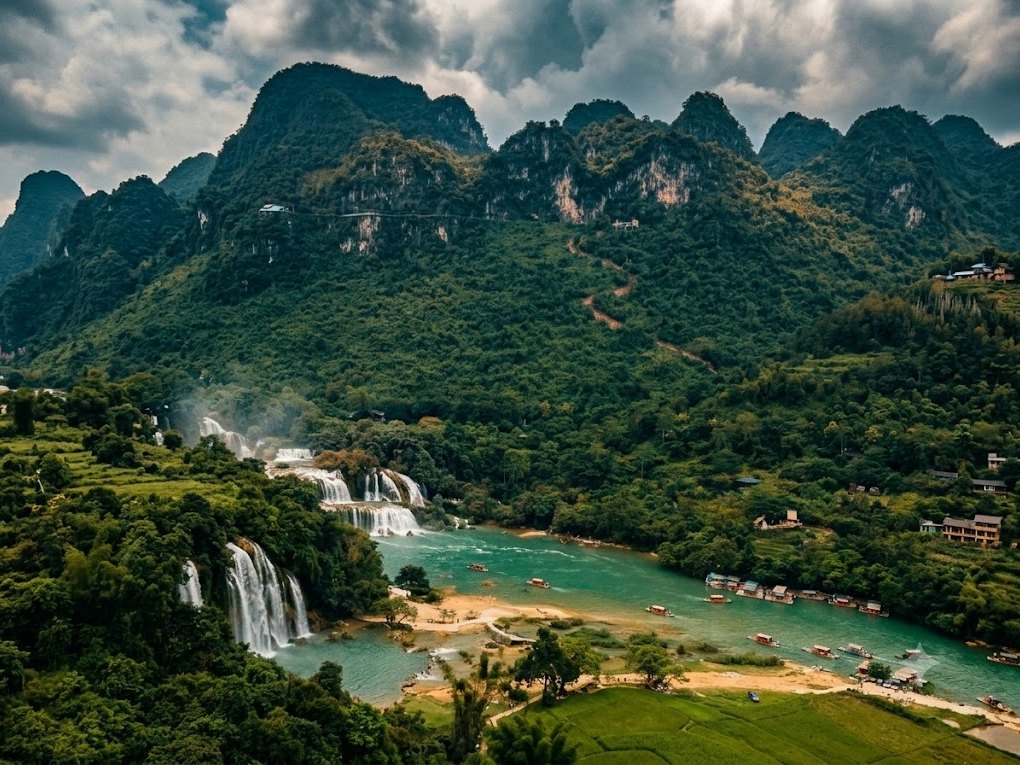
When is the best time to visit Ban Gioc Waterfall?
The honest answer depends on what you want to see. Ban Gioc Waterfall changes more through the year than almost any sight in the north:
- June to September – full power. The rainy season feeds the Quay Son River and the falls are at their widest and loudest. This is the classic postcard view. After a very heavy storm the water can turn brown and the rafts may pause for safety.
- September to October – our favourite window. Water is still strong, the sky clears, and the rice in the valley turns gold before the harvest. You get the waterfall and the rice fields in one frame.
- November to April – quiet and clear. Flow drops and some tiers thin out, but the water turns a deep turquoise and there are far fewer people. Mornings can be cold and misty from December to February.
Wherever you travel from, check the Ha Giang weather by month as well, because the same rain that fills Ban Gioc Waterfall also shapes conditions on the mountain passes you ride on the way.
How do you get to Ban Gioc Waterfall?
Ban Gioc is remote, and that is part of its charm. There are three realistic ways to reach it.
From Hanoi
Take a sleeper bus or limousine to Cao Bang city (around seven hours), then continue by car, local bus or motorbike to the falls, roughly another two and a half hours on mountain roads. Most people who come this way spend at least two nights in Cao Bang.
From Ha Giang – the route we recommend
If you are already riding the Loop, do not go back to Hanoi first. Continue east from Meo Vac through Bao Lac and into Cao Bang, and Ban Gioc Waterfall becomes the finale of one long line with no backtracking. Our full Ha Giang to Cao Bang guide explains the road day by day.
By bus from Ha Giang
If you finish the Loop and just want to get there, a 29-seat bus runs Ha Giang → Cao Bang for 350,000 VND, and Cao Bang → Ha Giang for 250,000 VND. You can book it with us through the bus ticket page, then arrange the last stretch to Ban Gioc from Cao Bang city.
What can you do at Ban Gioc Waterfall?
Plan on two to three hours at the falls themselves. Here is how our groups usually spend them:
- Walk the riverside path. A short, mostly flat walk leads from the entrance along the bank to the base of the main tiers. It gets you close enough to feel the spray.
- Take a bamboo raft. Rafts go out towards the foot of the falls. On our tours the raft is optional and paid on the spot, so you can decide once you see the conditions that day.
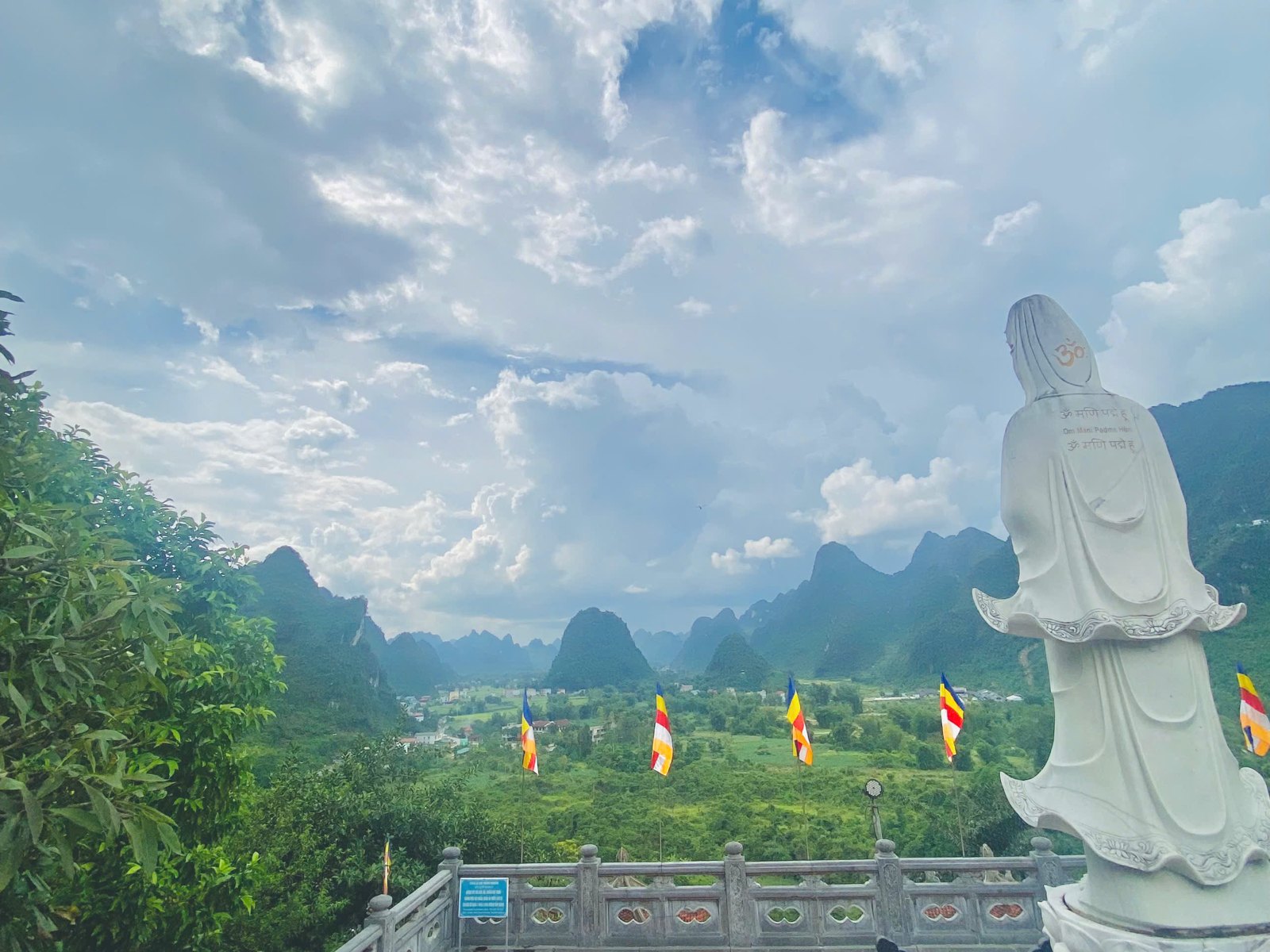
- Climb to the pagoda viewpoint. Phat Tich Truc Lam Ban Gioc pagoda stands on the hillside beside the falls. The stairs are steady rather than hard, and the view over Ban Gioc Waterfall and the valley is the best free viewpoint on site.
- Look for the border marker. The river is the border. Stay on the marked paths on the Vietnamese side and do not wade or cross.
Timing tip from our guides: arrive early in the morning or after about 3 pm. Tour buses from Cao Bang city tend to arrive late morning, and weekends and Vietnamese public holidays are the busiest days. On a weekday at 8 am you may have the riverbank almost to yourself.
What else is near Ban Gioc Waterfall?
The area around Ban Gioc Waterfall rewards an extra night. These are the stops we build into our routes:
Nguom Ngao Cave
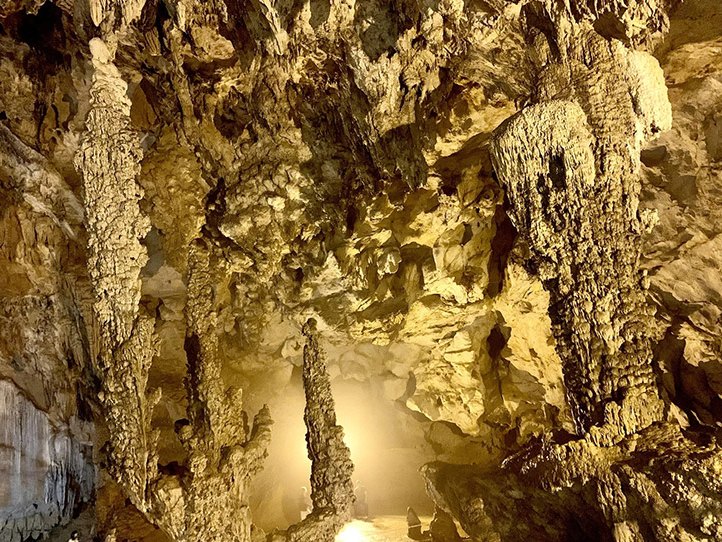
A few minutes’ drive from the falls, Nguom Ngao (“Tiger Cave”) has kilometres of lit limestone chambers, stalactites and dripstone curtains. The walkway is paved and flat, and it stays cool inside even in summer, which makes it the perfect pairing with a hot morning at Ban Gioc. If you enjoy caves, read our guide to caves in Ha Giang for more on the way.
Khuoi Ky stone village
A Tay village of stone houses in the valley near the falls. We use a family homestay here on our Ban Gioc route because it puts you minutes from the waterfall before the day visitors arrive.
Phia Thap incense village
On the road back towards Cao Bang city, the Nung An families of Phia Thap still make incense by hand and dry it in fans of red sticks in the yards. It is a short, gentle stop with great photos.
Angel Eye Mountain
A natural rock arch above the Thang Hen basin, west of the falls. An easy walk across the meadow brings you to the view through the “eye” – a favourite stop on the day before Ban Gioc.
How many days do you need for Ban Gioc Waterfall?
From Hanoi, allow a minimum of three days: one to get to Cao Bang, one for Ban Gioc Waterfall and Nguom Ngao, one to return. If you combine it with Ha Giang, five days is the comfortable minimum and seven lets you slow down. Our guide on how many days to spend in the north helps you choose.
These are the Ali Travel routes that end at Ban Gioc (published prices per person, 2026):
- Ban Gioc Traverse, 5 days – Ha Giang Loop, Black Lo Lo village, the Khau Coc Cha 14-tier pass, Pac Bo, Angel Eye and a night at Khuoi Ky before Ban Gioc Waterfall. Private en-suite rooms. Easy Rider 12,050,000 VND (about $463) · private car 15,350,000 VND (about $590).
- Ha Giang & Cao Bang: Grand North Loop, 5 days – the classic Loop plus Pac Bo, Ban Gioc and Nguom Ngao. Easy Rider 10,550,000 VND (about $406).
- Ha Giang & Cao Bang by Private Car, 7 days – the slow, comfortable version with a driver and English-speaking guide. 19,710,000 VND (about $759).
With an Easy Rider you ride pillion behind a local guide, so no licence or riding experience is needed. Entrance fees for every scheduled stop are included; the bamboo raft at Ban Gioc is optional and paid on site.
Practical tips for visiting Ban Gioc Waterfall
- Carry your passport. Ban Gioc is inside a border zone. On our tours the paperwork is handled for you; independent travellers should read our Ha Giang border permit guide, as the same rules apply to foreigners in Cao Bang’s border areas.
- Bring cash. Raft tickets, snacks and small shops near the falls work in cash. ATMs are in Cao Bang city, not at the waterfall.
- Wear shoes with grip. Rocks near the water are wet and slippery all year. Sandals with straps or trainers are better than flip-flops.
- Pack a light rain layer. The spray alone will soak you near the base in high water, and afternoon showers are common from June to September.
- Do not swim at the main falls. Currents under the tiers are strong. If you want a swim, our guide to Du Gia Waterfall on the Ha Giang side covers a calmer pool.
Is Ban Gioc Waterfall worth it?
Yes – if you give it the time it needs. Ban Gioc Waterfall is not a quick detour; it is a destination at the end of some of the most beautiful roads in Vietnam. Travellers who rush there and back often call it “just a waterfall”. Travellers who arrive by the long road through the Ma Pi Leng Pass, Bao Lac and Pac Bo, sleep in a stone village, and walk the riverbank at 8 am usually tell us it was the high point of their trip. If you can only spare three or four days in total, stay on the Ha Giang Loop itinerary and save Ban Gioc for another visit.
Frequently asked questions about Ban Gioc Waterfall
Can I visit Ban Gioc Waterfall as a day trip from Ha Giang?
No. Ban Gioc Waterfall is a full day’s travel from Ha Giang city. It works best as the end of a multi-day route from Ha Giang to Cao Bang, where every day is new road.
How far is Ban Gioc Waterfall from Cao Bang city?
Allow about two and a half hours by road each way. If you are based in Cao Bang city, leave early to reach the falls before the late-morning crowds.
Is the bamboo raft at Ban Gioc Waterfall safe?
Rafts stay in the calmer water below the falls, and you should always wear a life jacket on board. After very heavy rain they can be suspended; our guides check that morning and adjust the plan.
Which month is best for Ban Gioc Waterfall?
For the strongest flow, June to September. For strong water plus golden rice and clearer skies, September to early October.
Do I need a licence to join a Ban Gioc tour?
Not with an Easy Rider or private car – you are a passenger. If you want to ride yourself, read is the Ha Giang Loop safe and our licence guides before you book.
Plan your Ban Gioc Waterfall trip with Ali Travel
Tell us your dates, how many days you have and whether you prefer a motorbike or a car, and we will send you a route that ends at Ban Gioc Waterfall at the right time of day. Arrive in Ha Giang the evening before and your first night at Ali Hostel is on us.
WhatsApp/Zalo: (+84) 787 652 333 · Email: info@hagiangalitravel.com · hagiangalitravel.com
See more: Ha Giang rice season · Ha Giang Loop cost · All Ali Travel tours