Your cart is empty.


Located in the northernmost region of Vietnam, Ha Giang stands out with its towering mountains, dramatic landscapes, and vibrant cultural heritage. Unlike the country’s more crowded tourist destinations, Ha Giang has preserved its untouched beauty and peaceful atmosphere, making it a hidden gem waiting to be discovered. A journey to Ha Giang not only offers breathtaking natural scenery but also a chance to experience the unique traditions of local ethnic communities. If you’re looking for an unforgettable adventure, Ha Giang Ali Hostel shares compelling reasons why you should visit Ha Giang and Vietnam’s untouched northern gem at least once in a lifetime.
Ha Giang is a stunning mountainous province in northern Vietnam, located about 318 kilometers from Hanoi. This border province shares boundaries with Cao Bang to the east, Tuyen Quang to the south, Lao Cai and Yen Bai to the west and southwest, and China’s Yunnan and Guangxi provinces to the north.

Ha Giang has a long history and deep cultural roots. Traces of human settlement date back to the Dong Son Bronze Age, with prehistoric relics discovered in Bac Me and Meo Vac districts. Today, the province is home to 22 ethnic minority groups, each preserving unique customs, festivals, and traditional lifestyles that enrich the cultural tapestry of Ha Giang.
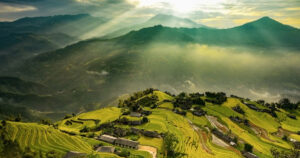
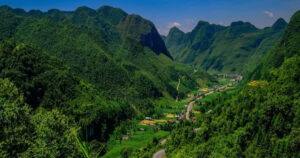
The landscapes of Ha Giang are breathtaking and diverse. The north is dominated by majestic limestone mountains, while the south features lush green forests. Among the most famous attractions are Dong Van Karst Plateau Geopark, a UNESCO Global Geopark since 2010, and Hoang Su Phi Rice Terraces, honored as a National Heritage Site in 2012. Other must-see destinations include Tien Stream, Heaven’s Gate, Quang Ngan Waterfall, Nam Ma Valley, and the historic Mansion of the Vuong Family.
With its extraordinary natural beauty, vibrant ethnic culture, and rich historical heritage, Ha Giang Vietnam stands as one of the most captivating travel destinations in the country, attracting adventurers and culture seekers alike.
Like other northern provinces of Vietnam, the weather in Ha Giang is shaped by a tropical monsoon climate with four distinct seasons: spring, summer, autumn, and winter. Winters are typically dry and cold, while summers are warm, humid, and often rainy. Thanks to its high-altitude terrain, Ha Giang offers cooler and more pleasant summers than the lowlands, but winters can be much colder.

No matter when you visit, Ha Giang is stunning year-round, with each season bringing its own charm:
Getting to Ha Giang is relatively convenient, especially for travelers departing from northern provinces of Vietnam. For those coming from the central or southern regions, the most common route is to travel to Hanoi first, then continue the journey from Hanoi to Ha Giang.

Several major bus stations in Hanoi, including My Dinh, Luong Yen, Yen Nghia, and Gia Lam, operate daily buses to Ha Giang. Travelers can choose from sleeper buses or high-quality limousine buses, with ticket prices ranging from 200,000 to 300,000 VND per person for a one-way trip.
After arriving in Ha Giang City, renting a motorbike is the most popular option to explore the Ha Giang Loop independently, with daily rental fees between 150,000 and 300,000 VND. For families, seniors, or those traveling with children, renting a tourist car with a driver is a more comfortable choice. Taxis are also available, with reliable companies such as Mai Linh Taxi, Thanh Cong Taxi, and Ha Giang Taxi, making it easy to get around the province.
Ha Giang offers diverse accommodation options, from budget guesthouses to mid-range hotels, with prices generally between 150,000 and 500,000 VND per night. Depending on your budget and preferences, you can easily find a place to stay in Ha Giang.

The most popular areas to book accommodation in Ha Giang are Dong Van and Meo Vac, both offering stunning landscapes and proximity to key attractions. If hotels in these areas are fully booked, especially during the buckwheat flower season, you can look for alternatives in nearby towns like Yen Minh or Quan Ba. To secure the best experience and scenic mountain-view rooms, booking at least one month in advance is highly recommended.
To ensure a safe and enjoyable trip in Ha Giang Vietnam, keep the following travel tips in mind:
As the economic, political, and cultural hub of Ha Giang Province, Ha Giang City is the perfect starting point for any Ha Giang journey. While it may not showcase the dramatic mountain landscapes that make the region famous, the city offers several must-visit attractions to enrich your travel experience.

A key highlight is the Km 0 Landmark, the symbolic spot marking the beginning of the legendary winding roads of Ha Giang. Nature lovers can enjoy Waterfall No. 6, cascading gracefully like a silk ribbon amidst lush greenery. For those seeking tranquility, Quan Am Pagoda provides a peaceful spiritual escape. And if you visit on weekends, don’t miss Nguyen Trai Walking Street, where every Friday and Saturday night the area comes alive with cultural performances, street food, and local handicrafts.
Located about 46 kilometers north of Ha Giang City, Quan Ba District is known as the “Gateway to Ha Giang.” This land welcomes travelers with fresh mountain air and spectacular scenery. A must-visit attraction here is Quan Ba Heaven Gate (Heaven’s Gate of Ha Giang) a high mountain pass offering panoramic views of limestone ranges, terraced rice fields, and valleys blanketed with buckwheat flowers in full bloom.

Nearby, the iconic Quan Ba Twin Mountains stand out with their perfectly symmetrical shapes, surrounded by terraced fields and rocky hills. For cultural exploration, the Mong Cultural Tourism Village allows visitors to discover traditional Mong houses and experience the authentic highland lifestyle. Nature enthusiasts should not miss Kho My Cave, home to fascinating limestone formations and stalactites that add a touch of mystery to Quan Ba’s landscapes.
Located in the heart of the Dong Van Karst Plateau Geopark, Yen Minh District is one of the most attractive destinations in Ha Giang. Travelers are drawn to the peaceful beauty of the Na Khe Pine Forest, an ideal place for nature walks and photography. Nearby, Lao Va Chai Commune offers sweeping highland views of majestic mountains and valleys.
Agricultural highlights include the Sa Ly Terraced Fields, which transform from lush green during the growing season to golden waves at harvest time. For nature lovers, the Du Gia Primary Forest is a biodiversity treasure, rich in unique flora and fauna.

Yen Minh also preserves many historical and cultural relics such as the French Fort, Lung Ho Wall, and Lao Va Chai Gate. Adventure seekers can explore a series of caves in the communes of Mau Long, Ngoc Long, and Duong Thuong, which showcase impressive geological features unique to Ha Giang.
Dong Van District is one of the top destinations in Ha Giang, Vietnam, known for its majestic mountains and dramatic valleys. The area’s most famous attraction is Dong Van Old Quarter, a cultural gem with more than 100 years of history. Another highlight is the Palace of the H’Mong Kings, built in the late 19th century, which showcases traditional architecture and historical significance.
For a peaceful retreat, travelers can take a boat trip or try kayaking on the emerald-green Nho Que River, surrounded by stunning limestone cliffs. Not far away, the Lung Cu Flag Tower stands proudly on Dragon Mountain at 1,470 meters, marking Vietnam’s northernmost point and offering panoramic views across the breathtaking landscapes of Ha Giang.

Visitors seeking a quieter experience should not miss Pho Bang Town. With a population of just over 500 residents from the Hoa and H’Mong ethnic groups, this ancient village preserves its timeless charm through traditional houses and a slow-paced way of life.
Neighboring Dong Van, Meo Vac District is another essential stop on the Ha Giang Loop, renowned for its awe-inspiring scenery and cultural richness. The district’s crown jewel is the legendary Ma Pi Leng Pass, one of Vietnam’s most beautiful mountain passes, where travelers can admire views of rugged cliffs and deep valleys.
Just below lies the dramatic Tu San Canyon, the deepest canyon in Southeast Asia, carved by the flowing Nho Que River. Another unique cultural experience in Meo Vac is the Khau Vai Love Market, held annually on the 27th day of the third lunar month. Originally a meeting place for separated lovers, it has now become a vibrant cultural festival that celebrates local traditions and community spirit in Ha Giang.

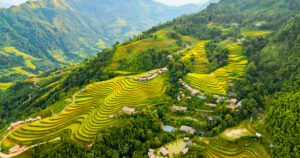
Hoang Su Phi District in Ha Giang is renowned for its breathtaking rice terraces, recognized as a national heritage of Vietnam. This district is also home to Tay Con Linh Mountain the highest peak in Northeastern Vietnam, surrounded by lush primary forests. Nearby, Chieu Lau Thi Mountain, the second-highest peak in Ha Giang, is a perfect spot for cloud hunting and sunrise watching. Just 30 kilometers away, Ban Phung Village offers travelers a peaceful retreat into both pristine nature and authentic local culture.

Vi Xuyen District in Ha Giang is a historic frontier offering diverse landscapes of mountains, valleys, rivers, and mysterious caves. Among its top attractions are the nationally recognized Dan Pioong Cave, Tay Con Linh Mountain, and Phong Quang Nature Reserve. Vi Xuyen is also home to sacred spiritual sites such as Binh Lam Pagoda, Sung Khanh Pagoda, and Nam Dau Pagoda. Visitors can also explore cultural villages like Xa Phin, Tan Son, and Lung Tao, where they can experience the unique traditions and warm hospitality of the local ethnic communities.

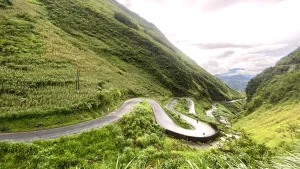
The Ha Giang Loop is a thrilling adventure that takes travelers through winding mountain roads and breathtaking scenery. Stretching over 350 kilometers, this iconic motorbike route is recognized as one of the most spectacular journeys in the world. The loop connects four scenic valleys Quan Ba, Yen Minh, Dong Van, and Meo Vac each offering unique landscapes and cultural experiences. Along the Ha Giang Loop tour, you’ll not only witness majestic mountains but also immerse yourself in the traditions of local ethnic communities. Riding through sharp curves with towering peaks around you delivers an unforgettable sense of awe and freedom.

The Ma Pi Leng Pass, often referred to as the “king of mountain passes” in northern Vietnam, is one of the most remarkable highlights of Ha Giang travel. Spanning 20 kilometers between Dong Van and Meo Vac, this route is a dream for motorbike adventurers. Located at an altitude of 1,200 meters within the Dong Van Karst Plateau Geopark, the pass unveils panoramic views of rugged limestone mountains and dramatic valleys. Below, the emerald Nho Que River winds gracefully through deep gorges, creating a breathtaking contrast against the towering cliffs. A journey to Ma Pi Leng Pass Ha Giang guarantees awe-inspiring sights and an experience you’ll never forget.

A boat trip on the Nho Que River in Ha Giang is one of the most unforgettable experiences when exploring the Dong Van Karst Plateau Geopark. For about 120,000 VND per person, visitors can enjoy a peaceful journey along emerald-green waters, surrounded by the breathtaking cliffs of Tu San Canyon. Known as the highest canyon in Southeast Asia, Tu San Canyon rises nearly 800 meters and stretches over 1.7 kilometers, offering a dramatic natural wonder that makes Ha Giang truly unique.

The rice terraces in Hoang Su Phi District, Ha Giang are among the most spectacular landscapes in Northern Vietnam. Cascading gracefully down the mountainsides, these terraces reflect centuries of cultivation by local ethnic communities. The best time to admire Hoang Su Phi’s beauty is during the harvest season in September and October, when the fields turn into a golden sea of ripened rice, filling the air with a rich fragrance and painting Ha Giang in vibrant shades of yellow.

Trekking to the summit of Tay Con Linh Mountain in Ha Giang is a challenging yet rewarding adventure for nature lovers. There are two main routes to choose from. The first begins in Cao Bo Commune, Vi Xuyen District, with a 7-kilometer motorbike ride from Lung Tao Village to the base camp, followed by a 7-kilometer trek. The second route starts in Phuong Tien Commune, featuring a 13-kilometer motorbike ride from Ban Reu Village to the base camp, and then a 4-kilometer hike. Reaching the top rewards adventurers with sweeping views of Ha Giang’s majestic landscapes.

Ha Giang festivals offer travelers a chance to witness the rich cultural heritage of ethnic minorities. The Long Tong Festival (first lunar month) welcomes the new crop season with dances and ancestor rituals. The Cau Trang Festival (15th day of the 8th lunar month) is celebrated with traditional dances to pray for abundant harvests. After the Lunar New Year, Ha Giang also hosts the unique fire-jumping festival, while the Cap Sac ceremony of the Dao people marks an important milestone in a young man’s transition to adulthood.

A trip to Ha Giang is incomplete without exploring its ethnic villages, where community-based tourism allows visitors to stay with locals and experience their daily lives.

These villages in Ha Giang give travelers a deeper cultural immersion and an authentic local experience.
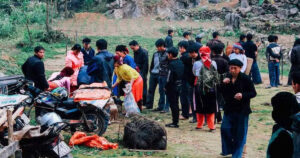
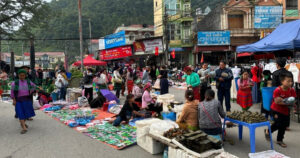
The local markets in Ha Giang are vibrant cultural hubs where ethnic groups like the H’Mong, Tay, and Dao gather to trade, meet friends, and enjoy traditional food.
Dong Van Market (every Sunday) is the largest in the Dong Van Karst Plateau Geopark, offering fresh produce, handmade crafts, and local specialties.
Other unique markets follow the lunar calendar, such as Ma Le Market and Pho Bang Market (days of the Rat and Horse), or Lung Cu Market and Sung Trai Market (days of the Ox and Goat).
At Ha Giang’s markets, you can find specialties like dried buffalo meat, bamboo shoots, silkworms, tam giac mach buckwheat cakes, xoi ngu sac (five-colored sticky rice), men men (steamed cornmeal), thang co hotpot, and ruou ngo (corn wine). These bustling markets are the perfect places to shop, eat, and dive into local traditions.

Ha Giang is not only famous for its breathtaking landscapes but also for its rich culinary culture. If you are planning a trip to Ha Giang, here are the Ha Giang specialties you definitely should not miss:
Beyond its food, Ha Giang also offers specialties you can buy as gifts: mint blossom honey, Shan Tuyet tea, dried buffalo and beef, smoked pork belly, handwoven textiles, and seeds like doi and buckwheat. These items capture the authentic flavors and traditions of Ha Giang, making them meaningful souvenirs.
Ha Giang is a one-of-a-kind destination, combining breathtaking natural beauty with rich cultural heritage, where travelers can enjoy majestic mountains, adventurous routes, and the warm hospitality of the local people. To make your journey even more memorable, let Ha Giang Ali Hostel craft your customized tour, organize team-building activities, or host special events in Ha Giang, ensuring an extraordinary and unforgettable experience. Contact us now via (+84) 78 765 2333 / (+84) 964 430 801, WhatsApp: +84 78 765 2333, or our official Fanpage Ha Giang Ali Hostel for dedicated support.
See more: